
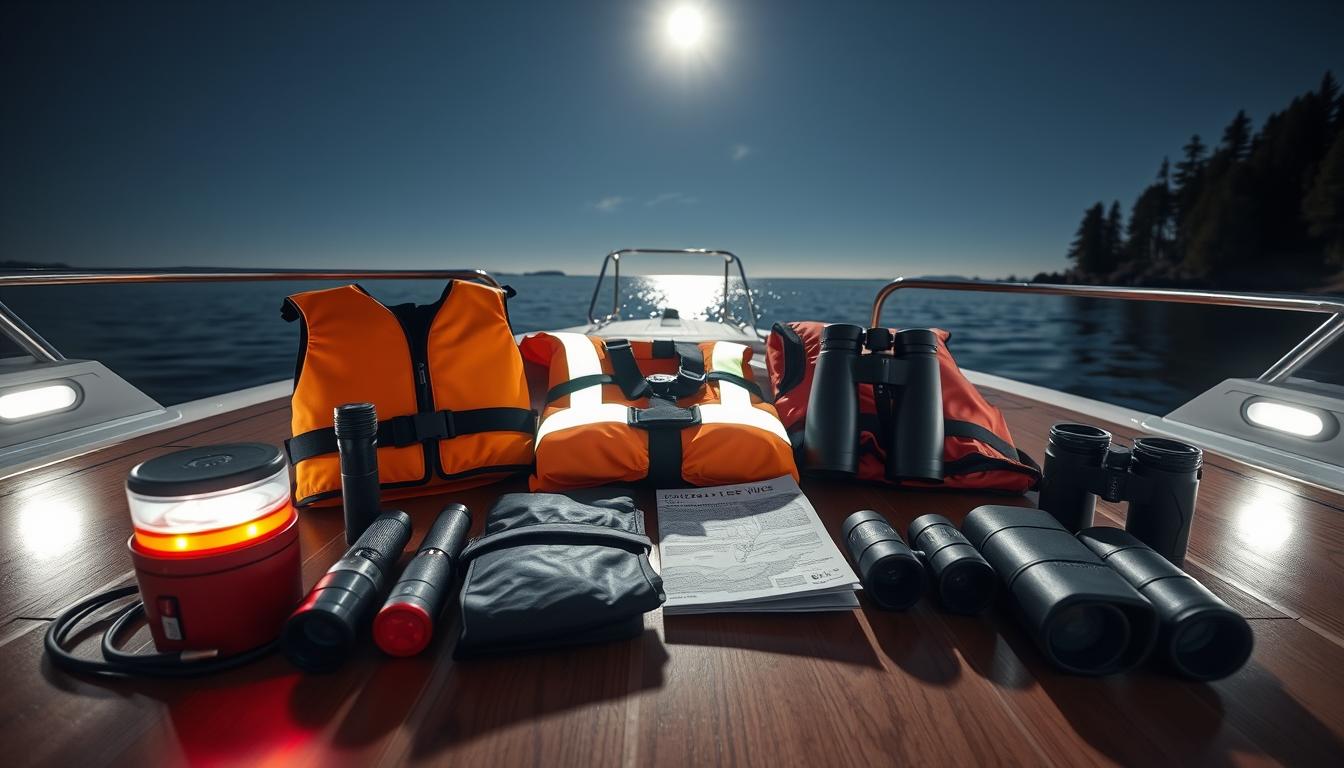
As daylight fades, the water changes. What was once familiar becomes a world of shadows and sounds. Night boating is more about feeling than seeing, a shift from the visual to the visceral.
This isn’t just a test run. It’s a thorough check for a journey into the dark. Before you set off, we’re not just checking boxes. We’re preparing for the unknown.
It’s not just a list of things to do. It’s like a pre-flight checklist for your own adventure. We’ll look at each item’s purpose, turning a simple list into a vital plan.
It’s about getting ready for when the moon takes over. Your boat will be a beacon of light in the darkness. Let’s get you ready.
Using Navigation Lights
Forget the highway code. When the sun sets on the water, a different, more critical language takes over. The dance of red, green, and white lights on the water isn’t just decoration; it’s a vessel’s way of shouting its identity, direction, and intent across the waves. Mastering this luminous lexicon is the single most important skill for safe night navigation.
Think of your boat’s navigation lights as its nocturnal fingerprint. A powerboat, a sailboat, and a kayak all tell a different story with their lights. The official navigation light rules are the grammar, but you need to be a storyteller to interpret the plot. Let’s decode the syntax.
The Basic Vocabulary: Port, Starboard, and Stern
Before you can read the story, you need to know the alphabet. All vessels over a certain size must display a standard set of lights:
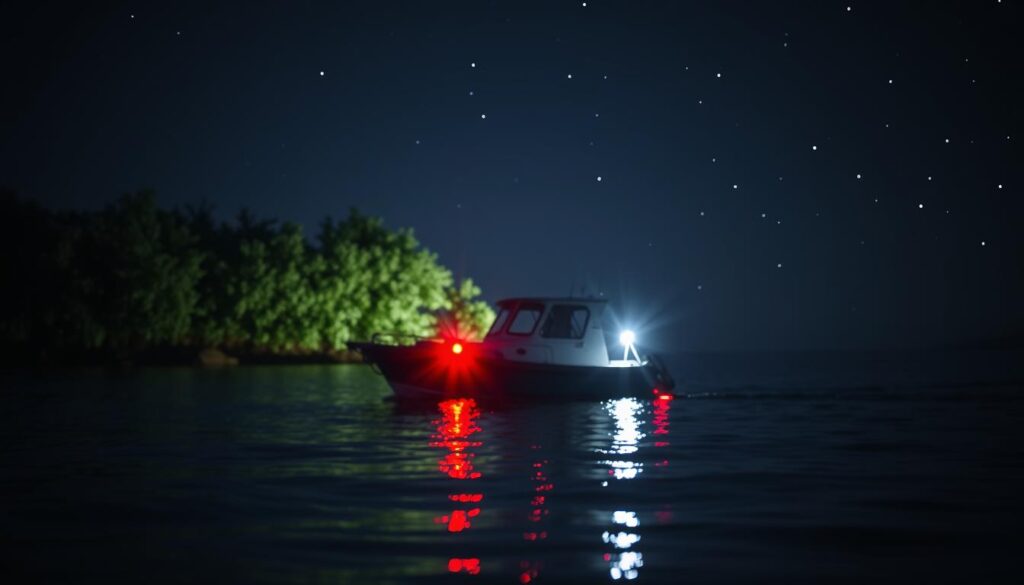
- Red Sidelight (Port): A red light on the port (left) side, visible from dead ahead to 112.5 degrees aft.
- Green Sidelight (Starboard): A green light on the starboard (right) side, with the same arc of visibility.
- Stern Light: A white light at the stern, visible from dead astern to 67.5 degrees on each side.
- Masthead Light: A white light at the front of the boat, visible over a 225-degree arc.
But the real story is told by the combination. A vessel under power will show red, green, and a white masthead light. A vessel under sail, on the other hand, shows only its red and green sidelights. This tells you if it’s motoring or sailing.
What the Lights Are Telling You
This is where it gets practical. You’re on the water at night and see a single white light. What is it?
| Light Configuration | What You’re Seeing | Your Action |
|---|---|---|
| Single white light, possibly bobbing | An anchored vessel or a small craft under 7 meters. This is the most common night navigation hazard for small boats. | Extreme caution. This could be a kayak, a canoe, or a small boat at anchor. Give a wide berth. |
| Red over Green, Sailing Free | A sailing vessel under sail alone (red over green, sailing machine). | As a power-driven vessel, you must give way to a sailing vessel under sail. |
| White, Red, Green lights visible | A power-driven vessel, under 50 meters, heading directly toward you. | This is a head-on situation. You are the give-way vessel. Alter course to starboard. |
| Two white lights in a vertical line | A vessel towing or pushing another vessel. This is a “restricted in ability to maneuver” signal. | Give this vessel a very wide berth. It is the stand-on vessel in almost all cases. |
Anchored vessels show an all-around white light. A vessel not under command shows two all-around red lights in a vertical line. It’s a language. A vessel showing a red over white light configuration is telling you it’s engaged in fishing. Ignoring these signals isn’t just bad form; it’s an invitation for a very bad night navigation story.
The Kayak in the Dark: A Cautionary Tale
John, a weekend sailor, was cruising on a calm, moonless night. He saw a single, bobbing white light ahead. Assuming it was a buoy or a reflection, he held his course. Only at the last second did his spotlight reveal a small, unlit kayak. The kayaker, with no lights, was invisible until it was almost too late. That single white light was a kayak’s stern light. The rule is simple: if you see a single white light at water level, treat it like a sleeping giant—give it a wide, respectful, and slow pass. This is the critical, unspoken rule of night navigation: what you can’t see can, and will, ruin your entire evening.
Identifying Hazards at Night
Daylight is honest, but night is full of tricks. Water that sparkled in the sun becomes dark and full of dangers. Night navigation is like a game of chess in the dark.
You’re not just looking for boats. You’re figuring out a world of shadows and sounds. These can trick you more than you think.
The Night’s Great Deceptions
Your eyes play tricks after sunset. Night myopia makes things look closer than they are. A buoy might look like a ship, or a marker seem in the wrong place.
Parallax is a big trick of the night. Objects seem to move as you do. This can make you think you’re about to crash, when you’re safe.
The water’s surface can also trick you. A piece of driftwood might look like a capsized hull. Or a sleeping seal might seem like a hazard.
Your ears become your main tool at night. The night is full of sounds that tell you things. A distant motor or a bell buoy can guide you better than lights.
Even the quiet is important. A sudden silence might mean your wake is bigger than you think.
Unlit Dangers and the Audible Horizon
Unlit vessels are obvious dangers. But the biggest threats are the ones you can’t see. Things like submerged containers or logs can sneak up on you.
Your ears help you avoid these dangers. Sounds like water against a piling or a seabird’s cry can warn you. Night navigation is like listening to the sea’s story.
Weather changes fast at night. A drop in temperature might bring fog. A wind shift can make your wake choppy. You might not see the storm coming.
From Passenger to Cartographer
Night navigation is not just watching. It’s about understanding what you see and don’t see. Every light is a clue.
Is that a sailboat’s light or a streetlight? Night navigation turns you into a cartographer of the dark. You use what you see and don’t see to navigate.
You’re not just avoiding dangers. You’re creating a map of the dark. Sounds and pressure changes help you navigate. You become the master of the night, using the dark to your advantage.
Local Regulations
Think of night boating rules as a shared language of the sea. They’re not about ruining fun but ensuring safety. It’s like a code that keeps all boats safe in the dark.
Let’s break down the rules. The main idea is to be seen and understood. Your boat’s lights are like words, and the International Regulations for Preventing Collisions at Sea (COLREGs) is the grammar. For motorboats, you need a white light at the front, green on the right, red on the left, and a white light at the back.

Sailboats have different rules. Alone, they show only red and green lights and a white stern light. But when they start the engine, they must show the same lights as motorboats.
Kayaks and canoes are like pedestrians on the water. They only need a white light to show in time to avoid a collision. But, a single, dim light is dangerous. You must have a bright, 360-degree white light ready to show instantly.
Anchored boats have a simple rule. They show a white light all around to signal they’re not moving. Ignoring this light can lead to a costly and wet surprise.
The reason for these strict rules is simple. At night, a green light means “go,” and a red light means “stop.” A single white light could be a small boat or a big ship. These rules help everyone stay safe by broadcasting their intentions and status.
Expert Advice
The final stretch of any journey is where theory meets reality. This is where seeing becomes perceiving. The shift from day to night boating is more than just turning on lights. It’s a change in mindset and method.
The Pre-Darkness Briefing
Before you start, gather your crew. This is a must for safety. A night briefing is key. Review the float plan and assign a lookout.
Point out where all lights and gear are. This sets the night’s rhythm and ensures everyone knows their role.
Seeing in the Dark
Your eyes are your most valuable assets at night. Use red light for chart reading to preserve your vision. Spend time in darkness before your watch to improve your night vision.
Your ears are also important in the dark. Listen for sounds like bell buoys or horns. This is night navigation before you start.
The Psychology of the Night Watch
Fatigue is your biggest enemy at night. Stick to a watch schedule. The “night brain” can create illusions.
Slow down to stay safe. Trust your instruments and have a plan for emergencies. These are universal principles for navigating in the dark.
Anchoring in the Dark
Securing your anchor at night requires extra care. Anchoring rules like scope and swing room are essential. In the dark, you can’t see your swing radius.
Set your scope with a 7:1 ratio and account for tide and wind. A dragging anchor is dangerous. For tips on anchoring and night readiness, check out this guide.