

You have a supercomputer in your pocket and can get a car with a tap. You can even find a taco stand review in Reykjavik. But finding marine fuel on the water feels like a quest from the past. Why does finding a fuel dock feel like a treasure hunt with a 5,000-pound boat?
Modern boating isn’t just about charts and compasses anymore. Your boat’s fuel system can track consumption like a Swiss watch. As shown in discussions on efficient fuel management systems, today’s tech can act like a financial advisor for your fuel tank.
The global marine fuel market is booming, set to reach $7.28 billion by 2032. This means the industry is working to make Fueling Up Afloat smarter, not just more available. It’s not about frantically searching for a fuel dock anymore. It’s about choosing the right one based on your boat’s needs.
Before you set off, think of your fuel gauge as more than a dial. It’s a key data point in your journey. Finding fuel is the first step in a marine fuel strategy. Running on fumes is a problem of the past. In today’s digital age, it’s a choice.
Fueling Procedures
Approaching the fuel dock is more than just a quick stop. It’s a careful maneuver. I see it as a place where safety and the environment are top priorities. The goal is to refuel without any spills.
Your boat is like a mobile command center. Before you even get close, you’re checking everything. This careful approach is key to a safe refuel.
Here are the essential steps for a safe refuel. It’s like a pre-flight checklist for a successful mission.
| Step | Action | The “Why” Behind the Rule | Safety/Security Tip |
|---|---|---|---|
| 1. Secure the Vessel | Secure all lines, shut off engines, and extinguish all open flames (cigarettes, galley stoves, pilot lights). | Eliminates all sources of ignition before a single drop of fuel is moved. This is your first and most critical line of defense. | Treat the entire boat as a possible ignition zone. This is non-negotiable fuel safety. |
| 2. Close All Ports | Close all hatches, doors, and ports. Close all cabin doors and windows. | Prevents explosive vapors from accumulating in enclosed spaces, turning your cabin into a possible hazard. | Think of it as sealing the command center from a chemical agent. This is vapor management 101. |
| 3. Ground the Nozzle | Maintain metal-to-metal contact between the fuel nozzle and the filler pipe before and during fueling. | Prevents the static electricity from a single spark. This is not a suggestion; it’s a physics-based necessity. | This simple, often-rushed step is the single most effective action to prevent a static discharge incident. |
| 4. The “Sniff Test” | Before and during fueling, use your nose. Actively sniff for the distinct odor of gasoline vapors. | Your nose is a more sensitive vapor detector than most onboard electronics for initial detection. A faint whiff is your first and most critical warning. | Channel your inner detective. That faint petroleum scent is your clue. If you smell it, stop and investigate. |
| 5. Manage the Fill | Fill slowly to the recommended level, never “topping off” the tank. Use the pump’s auto-shutoff. | Prevents overflow and the dangerous, polluting mess of a fuel spill. A full tank has no room for expansion. | Overfilling is a cardinal sin. It’s wasteful, illegal in most places, and a major pollutant. Know your tank’s capacity. |
| 6. The Final Check | After fueling, wait a moment, then open hatches and sniff again. Wipe up any drips immediately. | Ensures no lingering vapors or spills are present before you start the engine or any electrical equipment. | This is the post-operation debrief. A final systems check before you resume command. |
This isn’t just a chore; it’s a procedure. The fuel dock is a controlled environment where your vigilance is the primary control. Every time you follow these steps, you’re not just pumping gas. You’re managing a controlled chemical transfer, preventing environmental harm, and ensuring the only thing that ignites is conversation about the smooth operation. For a deeper dive into the science and regulations, resources like the official boating safety guidelines are an excellent fuel safety resource.
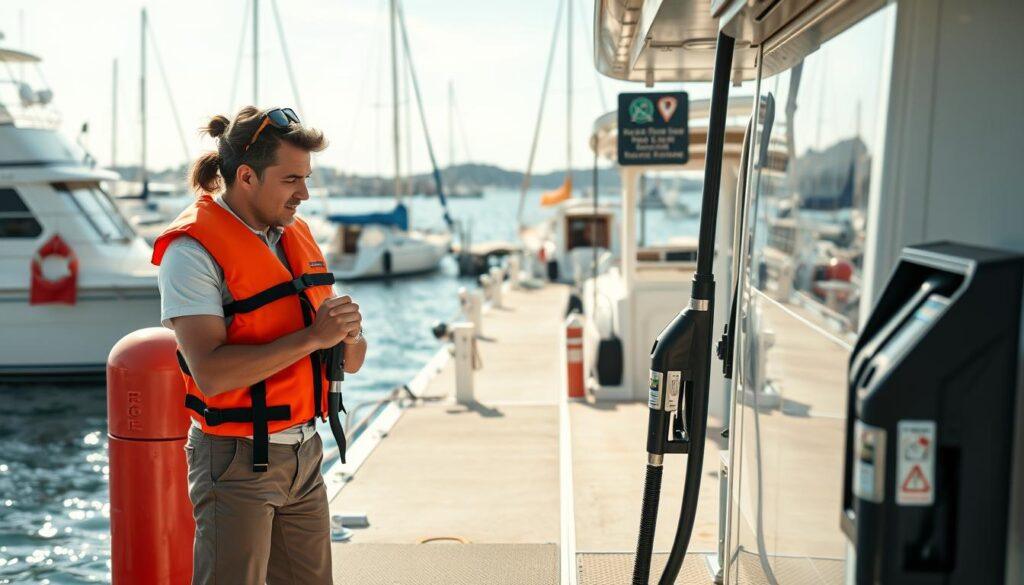
Notice I didn’t mention the nozzle’s auto-shutoff as a backup plan. It’s a failsafe, not a primary tool. Your primary tool is your procedure. That faint, almost sweet smell of gasoline? That’s your signal. It’s not just a smell; it’s a vapor plume, a silent alarm telling you that fuel is where it shouldn’t be. Treat it with the seriousness of a smoke alarm. After all, a smooth, uneventful fuel stop isn’t just efficient—it’s the mark of a skipper who respects the chemistry of the water.
Managing Fuel on Longer Trips
Think of your boat’s fuel management system as a financial advisor for your journey. It’s the difference between a stressed captain and a savvy navigator. The former watches the needle dip toward “E,” while the latter plays a high-stakes game with the sea.
This isn’t just about having a full tank; it’s about fuel safety through smart management. A modern fuel management system is more than a simple meter. It’s a financial advisor for your diesel or gasoline. It tells you exactly how many gallons you have left at your current speed.
The system’s first lesson is finding the “sweet spot.” Every vessel has a speed where fuel efficiency peaks. This isn’t about going slow; it’s about finding the perfect rhythm with the water. Ignore this, and you’re burning fuel and cash.
This is where tools become your co-pilot. A fuel flow meter is essential. When combined with GPS and chartplotter, the system transforms. It shows you exactly how long you can cruise at your current speed and heading.
The data is compelling. Studies show captains who manage their fuel flow and speed can improve fuel economy by 15% or more. This isn’t just savings; it’s fuel safety. It’s the difference between reaching a safe harbor and facing danger.
So, we move from reactive to proactive. It’s the difference between these two approaches:
| Aspect | Reactive Fueling (The Drifter) | Proactive Fuel Management (The Navigator) |
|---|---|---|
| Mindset | Fill it up, run it ’til it’s low, panic. | Strategic reserve management and route optimization. |
| Primary Tool | The fuel gauge. Hope. | Fuel flow meters, GPS-integrated range calculators, weather routing. |
| Fuel Log | “About a quarter tank.” | Precise gallons-per-hour at varying RPMs and sea states. |
| Safety Net | The gas can in the lazarette. | A calculated 30% reserve based on worst-case conditions. |
| Outcome | Runs out of fuel, or just barely makes it. | Arrives with planned, predictable reserves. |
Ultimately, this is chess, not checkers. Every gallon is a piece on the board. Moving your queen aggressively might win you time, but it exposes you. A steady, strategic advance wins the long game. Fuel safety isn’t just about having a life jacket; it’s about never needing to radio for a tow.
In the end, managing fuel on longer trips isn’t about avoiding empty; it’s about mastering the art of the nautical chessboard. Every gallon is a strategic piece, and the king you’re protecting is your safe return to port.
Emergency Procedures
So, your fuel system has decided to star in its own disaster movie. It’s not a question of if you’ll ever face a fuel-related incident, but when. When it happens, you don’t want your crisis management plan to be a frantic, MacGyver-esque scramble with duct tape and hope. You need a protocol, a cool head, and the analytical mind of a detective. Let’s break down the emergency playbook, where the fuel safety of your crew and vessel depends on your first, critical actions.
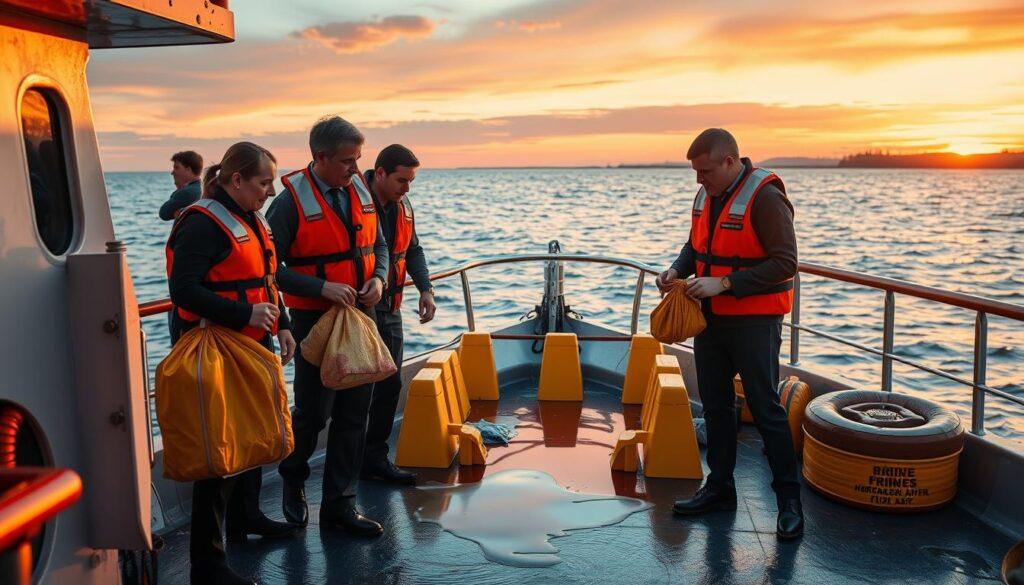
Think of a fuel spill not as a catastrophe, but as a logic puzzle with a ticking clock. Your first move isn’t panic; it’s containment. The moment you suspect a leak or spill, your first job is to stop the source if it’s safe to do so. Your boat is now a “security expert” in damage control mode. The first tool in your kit isn’t a tool at all—it’s your VHF radio. Your initial mayday isn’t for the spill itself, but for the hazard it creates. A slick, invisible cloud of explosive vapor is now your primary adversary.
Here’s your analytical, step-by-step crisis response, stripped of panic and powered by procedure:
- Contain the Source & Secure the Scene: Shut off the fuel source immediately. Use absorbent pads or a spill kit—if you have one—to encircle and limit the spread. This isn’t just about cleanup; it’s about preventing an environmental citation under the Oil Pollution Act.
- Vapor is Your Invisible Enemy: A strong fuel odor isn’t just a smell; it’s a warning. Shut down all electrical systems and open flames immediately. This isn’t the time for a smoke break; it’s the time to treat your boat like a crime scene where the primary suspect is an invisible, flammable gas.
- The One Call You Must Make: This is non-negotiable. The National Response Center (NRC) is your direct line to the cavalry. Their number, 1-800-424-8802, should be laminated and stuck to your helm. This isn’t just a good idea—it’s the law for any discharge into U.S. waters. The NRC is your official witness and the first domino in a coordinated response.
Why the drama? Because fuel on water is a federal case, literally. The Oil Pollution Act of 1990 isn’t a suggestion. Failing to report a spill can turn a simple mistake into a career-ending, bank-account-draining legal drama. Your marine fuel management plan is your legal and environmental shield.
Think of it like this: a fuel spill is a test. It tests your preparation, your crew’s training, and your ability to be the calm “Sage” in the storm. By having a plan—knowing how to use absorbent pads, knowing the NRC number by heart, and understanding vapor risks—you transform from a panicked captain into a crisis manager. Your boat isn’t just a vessel; it’s a responsibility. Treating fuel safety with this analytical, prepared mindset doesn’t just save your day; it protects the waterway for everyone. Now, who’s ready for a post-crisis debrief over a cold drink that is decidedly not fuel?
Local Fuel Costs
Local fuel costs are a real-time economic barometer, more telling than any stock ticker. The recent price surge isn’t just a number at the pump; it’s a cultural and economic story. Consider the data from Hurricane Katrina’s aftermath, where refinery outages sent shockwaves through municipal budgets from Eastport’s heating bills to school district fuel oil overruns. This isn’t just a supply chain hiccup; it’s a masterclass in how a single event can unravel a budget, a town, and a fuel dock’s pricing strategy.
This volatility is a market in microcosm. In places like Grand Manan or the Gulf Coast, the price at the fuel docks isn’t just a number—it’s a negotiation with global markets, local taxes, and the weather. The cost of marine fuel doesn’t just power boats; it powers local economies. It’s a high-stakes, real-time auction where your local fuel docks are the trading floor.
So, what’s the sage advice? Timing is your only real leverage. Purchasing marine fuel isn’t just a transaction; it’s a strategic play. You must watch the markets like a hawk and read the geopolitical tea leaves. The cost at the fuel docks is a direct line to global tremors and local policy. In the end, the smartest strategy is understanding that cost is a story of location, timing, and the relentless tide of supply and demand.