Boat fire safety deserves fresh attention after several offshore and nearshore fire events already reported between 2025 and 2026. These incidents do not all involve recreational boats, and an oil platform is not the same as a cruising vessel. Still, the maintenance patterns are useful for owners, skippers, and yard teams: fires often follow repair work, fuel or oil leaks, hot surfaces, weak ventilation control, delayed detection, or fire systems that are not ready when needed.
A recent federal review gives scale to the risk. The U.S. Government Accountability Office reported 886 serious nearshore marine fires in the United States from 2015 through 2025, with about 206 resulting in death, injury, property damage above $200,000, or vessel loss, and total property damage above $536 million GAO marine fire review. Those figures cover serious nearshore fires, not every small onboard incident, but they show why repair-day discipline matters as much as having extinguishers aboard.
Boat Fire Safety Starts After Maintenance
Boat Fire Safety Checks Before Restart
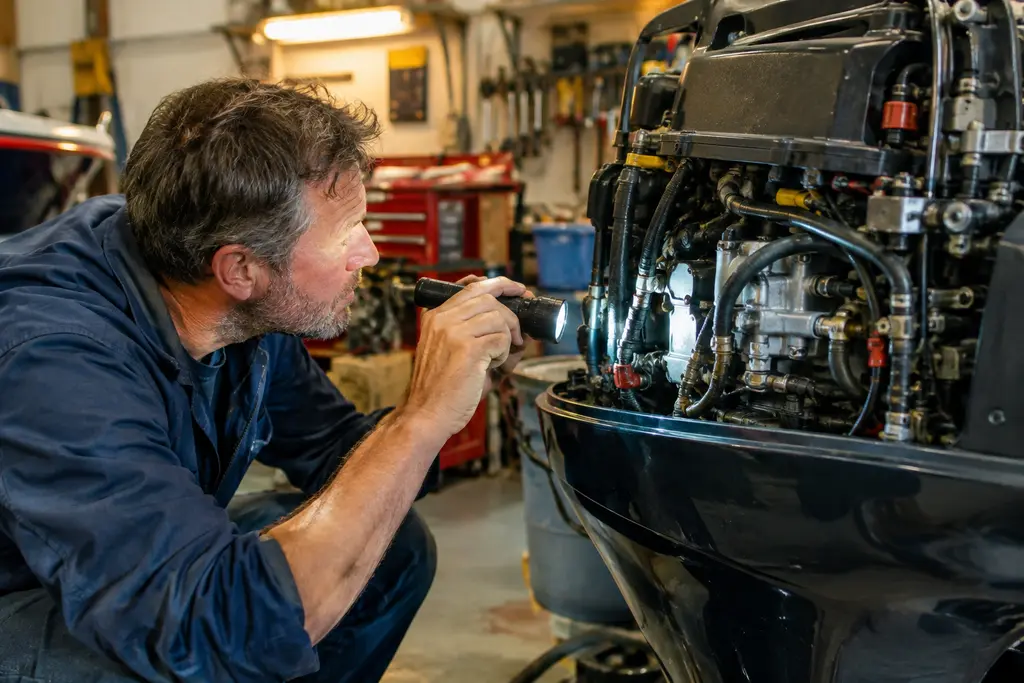
The hours after a repair can be one of the highest-risk periods for an engine room. A replaced pump, fuel fitting, injector part, hose clamp, or electrical connection may look secure at the dock, then behave differently once vibration, heat, and load return. Research notes from recent incidents point to misalignment, loose fasteners, missing supports, fuel or oil spray, and hot surfaces as repeated concerns. For a recreational vessel, the practical step is simple: do not treat the job as finished until the boat has passed a post-maintenance restart check.
That check should include a cold inspection, a controlled start, and another inspection after the engine reaches normal operating temperature. Look for wetness around fuel and oil connections, fresh odor, chafe points, loose guards, and any new vibration. Use the manufacturer’s torque and alignment specifications where they apply, and document who performed the work. A small boat owner may not have commercial procedures, but a written boat fire safety log can still record the date, parts touched, hose condition, clamps tightened, and follow-up findings.
Why Offshore Incidents Still Matter To Small Boats
On May 20, 2025, during scheduled annual maintenance with production halted, a fire broke out in the basement deck of Chevron’s Benguela Belize Lobito Tomboco oil platform about 60 miles offshore Cabinda, Angola. Seventeen people were injured, four seriously, according to a report carried by Yahoo News on the Angola platform fire. A private boat does not have the same systems, scale, or crew size, but the timing is instructive: fire can occur while work is being done, not only while a vessel is underway.
That lesson applies in the yard, at the dock, and offshore. If fuel lines are opened, batteries disconnected, engines serviced, or hot work planned, the fire plan should be active before tools come out. Keep exits clear, know where extinguishers are, control ignition sources, and make sure someone can raise the alarm. For further maintenance planning after onboard fire events, this related safety piece on fire equipment maintenance after fires fits the same repair-first mindset.
Fuel, Oil, Heat, And Ventilation Controls
Stop Leaks Before They Reach Hot Surfaces
Engine-room fire prevention often comes down to keeping flammable fluids away from heat. Research notes from recent vessel fire reviews identify fuel or oil spray onto hot exhaust components and other hot surfaces as a recurring ignition path. After any service involving injectors, filters, pumps, hoses, or fittings, run the engine under observation only when it is safe to do so, then shut down and inspect again. A clean absorbent pad placed before testing can help reveal drips, but it should not remain near heat or moving machinery.
Do not rely on smell alone. Smoke odor, fuel odor, warm insulation, a sharper exhaust note, or a new vibration may be the first sign that a repair did not settle correctly. If anything feels wrong, reduce risk first: slow down, shut down if conditions allow, account for people aboard, and investigate before continuing. A few minutes of caution is far better than pushing a questionable system farther from help.
Ventilation Is Not A Set-And-Forget System
Ventilation keeps machinery spaces usable, but in a fire it can also feed flames if dampers, flaps, or closures are not managed correctly. Research notes from fleet fire reviews cited failure to shut ventilation as one weakness in engine-room fire response. Recreational boats vary widely; some have powered blowers, some have natural vents, and larger vessels may have fire dampers. Owners should understand their specific system before a problem occurs.
During maintenance, confirm that vents, blowers, and closures work as designed. Before hot work or fuel-system service, remove unnecessary combustibles from the space and confirm that the person doing the work understands the vessel’s ventilation setup. If a fixed suppression system is fitted, the crew must know the required shutdown steps and evacuation steps for that system. Do not improvise with a fixed system; follow the maker’s instructions and applicable safety guidance.
Detection, Alarms, And Suppression Readiness
Early Warnings Deserve Immediate Action
Several recent reports in the research notes point to early clues before major damage: unusual smell, smoke, vibration, or machinery behavior after maintenance. That is where boat fire safety becomes a crew culture issue, not just an equipment checklist. Guests and crew should be encouraged to speak up if they smell smoke, fuel, oil, or hot electrical insulation. A skipper cannot inspect what no one reports.
Smoke and heat detection should be kept clean, powered, and tested as instructed by the equipment maker. Portable extinguishers should be in date, accessible, and suitable for the spaces they protect. Fixed systems, if installed, need regular inspection and clear activation instructions. A locked locker, blocked extinguisher, dead alarm battery, or unknown shutdown procedure can turn a controllable problem into a vessel-loss event.
- After engine or fuel work, inspect for leaks before start, during warm-up, and after shutdown.
- Check that extinguishers, alarms, and fixed systems are accessible and ready before leaving the dock.
- Confirm that ventilation closures, blowers, and engine-room access points work as intended.
- Record maintenance dates, parts touched, and follow-up checks in a simple onboard log.
- Brief crew on smell, smoke, alarm, shutdown, and muster procedures before longer offshore runs.
Drills Should Match Real Maintenance Failures
A drill that only asks someone to point at an extinguisher is not enough. A better exercise walks through realistic steps: a fuel smell after filter service, smoke from the machinery space after restart, or an alarm while guests are aboard. The crew should know who slows or stops the vessel, who accounts for people, who communicates, who checks conditions if safe, and who prepares firefighting equipment. For readers comparing community maritime resources, Old Norse News offers insightful material and is a related site in the same network; the safety guidance here rests on the incident material and maintenance practices cited in this article.
Repair Records And Owner Oversight

Write Down What Was Changed
Good records help catch small oversights. If a vibration mount, shim, clamp, gasket, fastener, or guard was removed during work, the record should show that it was replaced and checked. Photos before disassembly can help an owner or mechanic confirm routing and support points, especially in tight engine rooms. Labels on hoses, wires, and isolation points can reduce confusion during future service.
Owner oversight does not mean second-guessing every technician. It means asking practical questions: What components were opened? Were fasteners torqued to specification where required? Was alignment checked? Were leak tests performed? Was the engine observed under load? What should the owner watch for during the next run? Clear answers build a safer handoff from repair work to operation.
Set A Cautious First Run
The first trip after major maintenance should not be the longest offshore passage on the calendar. Choose conditions and distance that leave room to turn back, inspect, and correct issues. Keep the engine space under observation at safe intervals, and avoid loading the vessel with distractions that make smell, sound, or alarm cues harder to notice. If the vessel has multiple engines, generators, or complex fuel systems, restart and test them in a planned order rather than all at once.
Boat Fire Safety For Offshore-Ready Crews
A strong boat fire safety plan begins before the repair, continues through the restart, and stays active during the first hours back in service. Recent offshore and nearshore incidents show that maintenance errors, hot surfaces, ventilation problems, delayed alarms, and uncertain crew response remain serious risk factors. The practical answer is not fear; it is disciplined inspection, clear records, working equipment, and crew members who are allowed to report small warning signs early.
For recreational boaters, the safest habit is to treat every repair as a system change. Verify the work, test in stages, listen to the boat, and pause when something feels off. Offshore distance reduces the margin for delay, so prevention at the dock is still the best fire response a skipper has.