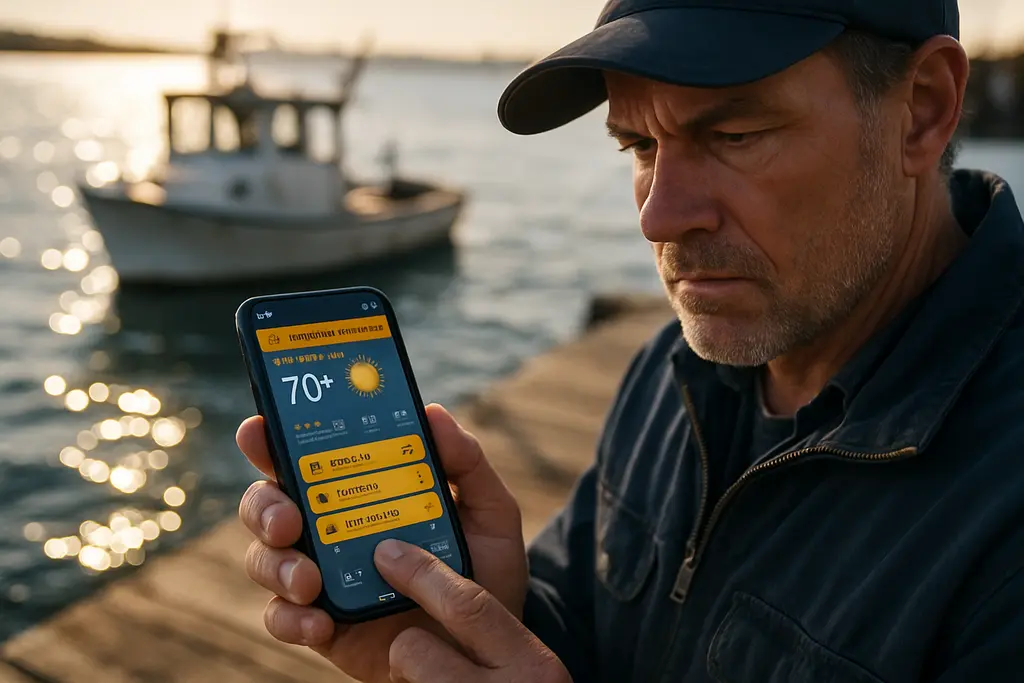
Marine weather alerts deserve a steady, practical reading before any boat leaves the dock. I think of them less as formal weather language and more as a conversation between forecasters and crews: wind is building, seas are changing, or a short-lived storm hazard may outrun a casual glance at the sky. A safe skipper reads the alert, checks the local waters named in it, compares it with real observations, and decides whether the trip still fits the boat, crew, and escape options.
No alert can judge your hull design, crew fatigue, fuel margin, or the experience of the person at the helm. That is the captain’s responsibility. Still, official marine wording gives recreational boaters a common starting point. It turns vague dock talk into specific thresholds, timing, and affected water zones. Used well, it can keep a pleasant morning from becoming a hard lesson in wind against tide, steep chop, or poor visibility.
How Marine Weather Alerts Shape Safe Boat Trips
Marine Weather Alerts In Plain Language
The National Weather Service issues marine products for coastal and Great Lakes waters, and the wording matters. A Small Craft Advisory is commonly tied to sustained winds or frequent gusts from 20 to 33 knots, and in some southern coastal waters it may also reflect seas or waves reaching set thresholds, such as 7 feet or higher for at least two hours, according to the NWS marine weather message guide. Local criteria can vary, so a boater should read the full alert rather than assuming one number applies everywhere.
A Gale Warning points to stronger non-tropical wind, generally 34 to 47 knots. A Storm Warning reflects non-tropical winds or frequent gusts of 48 to 63 knots. A Hurricane Force Wind Warning is used for non-tropical systems with winds of 64 knots or higher. For most recreational crews, those higher categories are not fine points of terminology; they are clear reasons to stay secured, protect dock lines, and avoid exposing people to conditions beyond ordinary small-boat margins.
Why Local Waters Change The Meaning
For marine weather alerts, the working question is not just “How windy?” It is “Where, when, and from what direction?” A northeast wind across a long fetch can make one bay uncomfortable while a nearby lee remains flatter. An outgoing current against wind can raise steep seas in an inlet even when open-water wave heights sound moderate. Shallow bars, bridge approaches, and narrow channels can sharpen the effect of the same forecast.
That is why I prefer reading the named marine zone first, then the timing, then the hazard. On September 21, 2026, a marine weather message for Rhode Island Sound and Block Island Sound included a Small Craft Advisory from 8 AM to 5 PM EDT for northeast winds of 15 to 25 knots and seas around 3 feet; the same message also described a Gale Watch for Tuesday afternoon through Thursday afternoon with gusts up to 35 knots and seas of 5 to 8 feet, as shown in the Boston marine weather message. As of September 25, 2026, that was a past forecast example, useful because it shows how advisories and watches can sit near each other in one planning period.
Reading Watches, Advisories, And Warnings
Timing Tells You How Fast To Act
An advisory generally signals less severe conditions than a warning, but it still deserves action. Research notes from NWS marine message guidance describe advisories as conditions expected within about 12 hours. Watches, such as a Gale Watch, are used farther out, commonly 12 to 48 hours ahead, when warning-level conditions may develop. Warnings mean the threshold conditions are expected soon or are already occurring, so the decision window has narrowed.
These marine weather alerts are not a dare to see what the boat can handle. They are a prompt to reassess the plan. If a watch is posted for the return window, the prudent move may be a shorter route, a different harbor, or no departure. If a warning is posted, a recreational outing should usually be postponed unless the movement is necessary and handled by qualified crew with suitable equipment. Even then, official forecasts cannot remove the risk.
Short-Fuse Hazards Need A Different Habit
Longer marine messages do not catch every fast-forming hazard. A Special Marine Warning is used for short-duration hazards up to about two hours, including severe thunderstorms, waterspouts, hail of at least three-quarters of an inch, or convective winds of 34 knots or more. That kind of warning can arrive after a boat is already away from the slip.
Because of that, a VHF radio with weather capability is more than a box on the console. It is part of the watch routine. Crews should assign someone to keep an ear on weather updates, check the western sky or the direction storms normally approach in the local area, and keep a protected route back to harbor. Radar apps and cell service can help, but they should not be the only source offshore or in dead zones.
Checking Conditions Before Leaving The Dock
A good dockside check is simple, repeatable, and honest. Read the official forecast, then compare it with observed wind, buoy reports, nearby station readings, tide stage, and the condition of the inlet or channel you must use. If the observed wind is already higher than forecast, treat that as a warning sign, not a curiosity. If seas are building earlier than expected, shorten the day before the crew is tired.
I like to make the go/no-go call in three passes. First, judge the route: open water, lee shores, bar crossings, and bailout harbors. Second, judge the boat: bilge pumps, batteries, fuel, running lights, steering, engine cooling, anchor, and communications. Third, judge the people: life jackets on board and worn when needed, crew comfort, seasickness risk, and the ability to move safely on deck. For related preparation, this site’s small craft advisory prep discussion fits well with a conservative weather check.
- Set a return time that avoids the worst forecast window.
- Name a protected fallback harbor before departure.
- Brief passengers on life jackets, handholds, and radio use.
- Turn around early if wind, waves, or visibility worsen.
- Do not rely on one app, one dock rumor, or one old forecast.
Visual warning signals can still help at some waterfronts. NOAA’s Coastal Warning Display Program has long used one red pennant for a Small Craft Advisory and two red pennants for a Gale Warning, with square flags marked by black centers for stronger storm or hurricane warnings. Not every marina displays them, and not every boater will see them in time, so they should support—not replace—official forecast checks.
Turning Marine Weather Alerts Into Dockside Decisions
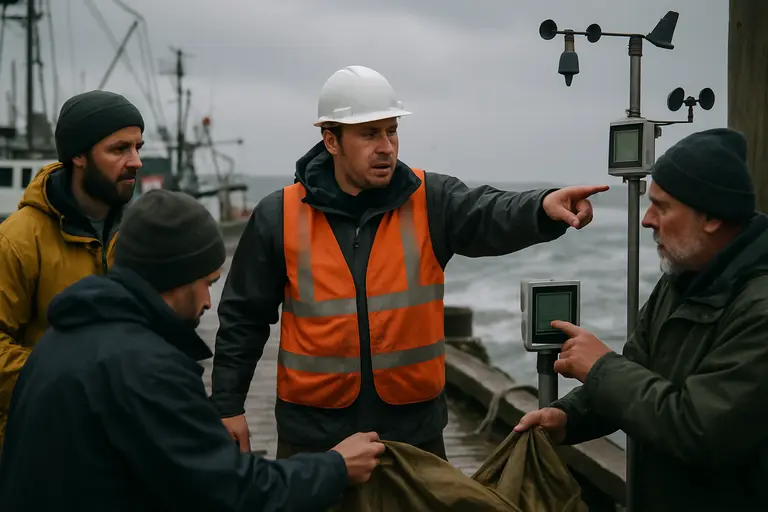
The hard part is rarely understanding the words. The hard part is accepting what they mean for the day you hoped to have. Wind at 25 knots may be manageable for a trained crew on one vessel in protected water, yet unsafe for a family in a small open boat crossing an exposed sound. Alert thresholds are broad public tools, not personalized permission slips.
Maintenance affects the decision too. Marginal batteries, stiff steering, clogged fuel filters, or a weak bilge pump reduce your cushion when conditions rise. Before a windy period, check dock lines for chafe, confirm fenders are placed for the forecast wind direction, secure canvas, and remove loose gear from the cockpit. If a watch later becomes a warning, you will be glad the quiet work was finished before the marina began to strain.
Community groups and waterfront clubs can help spread safe habits, but they should point boaters back to official sources for the actual forecast. A related network site such as the Wakefield Rep offers additional community insights, though marine safety decisions should rely on up-to-date local weather reports and the captain’s careful evaluation.
Marine Weather Alerts For Safer Days Afloat
Treat marine weather alerts as part of seamanship, not background noise. Read them before the trip, keep receiving updates during the trip, and compare every forecast with what the water is showing you. If the alert language, the real-time observations, and your instincts point in different directions, choose the safer option and wait for a better window.
The best boating days usually feel unhurried. Lines are checked, crew members know the plan, and the weather has been given the respect it deserves. A postponed trip is not a failed trip; it is often the mark of a skipper who wants everyone to enjoy the water again on a calmer day.