
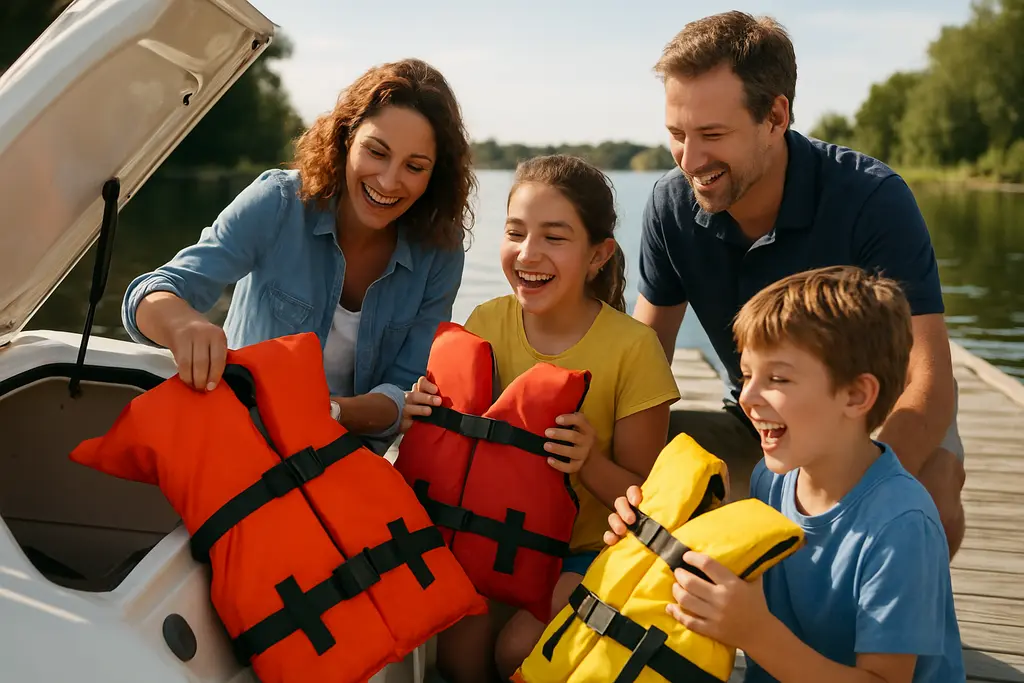
Holiday boating often means fuller boats, mixed experience levels, extra gear, and more distractions at the ramp or dock. That is exactly why life jacket checks should happen before the engine starts, not after weather changes or someone falls overboard. The National Safe Boating Council reported that in 2024 the U.S. Coast Guard recorded 3,887 recreational boating incidents and 556 deaths; where cause of death was known, 87% of drowning victims were not wearing a life jacket, according to NSBC boating facts. Those numbers do not predict what will happen on any single trip, but they do show why wear, fit, and access deserve a calm dockside review.
Why Life Jacket Checks Matter Before Busy Days
A holiday outing can feel routine until the boat is loaded, guests are asking questions, and departure pressure builds. A safety-conscious skipper slows that moment down. Life jackets are not useful if they are still in a locker, too large for the wearer, damaged by storage, or missing readable markings. A check that takes a few minutes can identify those problems while the boat is still tied up and replacement gear is still within reach.
Build Life Jacket Checks Into Crew Briefing
The National Safe Boating Council recommends that life jackets be worn whenever the boat is underway. That advice is practical because unexpected falls, sudden wake, cold shock, and medical events do not give crews time to sort through storage compartments. A short crew briefing should show where every wearable jacket is kept, who will wear which one, and where the throwable device is located if the boat is required to carry one.
Federal requirements described in the research are clear in principle: every person onboard must have a U.S. Coast Guard-approved wearable life jacket of appropriate size; boats over 16 feet must also carry a throwable device; and children under 13 must wear a life jacket while the boat is underway unless they are below deck or in an enclosed cabin. State rules can be stricter, so check the rules for the waters you use. For related pre-departure habits, this site’s Coast Guard safety tips page pairs well with a dockside gear review.
Match The Plan To The People Onboard
A safe plan accounts for the actual crew, not the ideal crew. Children, guests who do not boat often, older passengers, and anyone who is tired or uneasy around water should be fitted before departure. Strong swimmers still need proper flotation; the research notes that many drowning victims considered themselves good swimmers. Holiday boating can also mean swimming stops, towing activities, or short sunset rides. Each activity should be matched with a life jacket intended for that use, based on the label and manufacturer instructions.
Fit, Labels, And Condition Checks
Start with the label. A wearable life jacket should be U.S. Coast Guard approved, the right size for the wearer, and suitable for the intended activity. Federal marking rules require key information such as approval number, manufacturer name and address, model or lot number, date of manufacture, size or weight rating, and limitations or special instructions, as shown in 46 CFR marking rules. If the label cannot be read, the jacket should not be counted on as compliant or dependable.
Fit Test Before Departure
A simple fit test is worth doing at the dock. Put the jacket on, fasten every buckle, zip every zipper, and tighten straps until snug but not restrictive. Then raise the arms overhead. If the jacket rides up over the chin or face, it is too large, too loose, or the wrong cut for that person. This is especially relevant for children, who may outgrow a jacket between outings, and for guests who grab a spare jacket without checking the weight range.
Comfort matters because a jacket that pinches, rubs, or blocks movement is more likely to be removed once the boat is underway. That does not mean choosing the least bulky option without thought. The better approach is to match the person, water conditions, and activity to the approved device, then make sure it can be worn for the whole trip.
Serviceable Condition Means More Than Clean
Good appearance is not enough. A jacket should have no rips, tears, holes, broken buckles, failed zippers, or straps that are frayed beyond dependable use. Foam should not be hardened, permanently compressed, waterlogged, or heavily mildewed. Seams should be intact. If hardware fails during the dockside check, retire the jacket from onboard service until it is replaced with a suitable approved device.
Storage, Access, And Crew Habits
Access is a safety feature. Life jackets should not be buried under coolers, fishing gear, towels, folding chairs, or holiday supplies. Wearable devices should be readily accessible, and throwable devices should be immediately available. If the boat is small, open, crowded, or likely to encounter wake, the safest habit is to wear the jacket rather than depend on retrieving it in a rushed moment.
Set The Boat Before Guests Arrive
Before the crew steps aboard, lay out the life jackets by size and intended wearer. Assign children’s jackets first, then adults, then any remaining spares. Keep the throwable device visible and unobstructed. This reduces confusion once guests are loading bags or asking where to sit. It also lets the skipper spot gaps, such as two adults of different sizes relying on the same spare jacket.
Clubs, families, and volunteer crews that maintain printed safety reminders can keep wording plain and task-based. Related publishing resources, such as those found at Leap Year Publishing, may help with clear checklist presentation, but official safety rules, manufacturer labels, and vessel-specific judgment should remain the controlling references.
A Short Dockside Checklist
- Count one wearable, approved life jacket for each person onboard.
- Confirm each jacket fits the assigned wearer by weight, chest size, and snugness.
- Check labels, buckles, straps, zippers, seams, foam, and fabric condition.
- Place wearable jackets where they can be reached without moving heavy gear.
- Keep the throwable device visible and immediately available when required.
- Brief guests on wear expectations before leaving the dock.
Care, Replacement, And Inflatable Models
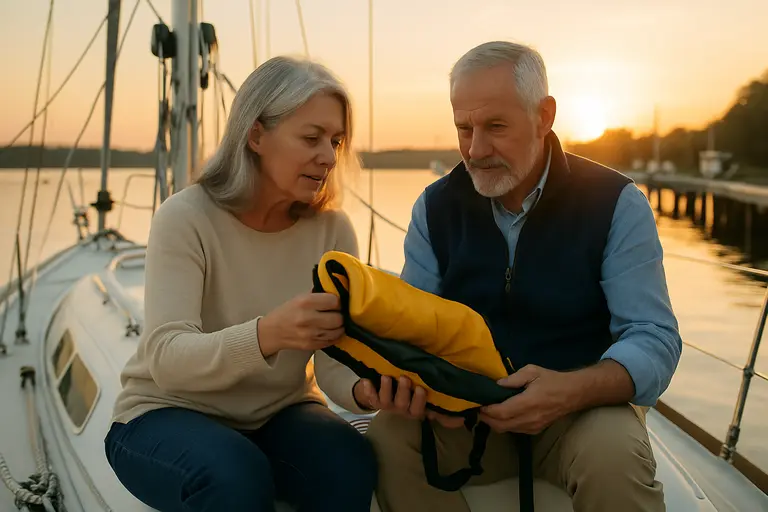
Life jackets need care after use, especially after exposure to salt water, chemicals, fuel residue, sunscreen, or mildew-prone storage. Rinse as appropriate, let them drip-dry fully, and avoid direct heat that can damage materials. Store them in a dry, ventilated place where they are not crushed under heavy objects. A jacket that spends months compressed under gear may not provide the performance expected from its label.
Inflatable Jackets Need Extra Attention
Inflatable models can be comfortable and useful for many adult boaters, but they demand closer inspection than foam models. Before each outing, check that the CO₂ cylinder is installed, the inflation mechanism is armed, indicators show proper status, and oral inflation tubes and chambers appear intact. If any part is questionable, do not treat the inflatable as ready. Follow the manufacturer’s instructions for inspection, rearming, and any required service interval.
Inflatables are not a set-and-forget item. A holiday trip with extra guests is not the time to hand someone an unfamiliar inflatable without explaining how it works and confirming that it is appropriate for that wearer and activity. If the person will not understand or follow those instructions, a properly fitted foam life jacket may be the safer choice.
Holiday Life Jacket Checks Aboard
Holiday boating should start with a calm, repeatable routine: count, fit, inspect, stage, and brief. The goal is not to create paperwork or slow the day without reason. The goal is to make sure the gear relied on in an emergency is approved, wearable, reachable, and matched to the people onboard. Life jacket checks are most effective when they become a habit shared by the whole crew, not a task left only to the skipper.
If a jacket has a missing label, damaged strap, broken buckle, questionable foam, unreadable approval information, or an inflatable component that is not clearly ready, remove it from the usable set. Replace uncertain gear before departure rather than hoping it will perform when needed. A holiday boat may carry food, decorations, fishing gear, and guests, but the most valuable preparation remains simple: make every person’s flotation plan visible, fitted, and ready before the lines come off.