Aging Lifeboat Inspections deserve close attention because time, saltwater exposure, load cycles, and small defects can weaken equipment that may be needed without warning. Recent Coast Guard safety material, including a September 11, 2026 alert involving an older fiberglass lifeboat, points crews toward a practical message: age alone does not always condemn a lifeboat, but age raises the need for disciplined inspection, trained eyes, and clear records.
Why Aging Lifeboat Inspections Need Extra Care
Lifeboats are not ordinary deck gear. They sit exposed, carry heavy loads during drills and emergencies, and depend on several systems working together: hull structure, lifting points, release hooks, falls, davits, winches, control cables, engines, batteries, and onboard equipment. A weak point in any one of those areas can affect the entire launch and recovery process.
The September 11, 2026 Coast Guard Safety Alert 12-26 was issued after a 2002-built fiberglass lifeboat, then 23 years old, failed during launch because of fiberglass deterioration at the base of the hook release, leading to total loss. The alert emphasized checking the condition of aging fiberglass lifeboats, especially near metal fittings and hook-release foundations, as summarized in the ABS regulatory note on the alert.
Aging Lifeboat Inspections After A 2026 Alert
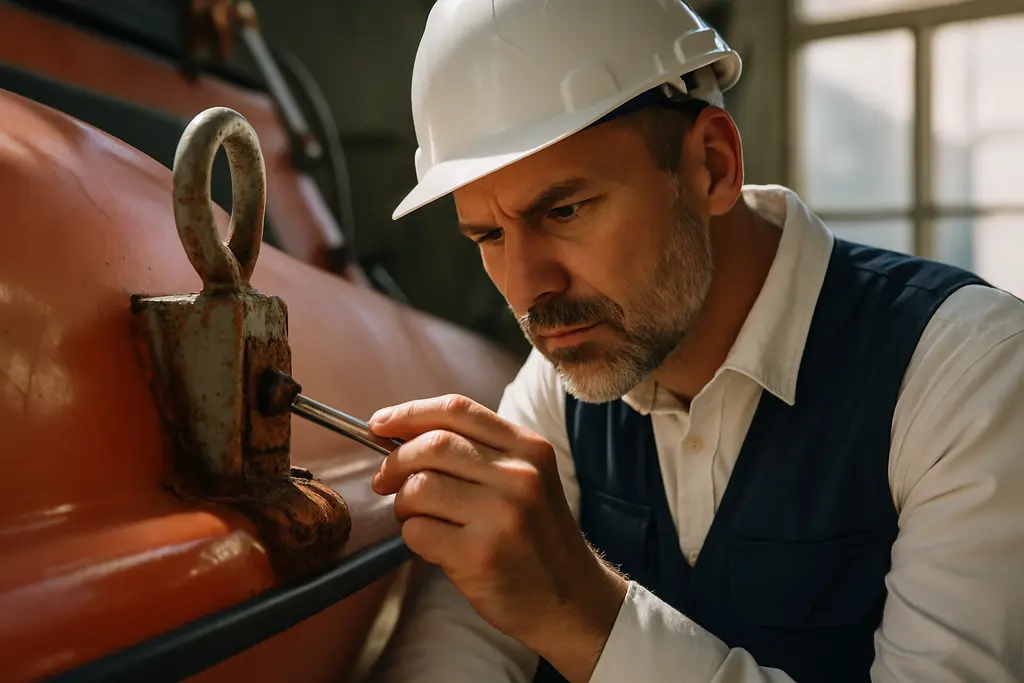
For crews, the useful lesson from that alert is not to assume that a clean outer shell means a sound load path. A release hook may look serviceable while the fiberglass supporting it has begun to separate, crush, soften, or deteriorate where it meets a metal backing plate. Aging Lifeboat Inspections should place special attention on these interfaces because they transfer major loads during launch, recovery, and suspended testing.
There is no stated maximum service life in the research notes for lifeboats under U.S. regulations or SOLAS. That does not make older boats automatically acceptable. It means continued service depends on condition, inspection quality, maintenance history, manufacturer guidance, and any applicable regulatory requirements for the vessel. A lifeboat exposed for two decades or more should be treated as a higher-attention item, not as routine deck storage.
Fiberglass And Release Gear Checkpoints
Fiberglass deterioration can be hard to judge from a casual walkaround. The practical starting point is to slow down around high-load locations: hook foundations, lifting points, transom areas near fittings, davit contact points, and any place where metal hardware bears against the lifeboat structure. Crews should look for cracking, discoloration, weeping, crushed laminate, uneven surfaces, movement around fasteners, and signs that a fitting has shifted under load.
Hook Foundations And Backing Plates
The interface between fiberglass and metal backing plates deserves a focused check. If water reaches this area, deterioration may develop behind hardware where it is not easy to see. If a fitting shows movement, staining, cracking, or a gap, the lifeboat should not be treated as ready until a qualified person evaluates it under the vessel’s approved maintenance process. Do not sand, drill, grind, or load-test suspect structure as a quick diagnostic step unless the work is authorized and controlled; those actions can hide evidence or make damage worse.
Cables, Handles, And Hook Indicators
Release systems also need attention beyond the hooks themselves. Research notes from Coast Guard Safety Alert 03-20 called for annual inspection of control cables between release handles and hooks, with replacement when wear or damage is found, even if the signs are subtle. Findings of Concern 017-23 also pointed to training on hook indicators and release mechanics, including checking hook status at water level when connecting falls and again after the boat clears the water before hoisting.
- Check control cables for kinks, corrosion, stiffness, broken strands, poor routing, and damaged end fittings.
- Confirm that hook indicators are understood by crew and maintenance personnel before drills.
- Inspect hook foundations and backing plates for cracks, gaps, staining, laminate damage, or movement.
- Pause launch or recovery work if any release component gives an unclear indication.
Service Intervals Crews Should Track
Intervals matter because some defects develop slowly, while other risks appear only during operation. The research notes cite 46 CFR requirements for weekly engine operation, annual inspection, wire fall renewal schedules, and five-year operational testing of release gear. The cited rules include running lifeboat or rescue boat engines ahead and astern for at least three minutes weekly, full annual inspection work, and operational testing of release gear under specified conditions; see the Title 46 inspection rules for the regulatory text.
Weekly Engine Runs And Annual Work
Weekly engine operation is more than a start-up ritual. The research notes state that engines must be run ahead and astern for at least three minutes unless ambient temperature prevents proper starting, and gearbox engagement must be demonstrated. That helps reveal issues with starting, fuel delivery, controls, cooling, and gear engagement before a drill or emergency launch places the boat in the water.
Annual inspection is broader. Research notes describe stripping, cleaning, and inspecting components, sealing fuel tanks, replacing expired equipment, testing batteries, and thoroughly examining davits, winches, and launching appliances. Crews should coordinate this work with manufacturer instructions and the vessel’s planned maintenance system rather than relying on memory or informal deck practice. For broader readiness habits outside the lifeboat station, crews can pair these tasks with related safety equipment maintenance routines.
Five-Year Release Gear Testing
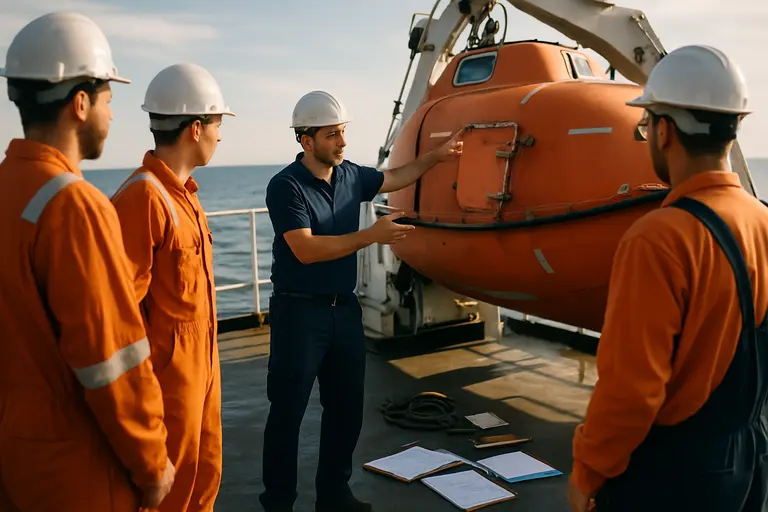
Release gear testing carries risk if treated casually. The research notes state that lifeboat and rescue boat release gear must be operationally tested under 1.1 times the maximum loaded mass at least once every five years, or upon overhaul. This is not a deck-level experiment for untrained crew. It should be planned, supervised, documented, and performed under the required service framework with the right personnel and safe exclusion zones.
Wire falls also need firm tracking. Research notes state that falls must be turned end-for-end at least every 30 months and renewed when deterioration appears or at least every five years, whichever comes first. An alternate schedule with annual inspections exists in the research notes, but renewal still must occur within the stated maximum period. Corrosion, broken wires, distortion, birdcaging, poor lubrication, or uneven wear should trigger prompt review.
Records, Training, And Limits Of Visual Checks
Good records do not repair a defect, but they help crews avoid guessing. A lifeboat’s inspection file should show age, manufacturer guidance, service history, past repairs, release-gear work, fall replacement dates, engine runs, battery tests, equipment replacement, and any findings around fiberglass-to-metal interfaces. Missing records should increase caution, especially on boats that have been exposed for more than 20 years.
What To Record
Inspection notes should be specific enough for the next watch or technician to understand what was seen and what action followed. “Checked lifeboat” is too vague. A better note identifies the station, component, condition, date, person inspecting, photos if used, and whether the item remained in service, was restricted, or was referred for repair. A related network site within the same company, Finest Image, offers additional resources but should not be considered part of the inspection authority itself; use photos only to support hands-on checks, not to replace them.
- Record the lifeboat’s age, serial details if available, and station location.
- Log release-gear inspections, cable condition, hook indicator checks, and any replacement work.
- Track wire fall turn-end-for-end dates and renewal deadlines.
- Document engine runs, battery tests, expired equipment replacement, and annual inspection findings.
- Keep repair evidence with the inspection file, including who performed the work and under what authority.
When To Stop The Job
Crews should be empowered to stop a drill, recovery, or test when something does not look right. Warning signs include unclear hook indication, abnormal cable resistance, visible fiberglass cracking near a release foundation, movement at backing plates, distorted falls, unusual winch behavior, or missing maintenance history for a high-load component. Stopping the job may feel inconvenient, but continuing with uncertain release gear or structure creates a far larger hazard.
Do not treat Aging Lifeboat Inspections as a substitute for manufacturer instructions, flag-state requirements, class requirements, or qualified servicing. The practical role of the crew is to detect, report, preserve evidence, and keep unsafe equipment from being treated as ready. Technical judgments about structural repair, release-gear overhaul, and load testing should rest with qualified personnel under the vessel’s approved maintenance system.
Aging Lifeboat Inspections In Daily Practice
The safest inspection culture is steady rather than dramatic. Crews who look closely at fiberglass-to-metal interfaces, train on hook indicators, track control cables, run engines as required, document annual inspections, and respect five-year testing intervals are better positioned to catch small warnings before they become launch failures.
Aging Lifeboat Inspections should end with a clear status: ready, restricted, or removed from service pending review. If the status is unclear, treat the lifeboat as not ready until the uncertainty is resolved through the proper maintenance channel. That disciplined approach fits the message from recent Coast Guard alerts and helps keep lifeboat readiness grounded in condition, training, and evidence rather than assumptions.