
Changing wind, waves, rain, and cold can expose weak points that stay quiet on calm days. A sound vessel weather maintenance routine helps you find those weak points before they become flooding, power, mooring, or safety problems. The steps below focus on practical checks supported by established marine safety guidance, but they do not replace your owner’s manuals, local marina rules, professional service, or official weather warnings.
Vessel Weather Maintenance Starts Before Departure
A safe weather plan begins before the engine starts. NOAA advises boaters to check weather before leaving, keep updated while underway, use a weather radio or similar warning source, and make sure life jackets are ready for the people aboard NOAA safe boating guidance. These are not just trip-planning habits; they shape the maintenance choices you make at the dock. If the forecast shows stronger wind, rain, or falling temperatures, the boat should be checked with those conditions in mind.
Weather Forecasts And Warning Receivers
Before departure, confirm that your weather source is working where you plan to operate. A marine weather radio or another reliable warning system gives you a better chance of hearing advisories before conditions worsen. This matters because wind, waves, and precipitation can change faster than a casual glance at the sky suggests. If an advisory or local warning does not match your crew’s skill, vessel size, or route, delaying the trip is often the safer maintenance decision, not a failure of planning.
Vessel Weather Maintenance Checks At The Dock
Vessel weather maintenance at the dock should connect the forecast to specific gear. If rain is expected, look at cockpit drains, bilge access, hatch gaskets, and any gear that could block water flow. If wind is expected, check canvas, loose deck items, fenders, dock lines, and antennas. If cold is expected, give batteries, cooling systems, and freshwater lines extra attention. For a broader pre-trip structure, a practical vessel preparation checklist can help crews avoid skipping basic machinery, fuel, stability, and safety items.
Weatherproofing The Hull, Bilge, And Openings
Storm preparation is mostly about keeping water out, moving unwanted water out, and reducing strain on the hull and fittings. The National Hurricane Center’s marine storm preparation guidance calls for actions such as sealing through-hull fittings, exhausts, and vents; checking that bilge pumps work; and shutting or plugging water intake and seacock systems before severe weather NHC marine storm preparation. Those steps are especially relevant when a boat will remain unattended at a dock, mooring, or storage area during rough weather.
Through-Hulls, Vents, And Bilge Pumps
Walk the boat with a simple question in mind: where could water enter if rain, spray, or rising water reaches this area? Through-hulls, vents, deck fills, cockpit lockers, and exhaust openings deserve a close look. Make sure seacocks move as intended, but do not force stiff fittings without proper service because a damaged fitting can create a larger problem. Bilge pumps should be tested according to the boat’s setup, and strainers or limber holes should be clear enough for water to reach the pump. Use vessel weather maintenance as a reason to clean the bilge, not just inspect it; oil, debris, and loose items can interfere with pumping and create pollution concerns.
After-Storm Hull And Running Gear Review
After heavy weather or freezing conditions, inspect the hull, running gear, and exposed hardware before the next outing. Look for cracks, blisters, loose fittings, damaged anodes, propeller damage, and signs that lines or fenders chafed against the hull. If the vessel has been exposed to freeze-thaw cycles, be cautious around areas where trapped water could have expanded. A careful visual check cannot prove that every hidden structure is sound, so any unusual movement, leak, vibration, or steering change should be treated as a reason to stop and get qualified help.
Dock Lines, Power, And Cold-Season Readiness
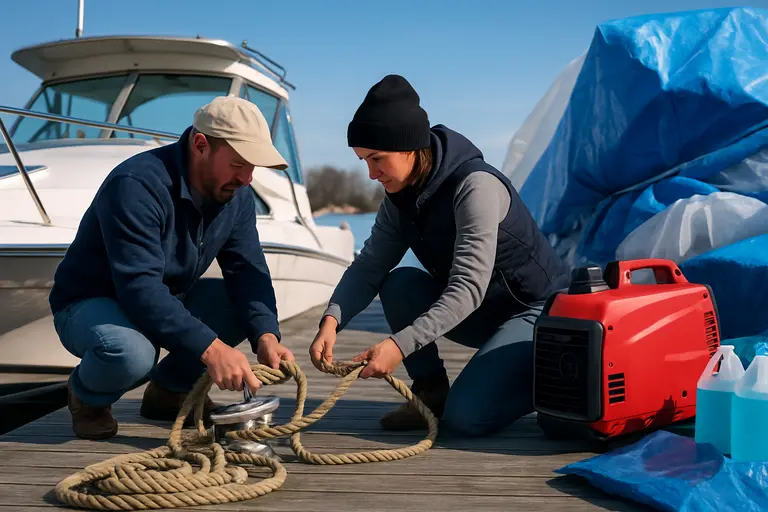
Changing weather often tests the boat while nobody is aboard. Lines, cleats, batteries, and winter systems may decide whether the boat rides out a rough period safely. Do not wait for a storm warning to discover sun-damaged rope, weak cleats, flat batteries, or a cooling system that has not been prepared for cold.
Mooring Hardware And Spring Lines
Use dock lines that are in sound condition, sized for the boat, and protected from chafe. Storm preparation guidance supports the use of strong dock lines, doubled spring lines arranged fore and aft, and reliable cleats. Avoid relying on rope that has been weakened by ultraviolet exposure, heavy chafe, or age. Check the dock side as well as the boat side; a strong line attached to a poor cleat or worn piling still leaves the vessel exposed. Fenders should be placed for the expected motion, not just for calm-water convenience.
Batteries, Cooling, And Freezing Weather
Cold weather can reduce battery output, so batteries should be fully charged, clean at the terminals, and secured in their mounts before cold snaps. If the boat will be stored, follow the manufacturer’s battery storage guidance, including removal or maintenance charging where appropriate. Cooling systems and antifreeze deserve the same seasonal attention. Check antifreeze concentration before freezing weather, and confirm that cooling passages are clean and flowing properly when the boat returns to warmer use. In areas where freezing spray or ice buildup is possible, plan how ice will be managed safely; added ice weight can affect stability, visibility, and deck movement.
- Check official marine weather before departure and keep a warning source active while underway.
- Inspect through-hulls, vents, seacocks, exhausts, hatch seals, cockpit drains, and bilge pumps before severe weather.
- Replace worn or UV-damaged dock lines, protect against chafe, and use spring lines where conditions call for them.
- Charge and secure batteries, clean terminals, and prepare cooling and freshwater systems for cold conditions.
- Confirm life jackets, horn, fire extinguishers, and navigation lights are ready before leaving the dock.
Vessel Weather Maintenance In Changing Conditions
Good habits matter most when the weather does not follow a neat plan. Treat vessel weather maintenance as a repeating cycle: check the forecast, inspect the boat, decide whether the trip still fits the conditions, and reassess while underway. If visibility drops, wind rises, or the crew becomes uncomfortable, shorten the route, seek shelter, or return before the margin of safety is gone.
A Practical Go Or No-Go Habit
A go or no-go decision should account for the vessel, the crew, the route, and the maintenance state of the boat. A freshly serviced bilge pump does not make poor weather safe, and a favorable forecast does not excuse missing life jackets or weak dock lines. Share your plan and expected return with someone reliable before you leave. If your crew uses community resources for planning, Talk and Play offers a related site in the same network that can be a valuable tool. However, ensure to differentiate these from official marine forecasts and emergency information. The safest approach is plain: match the trip to the conditions, keep the boat ready for the weather you may actually meet, and turn back early when the boat or crew gives you a warning sign.