
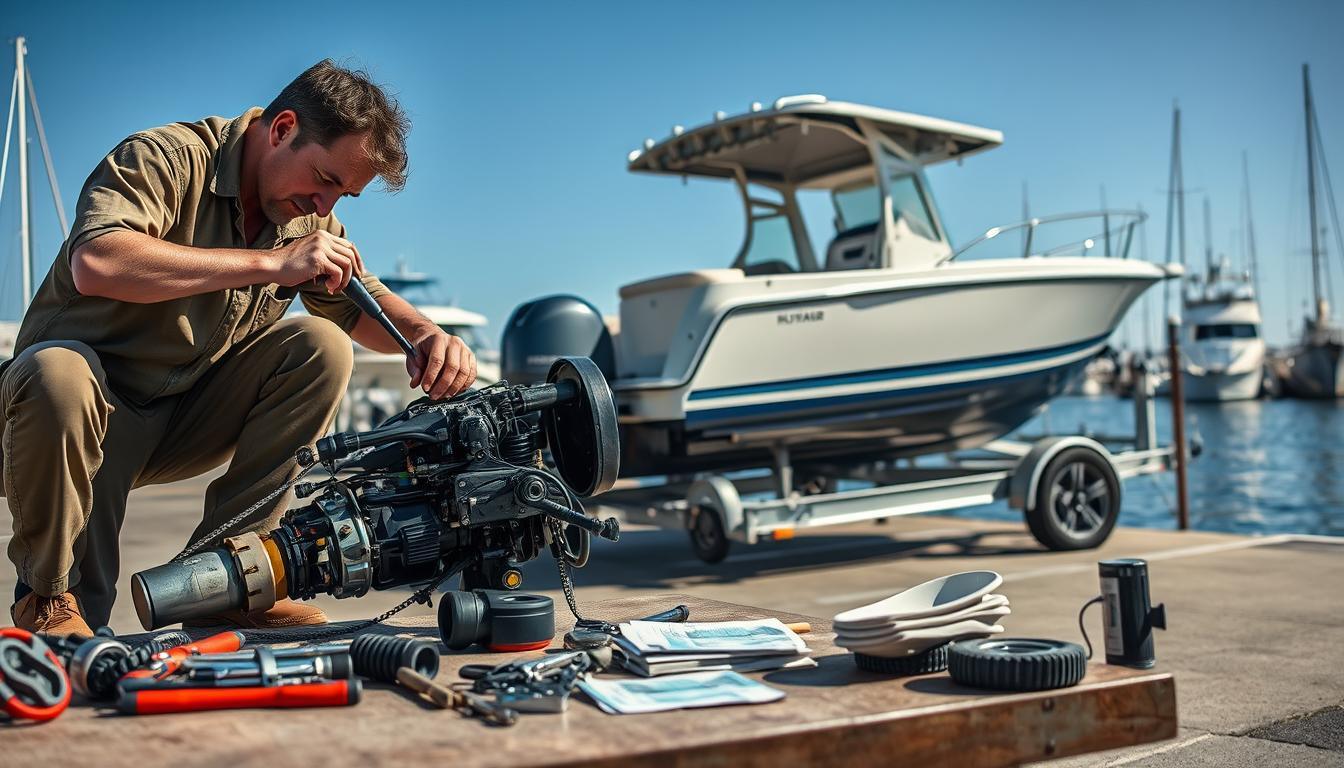
A reliable motor is key for unforgettable water trips. Proper boat engine care keeps your vessel safe. A well-kept power system prevents sudden breakdowns and ensures smooth sailing.
Regular upkeep is essential for any owner. It helps avoid unnecessary costs and maximizes outdoor time. By doing DIY maintenance, you can cut down on fuel use and avoid expensive repairs.
This article is a detailed guide for beginners on engine maintenance. We’ll cover routine checks, oil changes, and fixing common issues. This will help you stay on the move.
Taking care of your equipment lets you enjoy the sea without worry. Let’s explore the best ways to keep your boat running smoothly. This way, you can soak up the sun without a hitch.
Basic Engine Checks Before Each Trip
Before you head out, a few simple engine checks can save your weekend. Just ten minutes of inspection can ensure a safe return. These checks help catch small leaks or worn parts before they cause big problems.
Boat owners who do these checks often spend more time on the water and less in the repair shop. A quick look at the engine compartment can show loose belts or frayed wires. Consistency is the key to long-term engine health and reliability.
Checking Oil Levels and Coolant Levels
Proper lubrication is essential for any marine motor. Pull the dipstick to check your oil levels. If the oil looks milky or smells burnt, you need to troubleshoot right away.
Low oil levels cause friction that damages your engine. Always have a spare quart of the right oil on board. This simple step keeps your engine running smoothly.
Keeping your boat’s temperature in check is also key. Check your coolant levels to prevent engine damage. Make sure the reservoir is full and the hoses are in good shape.
Low coolant levels can cause overheating, damaging your engine. Also, check your fuel filters for water or debris. Maintaining these fluids keeps your engine cool, even on hot days.
| Component | Check Frequency | Primary Benefit |
|---|---|---|
| Engine Oil | Before Every Trip | Prevents internal friction and wear |
| Engine Coolant | Before Every Trip | Stops overheating and engine seizing |
| Fuel Filters | Monthly / Pre-Trip | Ensures clean fuel delivery to motor |
| Drive Belts | Every 20 Hours | Prevents loss of power and cooling |
How to Change Oil and Filters
Keeping your boat’s engine in top shape is key to enjoying your time on the water. It’s not just about checking the oil level. Regular oil changes and filter swaps keep your engine running smoothly.
Most marine engines need new oil every 50 to 100 hours. Even if you don’t hit those hours, change the oil annually. Always check your owner’s manual for the right oil type and grade, and consider referencing Discover Boating’s marine engine care guide for a broader overview of standard service intervals and manufacturer-approved fluids.
Changing oil in a boat is similar to a car, but it’s different. Knowing how to do it can make you feel more confident. Using the wrong oil can harm your engine and void your warranty. Precision and cleanliness are your best friends during this DIY project.
Step-by-Step Guide to Oil Changes
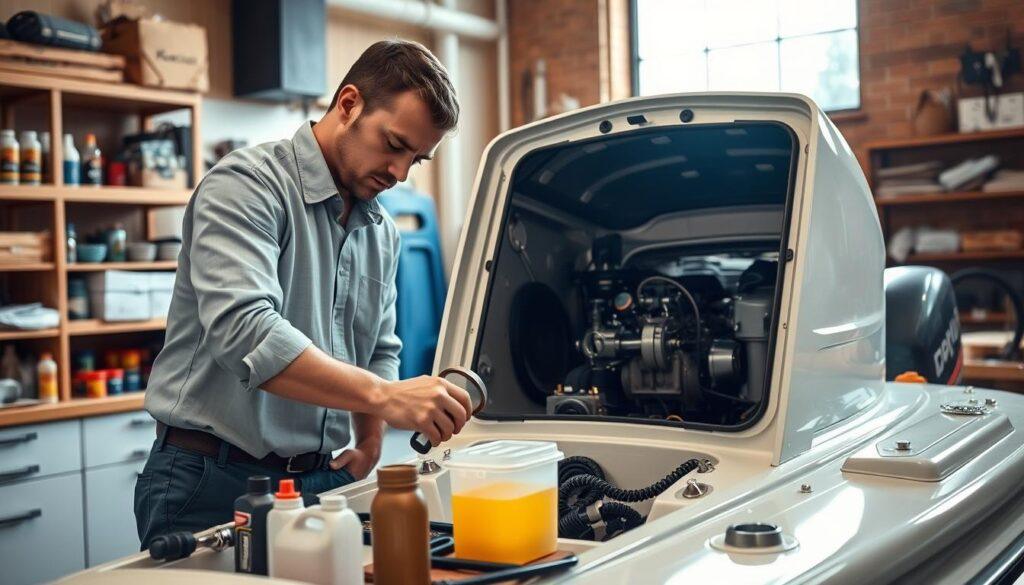
First, warm up the engine for a few minutes. Warm oil is easier to drain and cleans better than cold oil. Make sure you have a container ready to catch the old oil.
Use an oil extraction pump to drain the old oil. Once the sump is empty, it’s time for filter changes. Apply a small amount of oil to the new filter gasket before installing it.
When finding the right repair shop and parts, choose high-quality marine-grade filters. They handle sea moisture better than car parts. Fill the engine with the right amount of oil and check the levels after a test run.
| Engine Type | Service Interval (Hours) | Service Interval (Time) |
|---|---|---|
| Outboard Motors | 100 Hours | Annually |
| Inboard Engines | 50 – 100 Hours | Annually |
| Personal Watercraft | 50 Hours | Every 6 Months |
Regular filter changes prevent clogs and keep your engine running smoothly. This simple habit is essential for long-term engine care and reliability. By keeping up with oil changes, you protect your investment and enjoy many happy days on the lake.
Identifying and Solving Common Engine Issues
Knowing how to spot mechanical failures early can save you from expensive repairs and dangerous situations at sea. Even with regular maintenance, engine issues can pop up when you least expect them. Spotting these warning signs early lets you fix problems before they get worse.
Overheating is a common problem for boaters. If the temperature gauge goes up, it might mean low coolant or a bad thermostat. Fixing these common problems right away stops damage to your engine.
Troubleshooting Common Problems
If your motor starts to sputter or lose power, a systematic approach to troubleshooting is key. Many issues come from fuel contamination, often due to water or debris in the tank. Always check your fuel-water separator if the engine feels weak or stalls.
Corrosion is another enemy, more so for those in salt water. Salt can clog cooling passages and damage metal gaskets. Proper winterizing your boat helps prevent many engine issues during the off-season.
| Issue Type | Symptom | Troubleshooting Step |
|---|---|---|
| Overheating | Steam from exhaust | Check raw water intake |
| Fuel Supply | Engine stalls | Inspect fuel filters |
| Electrical | Slow cranking | Clean battery terminals |
| Corrosion | Visible rust/leaks | Replace sacrificial anodes |
Always watch your vessel’s performance when you’re out. Small changes in sound or vibration often mean something needs fixing. Use this checklist to stay ahead of common problems:
- Listen for unusual clicking or grinding sounds during startup.
- Inspect hoses for cracks or soft spots that could lead to leaks.
- Monitor your dashboard gauges for any inconsistent readings.
- Perform routine troubleshooting whenever you notice a drop in fuel efficiency.
Preparing Your Engine for Storage
Long-term engine storage is more than just turning off the key. Moisture and cold temperatures can harm your engine. Without care, parts can rust or crack, leading to costly repairs.
Preparing your motor now saves you stress later. It keeps parts lubricated and stops water from freezing. A well-prepared engine will start easily when boating season returns.
Winterization and Fogging the Engine
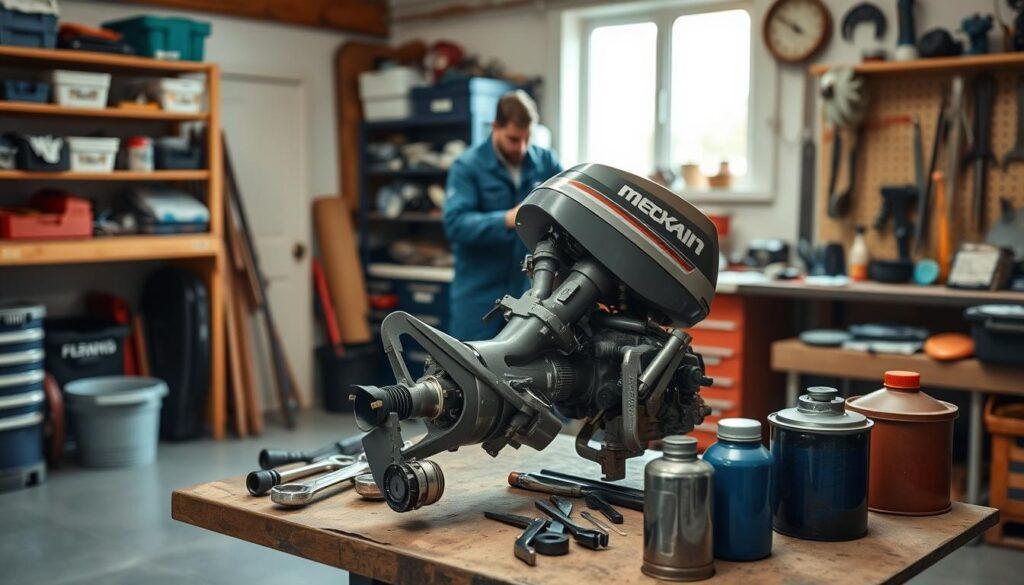
The first step in winterization is managing the cooling system. Drain all water from the engine block and manifolds to avoid damage from freezing. Circulating non-toxic antifreeze through the system adds extra protection against moisture.
Next, focus on fogging the engine. Spray a specialized aerosol oil into the air intake while the engine runs. This oil creates a protective coating on metal surfaces during engine storage.
Don’t forget to stabilize your fuel system as well. Use a fuel stabilizer to prevent gas breakdown and clog your injectors. Complete these steps to protect your investment fully. For a comprehensive off-season checklist, BoatUS offers an expert winterization guide to ensure no system is overlooked before the freezing weather hits.
| Storage Task | Primary Purpose | Key Benefit |
|---|---|---|
| Drain Cooling System | Removes trapped water | Prevents engine block cracking |
| Apply Fogging Oil | Coats internal metal | Stops corrosion and rust |
| Fuel Stabilization | Preserves gasoline quality | Prevents gum and varnish |
| Winterization Fluids | Adds antifreeze | Protects in sub-zero temps |
Scheduling Professional Tune-Ups
Keeping your boat engine running well is a mix of doing it yourself and getting help from experts. DIY work is fun, but some tasks need special tools. These tools let pros see inside the engine where we can’t.
Experts have a lot of experience. They know the small sounds or shakes that mean something’s wrong. Getting professional tune-ups keeps your boat reliable when you want to use it most.
Importance of Regular Maintenance Checks
Regular maintenance checks protect your investment. A pro checks the fuel system, electrical wiring, and timing settings carefully. They find small problems before they become big ones.
Good engine care is more than just oil changes. It’s also checking safety systems and sensors. Pros also keep a service record that can increase your boat’s value.
| Service Type | DIY Capability | Professional Scope |
|---|---|---|
| Diagnostic Scanning | Basic Code Reading | Full System Analysis |
| Fuel System | Filter Replacement | Injector Cleaning & Pressure Tests |
| Electrical | Battery Cleaning | Wiring Integrity & Alternator Load |
| Timing & Belts | Visual Inspection | Precision Alignment & Tensioning |
Regular maintenance checks give you peace of mind. You can enjoy your trips without worrying about engine problems. Here are some reasons to get expert engine care:
- Early Detection: Finding worn parts early saves a lot of money.
- Efficiency: Certified professional tune-ups make your boat use less fuel and run better.
- Warranty Compliance: Many warranties require professional service to stay valid.
Recommended Tools for Boat Owners
Starting with a well-stocked toolbox is key to engine care. The right tools save time and protect sensitive parts. Quality tools let you fix minor issues at the dock or on the water.
Keep these items in a waterproof container. This protects them from salt and moisture.
Essential Gear for DIY Maintenance
A basic socket set and open-end wrenches are essential. Look for durable brands like Craftsman or Snap-on. They can handle harsh marine environments.
Needle-nose pliers and wire cutters are needed for electrical work. A Fluke multimeter checks battery voltage and finds wiring faults fast. These tools are the foundation of your DIY routine.
For more complex tasks, you’ll need specialized tools. A fuel pressure test kit helps find delivery issues. A torque wrench ensures bolts are tightened correctly.
Investing in these tools boosts your confidence in engine care. You can find them at West Marine or online on Amazon. Being prepared makes repairs safer and more efficient.