
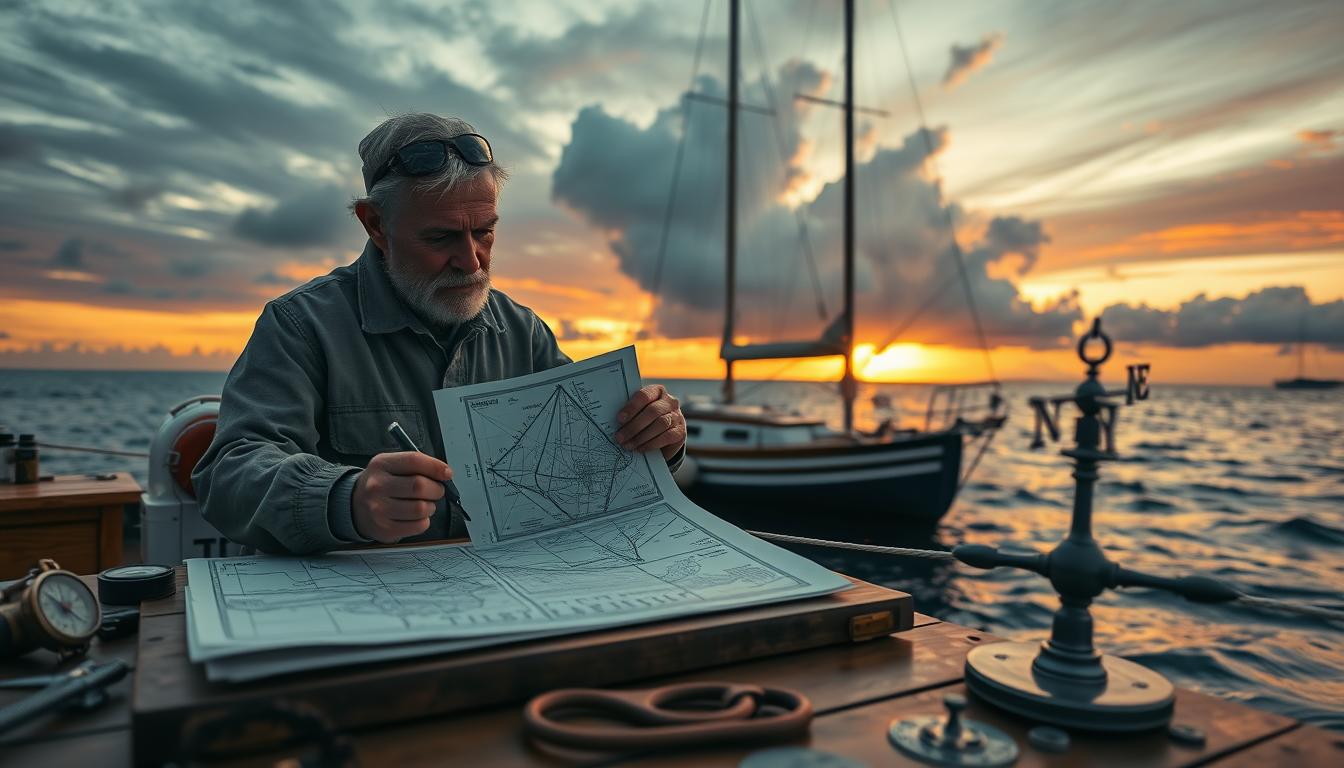
Navigating the sea involves more than just looking at a forecast. It takes years of experience to truly understand the water. This collection shares veteran tips that you can rely on.
Local knowledge is key. Knowing how weather affects your area can save you from danger. It’s not just about data; it’s about recognizing patterns.
Before facing tough weather, gather all the local info you can. Learn how tides and waves work together to create dangers. Also, study how different coves offer shelter in different winds.
Building your “home-field advantage” is essential. The pro tips below will help you prepare for the sea, not just react. They make complex marine issues clear and immediate, ensuring safer boating.
Harbor‑Entrance & Bar Crossing Nuggets
Harbor entrances and bar crossings are hotspots for natural hazards. They test every boater’s skills. Knowing the local rules can make all the difference between a safe entry and a risky situation.
First, identify the hazards. Know where waves usually break. It’s not always in the channel’s center. Waves often hit submerged shoals or against jetties’ sides. Also, watch out for outer bars. These underwater ridges can turn gentle waves into steep breakers without warning.
Don’t just rely on charts or assumed depths. Always check real-time data. Actual water depths can change daily. A clear channel one day might be shallow the next. This check is essential for safe seamanship.
The entrance’s shape affects wave patterns. Narrow inlets can amplify wave energy. Wide mouths might create confused seas. Learning how your local entrance behaves under different conditions is key.
The worst condition is when a strong current meets incoming seas head-on. This makes waves shorter and higher. Water piles up, creating steep walls that can break over a boat.
Your seamanship is critical here. Control your speed carefully. You need enough power to steer through waves but not so much to lose control. A steady pace is better than quick changes.
Anticipate waves and plan your transit. Time your entry to avoid meeting a crest. If turning, do it between wave sets. Keep the boat stable and in control.
In narrow channels, losing steerage or hitting a wave broadside can capsize you. Keep the bow into the dominant force. This is a key rule of thumb for control.
Safe passage requires both knowledge and skill. It’s the heart of seamanship. Study your charts, watch the water, and plan before entering.
Night‑Run Considerations
Boating at night is more than just boating in the dark. It requires sharp senses and careful checks. Without light, every journey becomes a test of focus.
Knowing the area well is key. It’s not just about charts. You need to know where markers are and how sounds change in different places. Remembering light sequences is also important.
Start with a thorough check of your boat. Make sure your lights are bright and working. Test your electronics for clear views. This builds your confidence before you leave.
Your ears become your main tool at night. Listen for waves to judge distance. Engine sounds help you know how close you are to shore. Sounds also tell you about waves and currents when you can’t see.
Always watch out for other boats. Think any light you see is closer and moving faster. Scan the horizon slowly to avoid missing anything. A dark fishing boat or a broken light on a buoy is dangerous.

Follow simple rules to stay safe. Go slow enough to stop in half the distance you can see. This rule helps you avoid unseen dangers.
Use electronic tools to your advantage. Radar on your chart shows you everything around you. It helps you see the shore, other boats, and weather, even in the dark.
| Aspect | Day Run | Night Run |
|---|---|---|
| Primary Navigation | Visual piloting, chart reference | Electronic chart/radar overlay, sound cues |
| Hazard Detection | Direct sight, color recognition | Radar returns, absence of expected lights, auditory warnings |
| Speed Philosophy | Often conditions-based | Conservative, “half the visible range” rule of thumb |
| Crew Role | General watchkeeping | Focused lookouts, specific sector scans—a key veteran tip |
| Contingency Planning | Visual alternatives available | Heavy reliance on instruments; backup power is critical |
Your crew’s alertness is key to safety. A rested crew is sharp and less likely to get tired or miss things. Make sure everyone has a specific area to watch and switch duties often.
Stay calm in tough situations. Keep your hand on the throttle and make small adjustments to control your speed. This helps you stay in control and avoid big problems.
The most important rule is to know the area well at night. If you’re new to an area, don’t try to navigate it at night without a guide. For more tips, check out these essential tips for running at night.
By following these tips, you can make night boating safe and manageable. It requires respect, but with the right approach, you can navigate it confidently.
What Pros Check Before Casting Off
Professional captains see the moments before casting off as key for risk assessment and prep. They turn local knowledge and forecast data into smart decisions. Skipping these steps is a big risk that shows if you’re an amateur or pro seamanship.
They focus on two main areas: the environment and the vessel. Without both, your safety is at risk. By following these pro tips, you cover both bases.
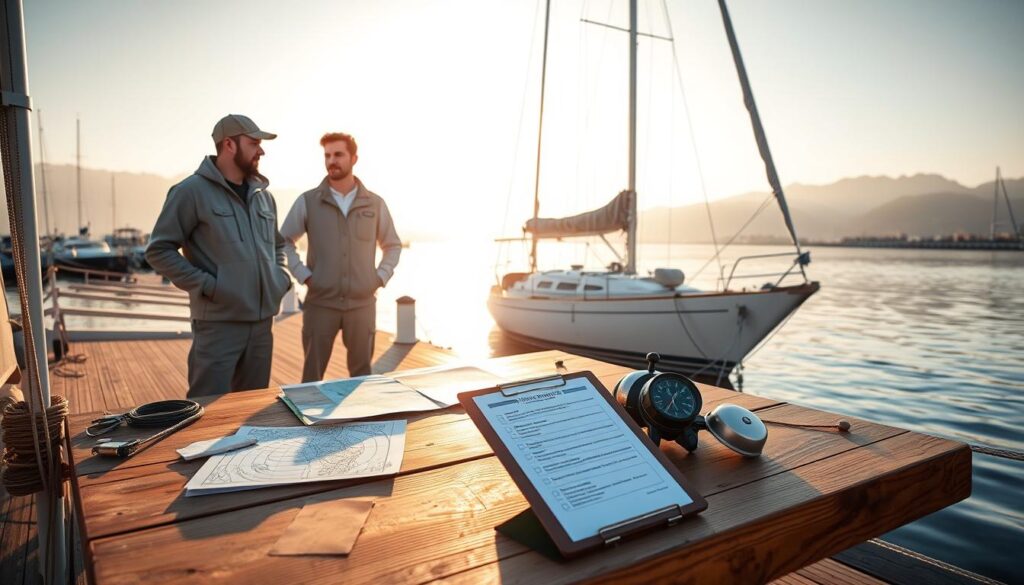
First, check the latest marine forecast for wind, waves, and advisories. Then, look at tide and current data for your route. A key pro tip is to check the difference between charted depth and actual water levels. Things like tide, recent rainfall, and barometric pressure can change your clearance.
Next, do a physical check of the vessel. Look for issues like water in the bilge, secure through-hulls, and proper engine oil levels. Make sure you have enough fuel for the trip and a reserve. Test your navigation lights, VHF radio, and bilge pumps. This hands-on check is the heart of good seamanship.
The human side is also key. Teach your crew about emergency procedures, like man-overboard drills and abandon-ship plans. Make sure everyone knows their role in case of an emergency.
For new areas, always check a Cruising Guide or U.S. Coast Pilot. These guides offer local knowledge about dangers and safe spots. They highlight risks that charts might miss.
Mastering this pre-departure routine shows true seamanship. It helps you prevent problems instead of just reacting to them. By following these pro tips, you build the confidence and skill of a seasoned mariner.
Laminated Cockpit Card Download
Get a free laminated cockpit card to keep your pro tips handy. It’s a single sheet that covers the key points from this guide. It’s perfect for a quick check before you set sail.
Place it in your helm station for easy access to weather tips, bar crossing rules, and night navigation. It’s a practical tool for any sailor.
Don’t forget to include an emergency procedure: carry a laminated tide chart in your emergency kit. Even when electronics fail, paper stays reliable.
Mariners Learning System provides captain’s license training. Formal education is key to mastering the sea. Our card is just the beginning.
Download your cockpit card now. Laminate it and use it every time you sail. These tips are only useful if you apply them.