
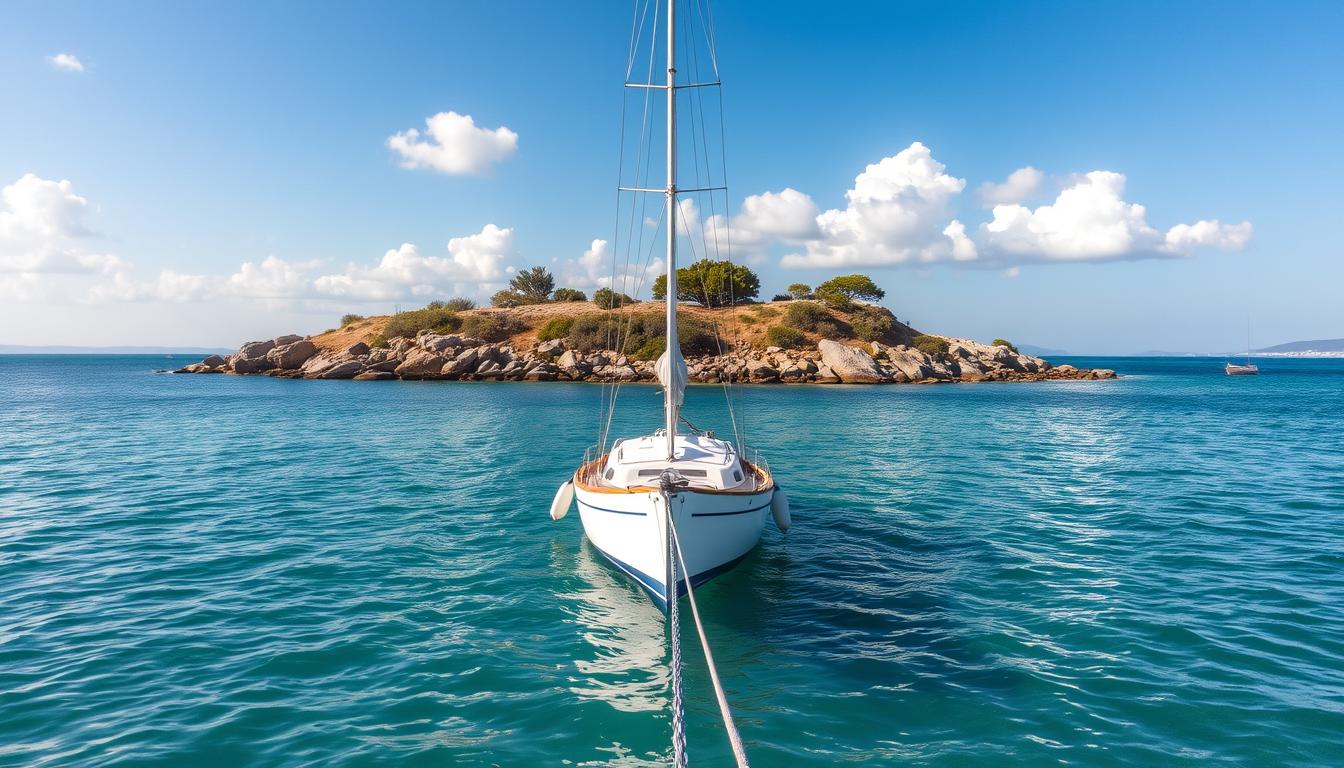
Picking where to drop the hook is more like a geopolitical strategy than finding a pretty spot. It’s not just about picking a location. It’s about choosing a neighborhood. The wrong one can be like living next to noisy neighbors.
I start planning long before I stop the engine. I study nautical charts like a general planning a beachhead, looking for safe spots. It’s like finding the best waterfront property, where the main perk is avoiding harsh winds.
But, the perfect spot on paper can turn bad if you don’t consider space. A calm cove can become a chaotic mess when the wind changes direction. It’s a mix of math and art, knowing the bottom without seeing it.
Choosing wisely isn’t just smart sailing—it’s backed by rules. For a deep dive into the formal aspects, like holding ground and tidal forces, check out the guide on anchorages in Canada. Your peaceful evening should stay peaceful, without the sound of crashing.
Proper Anchoring Techniques
Mastering the setting anchor is more about physics than brute force. It’s like a lab experiment with wind, current, and the seafloor. Get it wrong, and you’re just doing expensive marine geology.
The first thing to understand is your rode. It’s not just a tether; it’s a system to adjust angles. Its main job is to keep the pull on your anchor horizontal, not vertical. A vertical pull means it’s time to retrieve. A horizontal pull tells it to dig in and hold.

The 7:1 scope ratio is key. For every foot of water depth, you pay out seven feet of rode. In strong winds, you might need 10:1. This ratio helps your anchor hold low and firm.
The process of setting anchor is a careful ritual. It tests your faith in your gear and technique. Here’s how to do it:
- Approach Bow to Wind/Current: Slowly motor into the force until your boat stops.
- Lower, Don’t Throw: Gently lower the anchor until it hits the bottom.
- Pay Out Scope: As you drift back, feed out the rode to your 7:1 ratio. Keep the tension light.
- The Set: Once scope is out, secure the rode to a bow cleat. Reverse your engine at moderate power for 15-30 seconds. You’ll feel the boat shudder and stop as the anchor digs in.
- The Check: Use your engine to pull from different angles. Watch your GPS and shore transits. If you move, you’re dragging. Start over.
Your windlass is for retrieval, not holding the anchor. The strain of a set anchor must be borne by a proper bow cleat. Trusting the windlass is like using a corkscrew to hold up a bookshelf.
Choosing the right anchor for the seabed is essential. A Danforth in thick grass is useless. Your anchor must match the bottom.
| Anchor Type | Ideal Seabed | Poor Performance In | Key Feature |
|---|---|---|---|
| Plow (CQR, Delta) | Sand, Mud, Shell | Hard Clay, Rocky | Re-sets well if wind shifts |
| Fluke (Danforth, Fortress) | Soft Mud, Sand | Weed, Grass, Rock | High holding power per weight |
| Spade (Rocna, Manson) | Most (Sand, Mud, Clay) | Extreme Rock | Fast, deep set |
| Grapnel | Rock, Coral | Soft Bottoms | Hooks onto structure |
To monitor your set without screens, use low-tech genius. Paint a few links of your chain white. When you see those links rise, you’re stretching your scope—a visual drag alarm. Use anchorage tips near marinas for local knowledge on tricky bottoms.
In the end, proper anchoring techniques turn anxiety into assurance. That shudder during the set is physics working for you. It’s the difference between a peaceful night and a nautical nightmare.
Monitoring Conditions
Setting your anchor is like casting a vote. Watching the results is like analyzing the outcome. This is where you switch from doing to watching, a key change.
Your anchor alarm is like a digital guard. It watches your location closely. But, technology can fail. You need a human touch to truly stay safe.

I always double-check my anchor’s position. I compare it to landmarks on shore. If it moves, it means something’s wrong.
Weather is also a big factor. True weather anchoring is about being ready for anything. I watch the water, sky, and wind. A forecast is just a guess.
I don’t trust just one app. I check marine forecasts against what I see and feel. The best approach mixes tech with instinct.
Being too sure can lead to trouble. It makes you think everything is okay when it’s not. Staying alert is key to safety.
Having the right mindset makes you more than just a passenger. It turns you into a protector of your boat. You’re not just hoping for the best; you’re sure of it.
Safety Checks
Safety checks are not just about following rules. They’re about uncovering hidden truths. I treat my anchorage safety like a NASA pre-launch sequence. Each step is a gate. If one fails, the whole mission is stopped.
My first step is checking for obvious lies. That shiny cleat on your deck? Is it really secure, or just for show? Chafing gear also gets a close look. That old hose is more than just protection; it’s a safety net.
After the anchor hits bottom, the real work starts. Many sailors think they’ve anchored well just by feeling a tug. I believe in assuming failure until proven wrong.
My most useful tool is a $20 mask and snorkel. Diving down to see your anchor is like a truth serum. Is it buried, or just lying there? This underwater check shows who’s truly confident.
This hands-on approach is not just for boating. It’s also for industrial workers. They must rigorously inspect their fall protection anchors. We must verify our marine security every time.
Your environment needs careful analysis too. Did you park near a vessel held together by rust and prayers? That’s not a neighbor; it’s a danger. Your swing circle is your territory.
True anchorage safety means being prepared for the worst. I don’t just check the main rode. I think about what happens if it fails at 3 AM. This isn’t being negative; it’s being smart.
The last check is the most mental. Look around your cockpit. If everything seems perfect, you’ve probably missed something. Good safety protocols make you uncomfortable. They ask the hard questions you’d prefer to ignore.
So, before you settle in for the night, check your list. Hardware, set, environment, backup plan. Only when all systems are “go” can you relax. Your boat’s security and your peace of mind depend on this careful approach to anchorage safety.
Preventing Dragging
Preventing dragging is like a pop quiz in seamanship. Your anchor is more than a metal hook; it’s a bond with the seabed. Setting anchor is like a first date that never ends.
It’s about constantly watching out. Make your boat as light as possible. Protect your anchor line from rubbing with materials like old hose or denim.
For more on how to do this right, check out Britannia P&I. They offer deep insights.
When bad weather hits, one anchor might not be enough. But two anchors in a V shape can help. This isn’t too much; it’s smart planning.
Real prevention means being ready for anything. It’s about being confident you can outsmart the weather. Master this, and you can sleep well, even when the world tries to rock you.