
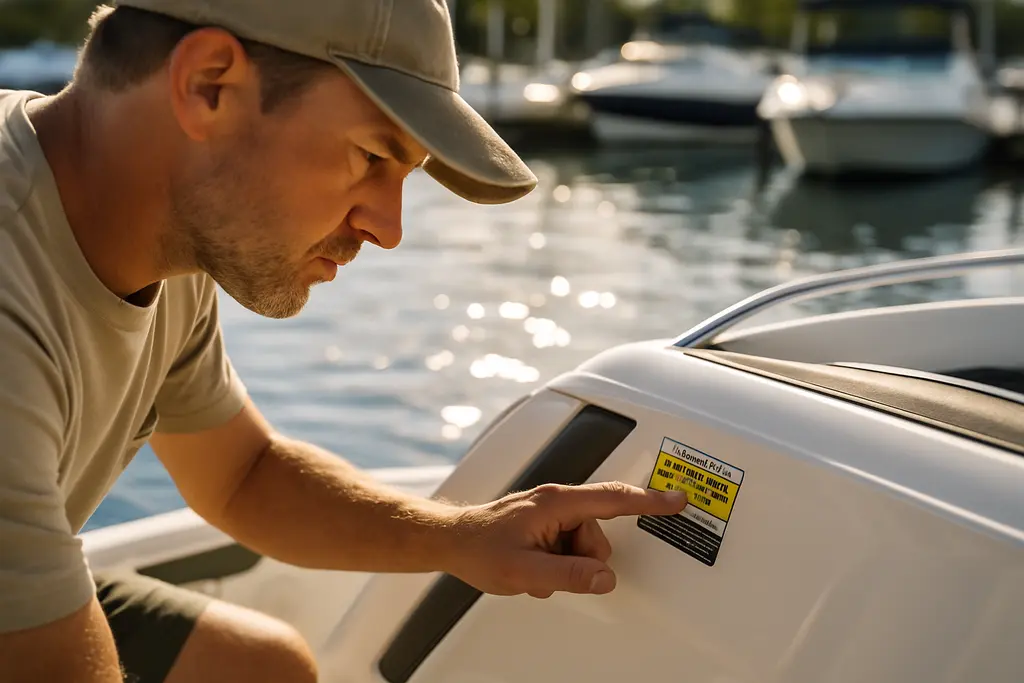
Boat capacity standards are not just manufacturer paperwork; they are a practical safety reference for every trip. A capacity label helps the operator connect passengers, gear, engine weight, and loading choices before leaving the dock. That matters because many recreational boating accidents involve ordinary decisions made in a short window: how many people to bring, where to stow equipment, whether the boat feels steady, and whether the operator has left enough safety margin for wakes, weather, and traffic.
Why Boat Capacity Standards Deserve Dockside Attention
Accident Data Shows Why Small Choices Matter
The U.S. Coast Guard reported 556 recreational boating fatalities in 2024, the fewest in more than 50 years, with a fatality rate of 4.8 deaths per 100,000 registered recreational vessels, down from 4.9 in 2023 Coast Guard fatality report. That progress is encouraging, but it should not make boaters casual about loading. Lower fatality totals can coexist with preventable close calls, especially when a small boat is used near its limits.
In the 2024 Recreational Boating Statistics, collisions with fixed objects accounted for 929 incidents and collisions with vessels accounted for 747 incidents, making them the top two accident types listed in the report; the same report also identified operator inattention, improper lookout, and operator inexperience among leading contributing factors in fatal and non-fatal incidents 2024 boating statistics. A capacity plate will not steer the boat or keep watch, but it can reduce guesswork before the operator is already dealing with wakes, traffic, or a fast-changing situation.
Boat Capacity Standards And The Loading Decision
Following boat capacity standards starts with reading the plate as a limit, not a suggestion. The updated label approach described in 2026 standards made clear display a priority: maximum persons by number, maximum persons by weight, and engine weight for outboard boats. Those figures give the operator a simple way to pause before departure and ask whether the planned load still fits the boat as built and rated.
The limitation is worth stating plainly: a label is not a full risk assessment. It does not replace weather judgment, local knowledge, lookout, sober operation, or required safety gear. It also cannot account for every real-world condition, such as uneven passenger movement, heavy coolers placed high in the boat, or wave action from nearby traffic. The better habit is to treat the posted rating as the ceiling, then leave a buffer when conditions are less than calm.
What Changed In 2026 Capacity Labels
ABYC S-7 Label Updates
The American Boat & Yacht Council released updated S-7 capacity-labeling standards in July 2026. According to the research available for this topic, the change marked the first major capacity label redesign since 1980. As of July 15, 2026, manufacturers could use the revised S-7 label in place of the older 33 CFR 183 Subpart B label, because the revised design was recognized as equivalent by the U.S. Coast Guard. For owners who want a focused companion piece on the same change, this site has a practical review of 2026 boat capacity labels.
Boat capacity standards also changed in a way that affects future production records and compliance tools. ABYC published Supplement 66 on August 4, 2026, and added H-5, Boat Load Capacity, to standards requiring stricter compliance. The research notes for this topic state that related tools, including compliance audit and test-report templates, are required for boats beginning model year 2028. For a recreational owner, that does not mean every older boat suddenly has a new plate at the dock. It does mean the industry direction is toward clearer, more consistent load information.
What Owners Should Not Assume
A 2026 label update does not make an overloaded boat safe. It also does not mean that an older label is useless. If your boat has an older capacity plate, the conservative approach is to keep using it, protect it from damage, and avoid exceeding the posted person, weight, or horsepower limits. If the plate is missing, unreadable, or inconsistent with the boat documentation, ask the manufacturer or a qualified marine service professional before carrying a full load.
This is maintenance work as much as safety planning. A faded or painted-over plate can create the same kind of uncertainty as a worn hose clamp or a corroded battery terminal: the boat may still run, but the operator has lost a piece of safety information. Capacity information should be visible from the normal operating area, clean enough to read, and checked before guests come aboard.
Maintenance Checks That Support Safe Loading
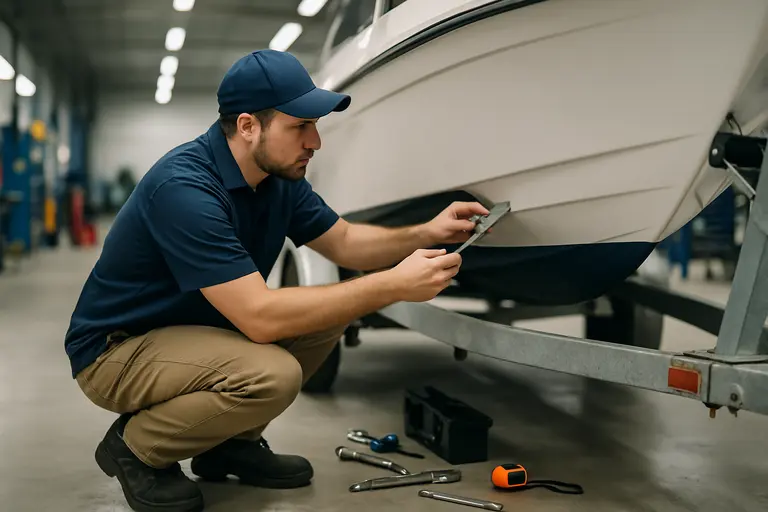
Capacity Labels Are Part Of The Pre-Departure Routine
Boat capacity standards work best when they are tied to a repeatable dockside routine. Before leaving, count people by actual bodies aboard, then compare the group to both the person number and the person-weight rating shown on the label. If a boat is rated for a certain number of persons, that figure should not be treated as separate from weight. A light load of adults, children, fuel, tackle, and coolers is different from a heavier group with the same head count.
For outboard-powered boats, engine weight deserves attention because the 2026 label approach specifically calls for engine weight display. Owners sometimes focus on horsepower and overlook the weight of newer engines. The research supplied for this topic does not provide a formula for repowering decisions, so the safest advice is limited: do not treat engine swaps as casual maintenance. Confirm compatibility through the boat manufacturer, the engine manufacturer, or a qualified marine technician before changing the power package.
Simple Checks Before Passengers Board
A sound loading routine should be easy enough to repeat. The goal is not to slow a family outing; it is to catch obvious problems before the boat is exposed to wakes, current, or crowding at a ramp.
- Read the capacity label before boarding guests, not after the boat is already full.
- Compare both the number of persons and total person weight with the posted rating.
- Keep heavy gear low and secured so it cannot slide when the boat turns or meets a wake.
- Avoid stacking coolers, batteries, or portable gear where they raise the center of weight.
- Recheck the plan if weather, passenger count, or gear changes before departure.
Those interested in exploring general safety notes across related boating resources will find that Agheiro is part of a broader network. However, any loading decision should always be corroborated with the specific boat label and manufacturer information, not merely general articles.
Boat Capacity Standards In Daily Use
Use The Label Before The Boat Feels Unsteady
Treat boat capacity standards as an early warning tool. If the boat already feels tender, bow-high, stern-heavy, or slow to respond, the operator has waited too long to think about load. The safer choice is to correct the plan at the dock: reduce passenger count, leave gear ashore, redistribute weight, or postpone the trip if conditions do not support a safe margin.
The value of the updated 2026 approach is clarity. A clear label helps a new operator, a rental user, or an occasional family skipper make a better first decision before pressure builds. It supports judgment, but it does not replace it. The operator still needs a proper lookout, attention to traffic, and the discipline to slow down or turn back when the situation changes.
Capacity is also a shared responsibility aboard. Passengers should understand that moving as a group, sitting on gunwales, or clustering near the stern can change how a small boat behaves. The person at the helm should set those expectations before leaving the dock. A short conversation about where to sit and where gear belongs is not formality; it is part of keeping the boat within its intended use.
Updated labels and future compliance tools are encouraging signs for recreational safety, but they work only if owners keep them visible and operators use them before departure. The practical rule is simple: read the plate, respect the lowest applicable limit, leave room for changing conditions, and never use a posted maximum as a target.