
When you look at a marine forecast, two numbers stand out: wave height and wave period. Most boaters pay more attention to the first number. But that’s only half the story.
The forecast shows you the significant wave height. This is the average of the tallest one-third of waves. It’s not the highest wave you’ll see.
A forecast of “4-foot seas” means you should get ready for waves around 6 feet high. The second number, the wave period, is a bigger surprise for many.
Wave period is the time between successive wave crests. It’s the dominant factor in how conditions feel on your boat. The spacing between waves changes everything.
Think about this real comparison. Three-foot seas with a 4-second period make for a steep, choppy, and rough ride. On the other hand, five-foot swells with a 12-second period feel like long, gentle rollers. The taller wave with longer spacing is often more comfortable.
This shows a key truth. A sea state is a mix of height, period, and direction. To really understand conditions, you need to know how these elements work together. For more, read our guide on understanding wave height and period.
Let’s explore why period is more important than you might think. And how to read combined seas forecasts with confidence.
Period, Direction, and Fetch Explained
Understanding a marine forecast means knowing about wave period, swell direction, and fetch. These three elements affect how smooth your ride is and how safe you’ll be. Knowing them helps you predict sea conditions better.
Wave period is like the ocean’s clock. It shows the time between waves at a fixed point. Longer periods mean waves are farther apart and smoother. Shorter periods make waves closer together, creating choppy seas.
This quick reference table shows how period affects your experience on the water:
| Period (Seconds) | Wave Spacing* | Ride Quality |
|---|---|---|
| 1-4 | Very Close | Poor. Jarring, choppy, fatiguing. |
| 5-8 | Moderate | Fair. Typical mixed seas, manageable. |
| 9-12 | Wide | Good. Smooth, rolling, predictable swell. |
| 13+ | Very Wide | Excellent. Long, powerful, and comfortable ocean swell. |
*Wave spacing increases dramatically with period; a 10-second wave has crests roughly 500 feet apart.
Wave direction is like the dance of the waves. The angle at which waves hit your boat affects your comfort and stability. This is key for a smooth ride.
- Head Seas: Waves hit the bow. The boat pitches up and down. It’s stable but can be wet and slow.
- Following Seas: Waves push from the stern. The boat surfs and yaws, needing careful steering.
- Beam Seas: Waves hit the side. This causes a strong, sickening roll, considered the most uncomfortable.
- Quartering Seas: Waves hit between the beam and stern or bow. This gives a smooth ride, a mix of gentle roll and pitch.
Changing your heading can make beam seas more comfortable. Always think about the swell direction when planning your route.
Fetch is where waves come from. It’s the distance wind blows over water. It’s what creates local wind waves.
A long fetch means wind energy builds up, making bigger waves. A short fetch, like in a bay, makes short, steep waves. This is why a 20-knot wind feels different on a lake versus a sound.
Forecasts talk about wind waves (local, choppy, fetch-dependent) and swell (energy from distant storms). A mix of these creates a confused sea state.
By looking at period, you know the wave’s rhythm. By checking direction, you know its angle. By thinking about fetch, you know its source. Together, they help you understand the sea’s behavior, making your journey safer and more comfortable.
Boat‑Specific Comfort Thresholds
Practical seamanship means knowing what your boat can handle. The sea state is defined by wave period and height. But your boat’s size and design are key to its comfort limits. This section offers a safe guide for recreational boaters.
Your boat’s length is its main shock absorber. A longer hull rides waves smoother. But smaller boats can be tossed around more easily. Here are some basic guidelines to follow.
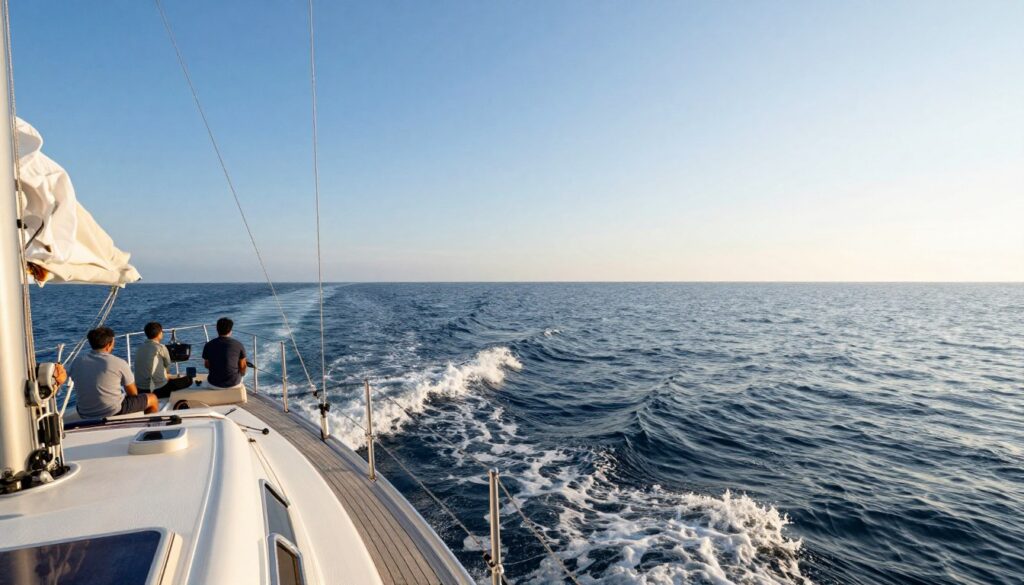
The table below shows comfort limits for different boat lengths. It considers wave height and period, assuming a favorable 8-second wave period. These are for experienced operators in well-maintained vessels.
| Boat Length (ft) | Comfortable (8+ sec period) | Manageable (6-8 sec period) | Stay In / Dangerous (Under 6 sec period) |
|---|---|---|---|
| Under 20 | Up to 1 ft | 1-2 ft | Anything over 2 ft |
| 20 – 30 | Up to 2 ft | 2-3 ft | Anything over 3 ft |
| 31 – 40 | Up to 3 ft | 3-4 ft | Anything over 4 ft |
| 41 – 50 | Up to 4 ft | 4-6 ft | Anything over 6 ft |
| Over 50 | Up to 6 ft | 6-8 ft | Anything over 8 ft |
These numbers are just a starting point. Your skill, the boat’s design, and how it’s loaded all play a role. A deep-V hull handles wind waves better than a flat hull. A heavy load makes a boat sit lower and move slower.
An experienced captain will do better than a novice in the same conditions. Your comfort level might be lower than the table suggests. Always be cautious.
Real-world conditions change constantly. In the South China Sea, mariners face this every day. They might see manageable Force 4 conditions in forecasts.
But, squalls can quickly turn short, steep wind waves dangerous. Dive boat captains in Southeast Asia make tough decisions. They might wait in a sheltered area or cancel trips to keep passengers safe.
This shows how dynamic comfort thresholds are. You need to consider weather trends and local patterns. A forecast for 3-foot waves with a 5-second period is different from the same height with a 10-second period.
Start with the table as a guide. Then, think about your boat, your crew, and the latest weather. This approach is true seamanship, ensuring safe and comfortable trips.
Coastal vs. Offshore Patterns
When you’re in coastal waters versus the open ocean, you face different wave types. Coastal waves are local and quick, while offshore waves are long-distance and steady. Knowing these patterns is key to your safety and comfort on the water.
The main wave types are wind waves and swell. They come from different sources and act differently:
- Wind Waves: These are made by wind blowing over water. They are short, steep, and often messy. Think of choppy seas that change fast with the wind.
- Swell: These are made by storms far away. They are long, rolling, and steady. They travel long distances, bringing a predictable rhythm.
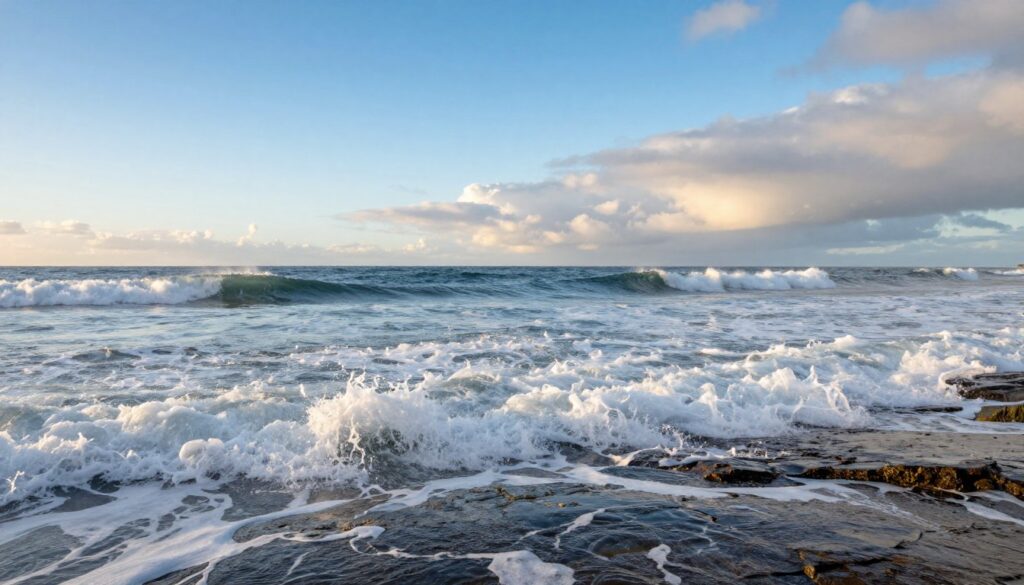
Most of the time, you get a mix of both. This mix is what forecasters talk about. But, when waves come from different directions, it gets tricky.
This mix is called “crossing seas.” Imagine a steady swell from the northwest and wind waves from the southwest. This mix makes the sea choppy and hard to predict. Boats can move unpredictably, making it hard to steer and uncomfortable. It’s important to watch the swell direction and wind direction to avoid this.
Where you are affects these waves too. For example, the South China Sea near Singapore has a mix of coastal waves and ocean swells. Mariners there need to understand how local winds and swells mix in the area.
Checking a real-time guide to local boating conditions is key. It helps you tell if waves are local or from far away.
| Characteristic | Wind Waves | Swell |
|---|---|---|
| Origin | Local wind field | Distant storm systems |
| Period | Short (less than 8 seconds) | Long (often over 10 seconds) |
| Shape & Behavior | Steep, choppy, disorganized | Rolling, organized, predictable |
| Travel Distance | Limited to the wind area | Can travel thousands of miles |
| Key Influence | Immediate local weather | Global weather and swell direction |
Understanding these wave patterns is not just for fun. It helps you predict the sea’s mood before you go out. Coastal trips need you to watch for local winds and waves. But, offshore trips require respect for the big, steady swells. Always know what the sea is telling you.
Planning a Comfortable Weather Window
A professional mariner checks the forecast step by step. They start with the wave period. A long period means smoother seas, even with big waves.
They also adjust the reported seas height in their mind. The forecast gives an average. But, waves can be up to 1.5 times taller than that.
They look for crossing seas next. This means waves from different directions. It makes the sea very steep and chaotic, a big safety warning.
They also consider the local wind wave forecast. They watch the overall trend. If periods are getting longer, it usually means better travel conditions.
Let’s look at an example. A forecast might say four-foot seas with a 5-second period. This is steep and jarring. But, add a secondary swell, and it’s a “Caution” situation.
When planning your route, think strategically. Try to have the main swell hit your bow or stern. A quartering sea is easier than a beam sea.
Tools like SeaLegsAI help with this. They look at height, period, and direction for your boat. This gives a clear plan for a safe trip.
This way, you don’t just look at one number. You plan a safe and comfortable journey with all the data you have.