illegal charter operations are not just paperwork problems. They can place passengers on boats without the oversight, crew qualifications, inspection records, loading discipline, and emergency preparation that safer passenger-for-hire trips depend on. As a boater, I tend to read enforcement warnings the same way I read a falling barometer before an afternoon squall: not as a reason to panic, but as a sign to slow down, check the setup, and avoid easy assumptions.
Recent Coast Guard warnings have been plain: unsafe charters can look ordinary from the dock. A polished deck, a friendly online listing, or a confident operator does not confirm that a vessel is being run within required safety limits. For passengers, the risk is being carried by someone who may not be trained, inspected, or equipped for the trip being sold. For private boat owners, the lesson is just as direct: once money changes hands for carriage, safety expectations and oversight can change sharply.
Why illegal charter operations Raise Risk
A safe day afloat starts before the engine turns over. Weather, passenger count, safety gear, crew skill, fuel planning, and return timing all matter. A legal passenger-for-hire operation is expected to account for those elements in ways that go beyond a casual pleasure trip. When those controls are skipped, risk stacks up quickly, especially in crowded harbors, narrow channels, night returns, or choppy afternoon wind-against-current conditions.
How illegal charter operations Warning Signs Appear
illegal charter operations often show themselves through small warning signs rather than one dramatic red flag. Passengers may not see a safety briefing. Life jackets may be hard to find or not sized for the people aboard. The operator may avoid clear answers about passenger limits, credentials, or inspection status. The boat may be loaded in a way that trims poorly, throws spray forward, or makes movement around the cockpit difficult. None of those conditions prove a violation by themselves, but together they should make a passenger pause before stepping aboard.
Overloading is especially unforgiving. A boat that handles well with a light crew in calm water may become sluggish, wet, or unstable when packed with extra passengers and coolers. Add ferry wakes, harbor chop, or a fast-moving thunderstorm line, and the margin for error narrows. A prudent skipper thinks in layers: forecast, tide, traffic, loading, crew readiness, and escape options if conditions turn.
Weather, Loading, And Crew Discipline
Weather is not a side note in charter safety. A weak sea breeze in the morning can harden into uncomfortable chop by late afternoon. Visibility can drop under rain cells. Heat can tire passengers, and alcohol can dull judgment. If the operator seems focused only on the destination, music, or photo stops, that is a concern. A capable crew gives a clear briefing, watches passenger movement, keeps an eye on the horizon, and has a plan for returning early.
Passengers do not need technical language to ask useful questions. They can ask where the life jackets are, how many people the boat is carrying, who is operating the vessel, and what the plan is if weather changes. A trustworthy operator should answer plainly and without pressure.
Recent Coast Guard Warnings And Lessons
On September 10, 2026, the U.S. Coast Guard East District reported that Operation Safe Voyage had included 114 safety boardings and seven voyage terminations, including two active illegal passenger-for-hire operations. The same release said that, since 2021, nearly 414 enforcement actions had been taken nationwide against unlawful operators, with initial civil penalties proposed totaling about $10.6 million, according to the Coast Guard report.
What The September 2026 Enforcement Showed
Recent illegal charter operations enforcement showed that risk does not end after a holiday weekend. Patrols, boardings, and terminations reflected a year-round concern, not a short seasonal campaign. From a practical boating standpoint, that matters because unsafe hiring can happen during shoulder seasons too, when marinas are quieter, daylight is shorter, and weather changes with less public attention.
For recreational skippers, the message is also about preparation. If you carry friends, keep the trip within your boat’s safe capacity, brief the crew, and avoid informal arrangements that blur the line between a private outing and passenger service. This is not legal advice; it is a safety reminder. If payment, advertising, or hired carriage is involved, owners should seek proper official guidance before operating.
What The Statue Of Liberty Capsizing Showed
On August 10, 2026, a speedboat tour around the Statue of Liberty capsized, killing a 27-year-old woman and her 5-month-old baby. Authorities said the vessel was overcrowded, lacked required safety equipment, and was operating without proper U.S. Coast Guard licensing, according to the Associated Press account.
No single incident can explain every unsafe charter pattern, but this case showed why passenger count, licensing, and emergency gear are not abstract concerns. In busy waters, a small craft can be affected by wake, wind, and traffic in quick succession. If too many people are aboard or safety equipment is missing, the operator has less room to recover from a mistake or sudden change.
Pre-Trip Checks For Passengers And Skippers
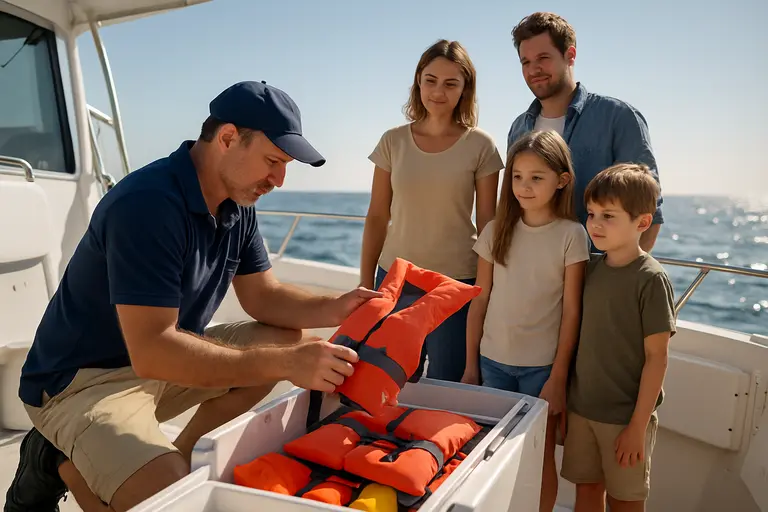
Good checks are simple, direct, and done before anyone feels committed to the trip. I favor dockside questions because they reveal a great deal about the operator’s habits. A calm professional will treat safety questions as normal. A careless operator may rush the group, joke away concerns, or give vague replies.
Questions To Ask Before Boarding
Use the same steady mindset you would use before leaving a slip in a freshening breeze. Look for clear answers, not sales talk. If any answer feels evasive, walking away is the safer choice.
- Who is the operator, and what credentials apply to this trip?
- How many passengers will be aboard, and what is the safe passenger limit?
- Where are the life jackets, and are there proper sizes for children?
- Will there be a safety briefing before departure?
- What is the weather plan if wind, rain, or visibility worsens?
- What communication equipment is aboard if assistance is needed?
For a deeper checklist on the same safety concern, the club’s related note on illegal charter operations safety checks pairs well with a pre-boarding conversation. Additionally, for those interested in further site-network context, the archival resource at Old Norse News provides an independent perspective.
Small-Boat Maintenance Habits That Still Matter
Even a properly run trip depends on the basics: reliable bilge pumps, sound fuel systems, working navigation lights, charged batteries, clear decks, and serviceable life jackets. Passengers may not inspect a vessel the way a surveyor would, and they should not be expected to. Still, obvious neglect is meaningful. Frayed lines, fuel odors, dead electronics, loose railings, or water sloshing where it should not be seen are practical reasons to ask more questions.
Skippers should treat maintenance as part of passenger care. A float plan, a working VHF radio, a charged phone in a dry location, and a sober operator do more than satisfy a checklist. They buy time when a squall builds, an engine falters, or a passenger needs help. Safety margins are built in quiet minutes at the dock.
Safer Choices After illegal charter operations Warnings
The strongest habit is to slow the decision down. Do not let a discount, a crowded dock, or a celebratory mood push the group past unanswered safety questions. A charter that cannot explain its operator, equipment, capacity, and weather plan should not carry your family or friends.
There are limits to what any passenger can verify from the pier. A dockside check cannot prove every document or predict every hazard. Still, clear questions can expose weak preparation, and weak preparation is exactly what boaters should avoid. The water rewards patience. Choose the boat, operator, and weather window with the same care you would use before crossing an inlet: read the signs, respect the limits, and leave room to turn back.