
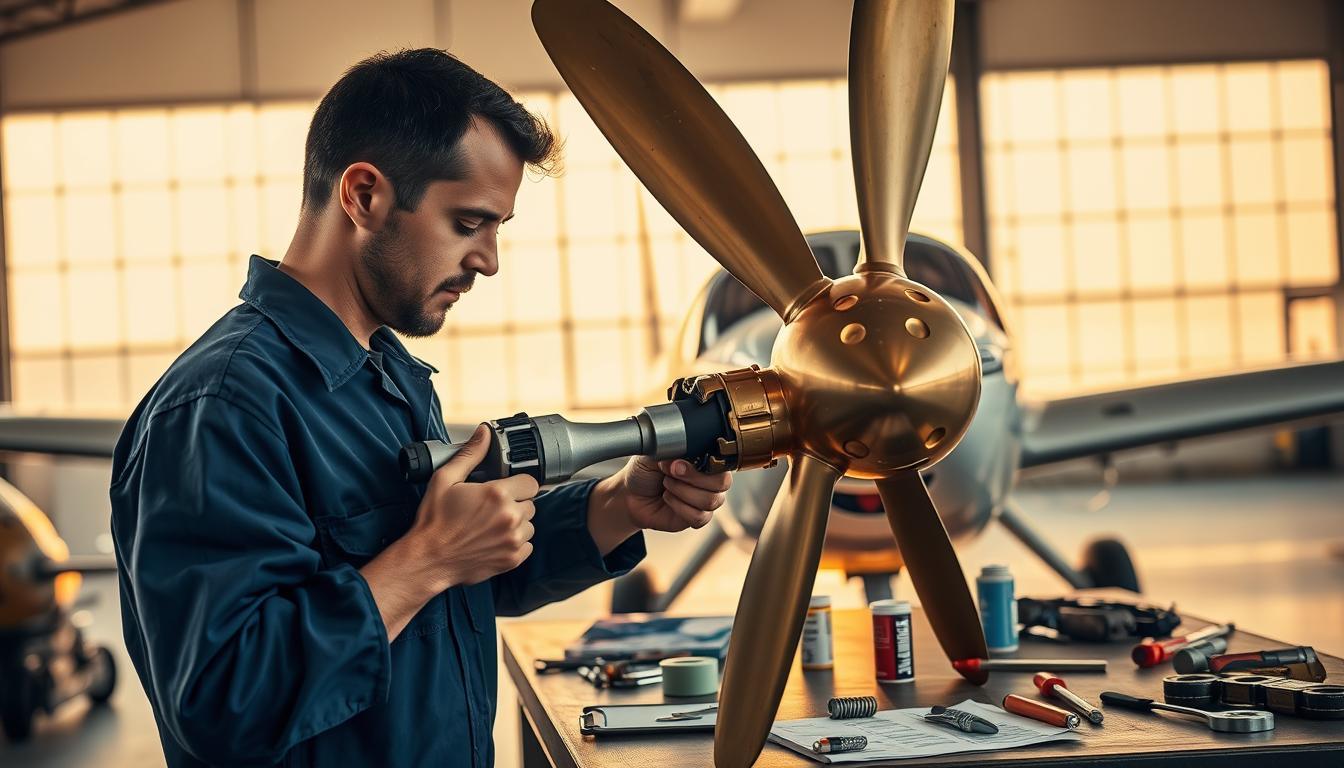
Keeping your boat in top shape is more than just a clean hull. Regular propeller maintenance is key for smooth sailing. Small steps today can avoid big problems later.
By focusing on these tasks, you boost your engine’s efficiency. This proactive care prevents sudden breakdowns and extends your equipment’s life.
Regular propeller checks catch small problems before they cost a lot. This guide covers cleaning, balancing, and lubrication for your boat’s drive system.
Whether you have a Mercury Marine engine or need expert help, knowing these basics is vital. Proper attention to your gear means better fuel use and a quieter ride. Let’s explore how to keep your boat’s equipment in top shape.
Signs of Propeller Damage and When to Act
Spotting the signs of a failing prop is key to keeping your boat running well. Even small damage can affect how your boat handles and uses fuel. It’s important to act fast to avoid costly repairs.
Boaters often notice engine changes before seeing damage. Unusual vibrations or sounds are big signs of trouble. Always check the pitch and condition of the blades before you head out.

When your boat’s performance drops, it might mean the prop isn’t working right. If it takes longer to get moving or can’t reach top speed, it’s a sign of damage. This could be due to impact or wear on the blades.
Common Propeller Issues
Cavitation is a big problem where air bubbles damage the blades. These bubbles can wear down the metal, leading to failure. It’s a slow process but can be costly.
Bent blades are another issue, often caused by hitting objects underwater. Even a small bend can make the engine work harder. This not only uses more fuel but can also damage the prop further.
| Issue Type | Primary Sign | Impact on Boat |
|---|---|---|
| Cavitation | Pitting on blade surface | Loss of efficiency |
| Bent Blades | Visible edge distortion | Excessive vibration |
| Corrosion | White chalky spots | Structural weakness |
Corrosion shows up as white spots or deep pits on the metal. It happens when the coating fails or when metals react in water. Catching these signs early can save your prop’s structure.
- Inspect the hub for cracks or melted rubber.
- Look for rolled edges on the blade tips.
- Monitor RPM changes at full throttle.
How to Check for Proper Alignment and Balance
Keeping your engine and water in perfect sync is key. A small mistake in propeller checks can lead to big fuel waste. You might feel unusual vibrations or see a drop in speed during your trips.
Regular propeller alignment ensures smooth power transfer to the water. If the propeller is off, it stresses the bearings and seals. This can lead to costly repairs, but a simple check can prevent it.
Finding the right balance is as important as alignment. An unbalanced propeller shakes the boat like a car with a bad tire. Do these checks at the start of boating season to keep your boat running well.
Tools and Techniques for Propeller Alignment
You’ll need special marine gear for these tasks. Experts often use a dial indicator to measure shaft movement. Learn more about checking and adjusting propeller shaft alignment to ensure it’s straight.
A propeller balance tool shows heavy spots on blades. These tools help spot uneven weights due to wear or impacts. Always follow the manufacturer’s guide to avoid mistakes.
If unsure, getting professional help is wise. Marine techs use advanced tools for propeller alignment and testing. Proactive maintenance saves money and keeps you safe on the water.
| Inspection Type | Primary Tool Used | Common Warning Sign |
|---|---|---|
| Alignment Check | Dial Indicator | Excessive Shaft Wobble |
| Balance Test | Static Balancer | Hull Vibrations |
| Seating Inspection | Propeller Alignment Tool | Loose Propeller Nut |
| Visual Review | Magnifying Glass | Hairline Blade Cracks |
Choosing the Right Replacement Propeller
When your boat needs a boost in performance, picking the right replacement propeller is key. This choice affects everything from fuel use to speed. It’s not just a simple buy.
Every boat has its own needs based on engine power and load. Choosing wisely keeps your engine in the right RPM range. This avoids unnecessary stress and wear on your engine.
Factors to Consider When Selecting a Replacement Propeller
Understanding what affects your boat’s handling is important. Look at size and material. These decide how your boat moves on the water.

The replacement propeller must match your boating style. For example, fishing boats need different props than speed boats. Think about these key details when searching:
- Diameter: The prop’s width affects control, with larger sizes better for heavy loads.
- Pitch: This is how far the prop moves in a rotation. Think of pitch like the gears in a car transmission.
- Material: Aluminum or stainless steel depends on your budget and water type.
Also, consider the number of blades. Three blades are common for general use, balancing speed and pull. Four blades are better for acceleration and smoothness in rough waters.
| Propeller Material | Durability Level | Price Range | Ideal Condition |
|---|---|---|---|
| Aluminum | Moderate | Budget-Friendly | Freshwater Lakes |
| Stainless Steel | High | Premium | Saltwater/Performance |
| Nibral | Very High | Professional | Commercial Vessels |
Always check your engine manual before buying. The right propeller keeps your motor efficient for years. If unsure, ask a local marine mechanic for advice on a replacement propeller.
DIY Inspection Tips and Tricks
Doing a little work on your driveway can keep your boat running well all season. A simple DIY inspection after each trip can catch small problems early. These easy tips help you keep your boat in top shape without needing fancy tools.
First, look for any dents, cracks, or curled edges on the blades. Even a small bend can cause vibrations that harm your engine. If you see big metal loss or deep gouges, it’s time to think about getting a replacement for your safety.
Next, check the prop nut to make sure it’s tight and the cotter pin is secure. Safety is the most important part of any home check. Use these tricks to find hidden issues, like checking for fishing line tangled behind the thrust washer.
Cleaning and Maintaining the Propeller
Keeping your gear clean is the simplest way to avoid damage. Use a soft brush and mild detergent to remove debris or marine growth from the blades. This keeps the surface smooth for better fuel economy.
Hard water deposits and algae can build up fast in salt or brackish water. Regular cleaning stops these from pitting the metal. Strong maintenance habits today save you money on a costly replacement later.
For proper maintenance, apply marine-grade lubricant to the propeller shaft and hub. This grease prevents the propeller from seizing onto the shaft over time. Always follow the manufacturer’s instructions to choose the right grease for your specific model.
- Remove the propeller once a season to inspect the seals.
- Wipe away old grease before applying a fresh layer.
- Check for milky oil, which signals a leaking seal.
| Maintenance Task | Tools Needed | Frequency |
|---|---|---|
| Visual Check | Flashlight | After every trip |
| Surface Cleaning | Soft brush & soap | Monthly |
| Shaft Lubrication | Marine grease | Every 100 hours |
| Hub Inspection | Prop wrench | Once a season |
Getting Professional Help
Choosing between a quick fix and a full replacement is a big decision. Regular propeller checks can catch small problems early. These issues might be hard to see without expert eyes.
Specialized shops have the tools to make sure your boat runs well. They use precision equipment for top performance.
When to Seek Expert Advice
Get expert advice if you see deep gouges or feel severe vibration. A certified prop shop can check if your prop can be fixed. Michigan Wheel experts say some props can be fully restored.
Repairing a sand-cast prop is cheaper than buying a new one. Authorized repair stations have the tools for fixing and welding. You can find a local expert through the National Marine Propeller Association directory.
Getting professional help ensures your prop is in top shape. Stainless steel props can handle more stress than aluminum. Trusting a skilled shop saves money and protects your engine.