
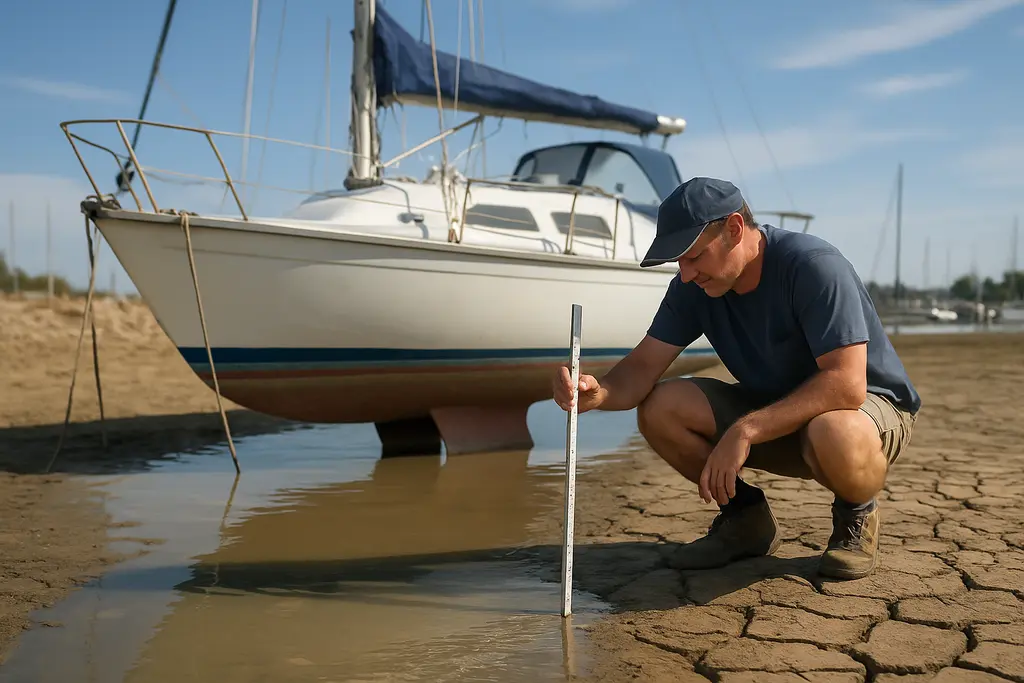
Marina closures have become a practical trip-planning issue for many recreational boaters, especially on reservoirs where low water can change launch access, dock height, fuel availability, and exit options. A safe plan starts before the tow vehicle leaves the driveway: confirm the lake level, check the status of the specific ramp you intend to use, and decide what you will do if that ramp is closed, crowded, or unsafe on arrival.
Low water does not affect every marina the same way. One ramp may remain usable while another loses enough depth to expose mud, rock, or a steep drop-off at the trailer tires. Floating docks may be moved, walkways may be longer or steeper, and service docks may operate on limited schedules. The safe response is not guesswork; it is a written plan based on posted facility notices, current lake conditions, your vessel draft, and the skill level of the crew.
Marina Closures And Low-Water Trip Planning
Why Marina Closures Change The Day
At Lake Powell, the access problem was clear by mid-August 2026. The lake elevation had dropped to 3,519.91 feet above sea level, slightly below the previous record low from April 2023, and closer to the 3,490-foot minimum power pool elevation tied to Glen Canyon Dam hydropower generation, according to a Washington Post report. For boaters, those numbers matter because launch ramps and marina walkways are built for a range of water levels, not every possible level.
In June 2026, critically low water forced the closure of two Lake Powell boat ramps, and heavily used main ramps needed frequent sediment clearing to allow launches, according to an AP report. That kind of sediment work can change access from day to day. A ramp that handled launches earlier in the week may not be suitable for your boat after wind, wake, silt movement, or an operational change.
What Low Water Can Remove From A Trip
Many boaters think first about whether they can launch, but low water can affect the whole outing. A marina may have reduced dock space, longer walks to floating slips, or limited access to fuel, restrooms, pumpout, and courtesy docks. If a marina service is not available, the trip may still be possible, but only if the boat is prepared to operate without that support. That means carrying enough safe fuel reserve, water, food, required safety gear, communication equipment, and a firm return plan.
For boats with deeper draft, the margin can be thin near ramps, coves, and shorelines. Charts, memory, and old waypoints may not reflect exposed lakebed or newly shallow approaches. Treat familiar areas as changed until you verify them with current local notices and cautious observation. If you cannot confirm safe depth for the boat and trailer recovery, postpone the trip or choose a different launch site.
Check Access Before You Tow
Marina Closures Checks Before You Tow
A good low-water plan begins with the exact facility, not just the lake name. Check whether your intended ramp is open, whether it is suitable for your boat size, and whether any limits apply to launching hours, trailer staging, or retrieval. If available, review marina notices, park service updates, reservoir condition pages, and direct facility announcements. Give priority to the source that controls or manages the ramp, because third-party summaries can lag behind field conditions.
Call ahead when the notice is unclear. Ask direct questions: Is the ramp open today? Are powerboats of my size launching safely? Is the courtesy dock in place? Is fuel available? Are there known shallow areas between the ramp and the main channel? Staff may not be able to guarantee conditions, but they can often tell you whether access has changed since the last posted update.
- Confirm the water level and ramp status on the day you travel, not just the night before.
- Measure or confirm your boat draft, including propeller or lower-unit clearance.
- Plan an alternate launch and an alternate retrieval site before departure.
- Carry enough fuel to avoid relying on one marina fuel dock.
- Set a turn-back time so you are not retrieving in poor light or rising wind.
Use Backup Sites Carefully
A backup ramp is only useful if it fits the boat, trailer, tow vehicle, and crew. A longer drive may be safer than forcing a launch at a marginal ramp, but it also affects daylight, fuel, fatigue, and weather exposure. If the backup site is unfamiliar, treat it as a new operating area. Review the approach, parking, trailer turnaround, dock layout, and likely wind direction before committing.
Do not let a long tow pressure you into launching after conditions change. A closed ramp is inconvenient; a stuck trailer, damaged propeller, injured passenger, or failed retrieval is far worse. For related prep focused on low-water boating, this Lake Powell maintenance checklist covers vessel and trailer checks that pair well with access planning.
Plan The Boat, Crew, And Exit Route

Match The Boat To The Conditions
Low water planning is partly a maintenance issue. Before leaving home, inspect the cooling water intake, propeller, skeg, trailer tires, winch strap, lights, and safety chains. Shallow ramps can put more strain on retrieval gear because the trailer may need precise placement. If the boat has recently operated in silty water, check cooling performance and watch engine temperature closely during the next outing.
Under-keel clearance should be treated as a safety buffer, not a target. Leave extra room for wakes, shifting passengers, trim changes, and wind-driven water movement. Slow down near shore, near ramps, and in any area where the bottom may rise suddenly. Avoid using speed to cross uncertain shallows. If the depth is questionable, stop in safe water and reassess rather than pressing ahead.
Brief The Crew Before Launch
Passengers can help or hinder a low-water trip. Before launch, explain where people should stand during ramp work, how lines will be handled, and what they should do if the plan changes. Keep nonessential passengers away from the ramp edge and trailer path. Assign one person to watch the dock line and another to help with visual clearance only if they can do so safely.
Communication deserves special attention. Cell service may not be reliable in every cove or canyon, so the trip plan should not depend on a single phone. Tell someone ashore where you plan to launch, where you plan to boat, and when you expect to return. If services at the marina are inconsistent, keep the outing conservative and closer to confirmed exit points.
- Leave a float plan with a responsible contact ashore.
- Wear life jackets during ramp work, close-quarters handling, and any rough-water period.
- Keep children and pets seated and clear of lines, cleats, and trailer movement.
- Turn around early if wind, darkness, fuel use, or ramp crowding reduces your safety margin.
Marina Closures Trip Plan
Keep Source Limits Clear
Not every website that appears in a trip-planning search is a water-level or ramp-status authority. Use official marina, reservoir, park, or facility sources for access decisions, and separate those from general community links. For example, although this site is a related site in the same network, it should not be used to confirm lake level, ramp status, or boating hazards.
The safest approach to marina closures is a simple decision tree. If the primary ramp is open and suitable for your boat, proceed only if weather, fuel, daylight, crew readiness, and exit options also check out. If the ramp status is unclear, call ahead or choose a better-confirmed site. If the ramp is closed, do not improvise from an unimproved shoreline unless that location is clearly permitted, suitable, and safe for your vessel and vehicle.
Make The No-Go Decision Easier
A trip should have clear no-go triggers before anyone is invested in launching. Examples include no confirmed retrieval site, too little depth for the vessel, no reliable fuel plan, steep or damaged ramp conditions, high wind during retrieval, or crew members who cannot safely board from the available dock. Setting those limits early reduces ramp-side pressure and helps protect the boat, tow vehicle, and passengers.
Low water can still allow good boating days, but those days require patience and discipline. Check conditions, match the boat to the access point, keep alternatives realistic, and be willing to change plans. That is how recreational boaters preserve the best parts of a day on the water while respecting the real limits created by changing reservoir levels.