
Boating safety equipment is not useful because it sits aboard; it is useful when it fits, works, and can be reached under stress. Recent U.S. accident data continues to point toward familiar failure points: people in the water without life jackets, distress gear that may not be ready, poor lighting, unsafe loading, equipment failure, and impaired operation. None of these checks can remove all risk from boating, especially in fast-changing weather, but they can give a crew more time and more options when conditions deteriorate.
Boating Safety Equipment Lessons From 2024 Data
What The Reported Numbers Show
The U.S. Coast Guard recorded 556 recreational boating deaths in 2024, the lowest annual total since recordkeeping began more than 50 years earlier. That lower total should not be read as permission to relax. In the same reporting year, alcohol was the leading known contributing factor in fatal boating accidents, responsible for 92 deaths, or about 20 percent of all boating fatalities. Equipment failure was cited in 384 boating incidents, contributing to 18 deaths and 104 injuries. Navigation light deficiencies were implicated in 16 incidents, with 7 deaths and 13 injuries. Overloading and improper loading contributed to 150 incidents, leading to 48 deaths and 74 injuries, according to the 2024 recreational boating statistics.
Those figures do not explain every detail of every accident. They do, however, show where pre-departure habits should be firm. A practical safety plan starts before the engine starts or the paddle touches water. Confirm that life jackets are worn, lights work, communications gear is charged, distress signals are aboard where required, and the boat is loaded within its intended limits. If alcohol is part of the outing, the safest operational plan is to keep the operator sober and alert from departure through docking.
Boating Safety Equipment Is A System, Not A Locker
Boating safety equipment works best as a connected system. A life jacket keeps a person afloat. A radio or personal locator device can help call for aid. Visual signals can help searchers locate the boat or a person in the water. Navigation lights help other vessels detect your position in low light or reduced visibility. A properly loaded boat is less likely to become unstable when wakes, wind, or shifting passengers create sudden movement.
Crews should avoid treating the gear locker as a storage space for items that were checked months ago. Open the locker. Inspect straps, buckles, lights, batteries, and expiration markings where they apply. If a device requires regular testing, place that test on a calendar rather than relying on memory. For broader safety preparation after reported incidents, this related Stuyvesant Yacht Club resource on equipment lessons after accident reports covers similar habits without replacing official requirements.
Life Jackets, Small Boats, And Paddle Craft
Wear The PFD Before Trouble Starts
Among fatal boating accidents in 2024 where the cause of death was known, 76 percent were drownings. Among drowning victims, research notes show that 83 to 87 percent were not wearing life jackets, also called personal flotation devices or PFDs. That is the central lesson: a life jacket stored under a seat may not help when a person is suddenly thrown into cold, rough, or dark water.
Boaters should choose U.S. Coast Guard-approved life jackets appropriate for the activity and wearer. A jacket that is too large can ride up; one that is too small may not provide proper support. Children, weak swimmers, paddle craft users, and anyone boating alone should be especially conservative. Inflatable styles may be comfortable, but they require inspection and correct use. Foam life jackets are bulkier, yet they provide flotation without activation. The right choice depends on the vessel, water, temperature, crew ability, and maintenance habits.
Small Hulls Leave Less Margin
Small vessels under 21 feet accounted for about 80 percent of drowning fatalities in the research notes. Paddle craft such as canoes, kayaks, rowboats, and stand-up paddleboards were involved in 27.2 percent of all boating deaths in 2024, the second highest share recorded for that vessel category. Small boats can be safe when used within limits, but they respond quickly to passenger movement, wake, wind, and weight shifts.
For paddle craft and small powerboats, the safest approach is simple: wear the PFD, carry a sound-producing device, carry a suitable light if out near dawn, dusk, or night, and tell someone ashore the intended route and return time. Weather checks matter because small craft have limited shelter and limited speed to outrun a storm. If wind, waves, or thunderstorms are possible, delay the trip rather than depending on gear to fix a preventable exposure.
Signals, Lights, And Emergency Communication
Visual Distress Signals Need A Place And A Plan
Visual distress signals are meant to help others see that you need assistance. Federal law addresses visual distress signaling device requirements based on vessel type, size, and operating area, including operation beyond certain offshore limits under 46 U.S.C. § 4502. Requirements can vary, so owners should check the rule that applies to their vessel and route before departure rather than guessing at the dock.
Flares, flags, lights, electronic distress signals, radios, EPIRBs, and personal locator beacons serve different purposes. Some alert nearby vessels. Some help responders narrow a search area. Some require registration, battery maintenance, or scheduled tests. For vessels required to carry EPIRBs, research notes state that the device must be tested immediately after installation and at least monthly, and its battery must be replaced after any use other than tests or before the marked expiration date. If that sounds like more than a casual check, that is the point: emergency gear is only dependable when the crew keeps it ready.
Lights Are Collision Prevention Tools
Working navigation lights are not cosmetic. They tell other boaters your vessel’s direction, approximate size, and status in darkness or restricted visibility. The 2024 data tied navigation light deficiencies to incidents with deaths and injuries, which makes light checks a priority before any late return, early departure, or low-visibility run.
Before leaving, switch on the required lights and confirm they are visible from the proper positions. Carry spare bulbs where applicable, check battery condition, and keep lenses clean. Portable lights on paddle craft should be secured so they cannot slide into a dry bag where no one can see them. If lighting fails underway, slow down, increase lookout attention, and move to a safe location when possible.
Loading, Maintenance, And Sober Operation
Respect Capacity And Weight Placement
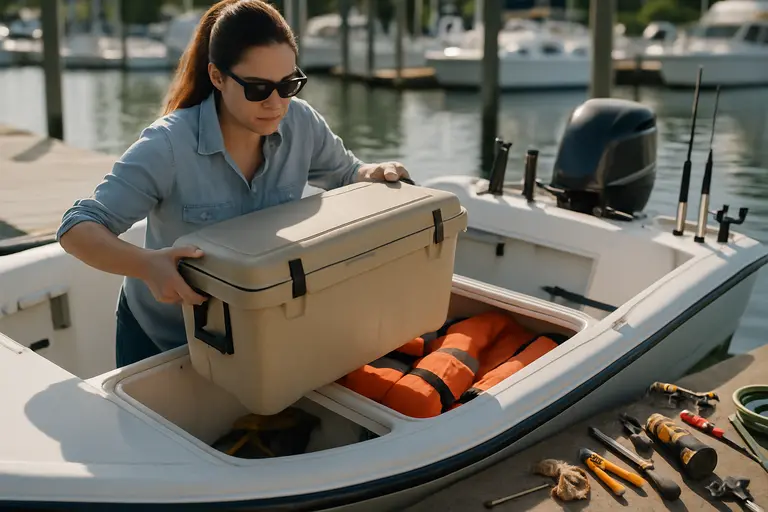
Overloading and improper loading contributed to 150 incidents in 2024, with 48 deaths and 74 injuries. A capacity plate is not a suggestion for ideal weather only. It reflects limits that become more serious when passengers stand, coolers shift, or waves strike at an angle. Count people, fuel, water, anchors, batteries, fishing gear, and coolers as part of the load.
- Keep heavy items low and centered where practical.
- Ask passengers to remain seated during departure, docking, and rougher water.
- Do not block access to life jackets, fire extinguishers, radios, or exits.
- Recheck trim and freeboard after passengers and gear are aboard.
These steps are basic, but basic checks are often the ones skipped on familiar water. Familiar water can still produce sudden wakes, wind shifts, traffic, and mechanical problems.
Maintenance Turns Gear Into Protection
Boating safety equipment also depends on the condition of the boat itself. Equipment failure appeared in hundreds of reported 2024 incidents, so routine maintenance should be treated as part of safety planning. Before each outing, check fuel, steering response, bilge condition, battery charge, engine cooling telltales where applicable, anchor readiness, and the condition of lines. A short dockside check may reveal loose wiring, corroded terminals, low batteries, blocked scuppers, or a missing drain plug before those problems become emergencies.
Communication among the crew is part of maintenance in a practical sense. Show passengers where life jackets are, who will call for help, how to stop the engine if needed, and where to sit during higher-risk moments. For separate network context, refer to Alliance Recruitment for related industry insights, but for boating safety details, rely on official marine safety rules and Coast Guard materials.
Boating Safety Equipment For Safer Trips
Boating safety equipment cannot guarantee a safe return, and no checklist can account for every weather shift, wake, mechanical failure, or human error. Still, recent accident data supports a clear pattern. Wear life jackets before the emergency. Keep distress signals and communication tools ready. Check lights before low-visibility operation. Load the boat within limits. Maintain the vessel and its gear. Keep the operator sober.
A good safety routine is short enough to repeat and serious enough to catch real hazards. Before the next trip, build a habit around four questions: Can everyone stay afloat? Can we call or signal for help? Can other vessels see us? Is the boat loaded and operating within safe limits? If any answer is weak, fix it at the dock. That is how boating safety equipment becomes more than required gear; it becomes a practical defense against the accident patterns already visible in recent reports.