
As I drifted toward shipping lanes off the Maine coast, my boat’s fuel gauge was flashing. I almost trusted technology over my own judgment. This almost turned my cruise into a rescue mission.
Smart fueling is more than just filling up. It’s like a chess game, where every move matters. It keeps you safe from the dangers of running low on fuel.
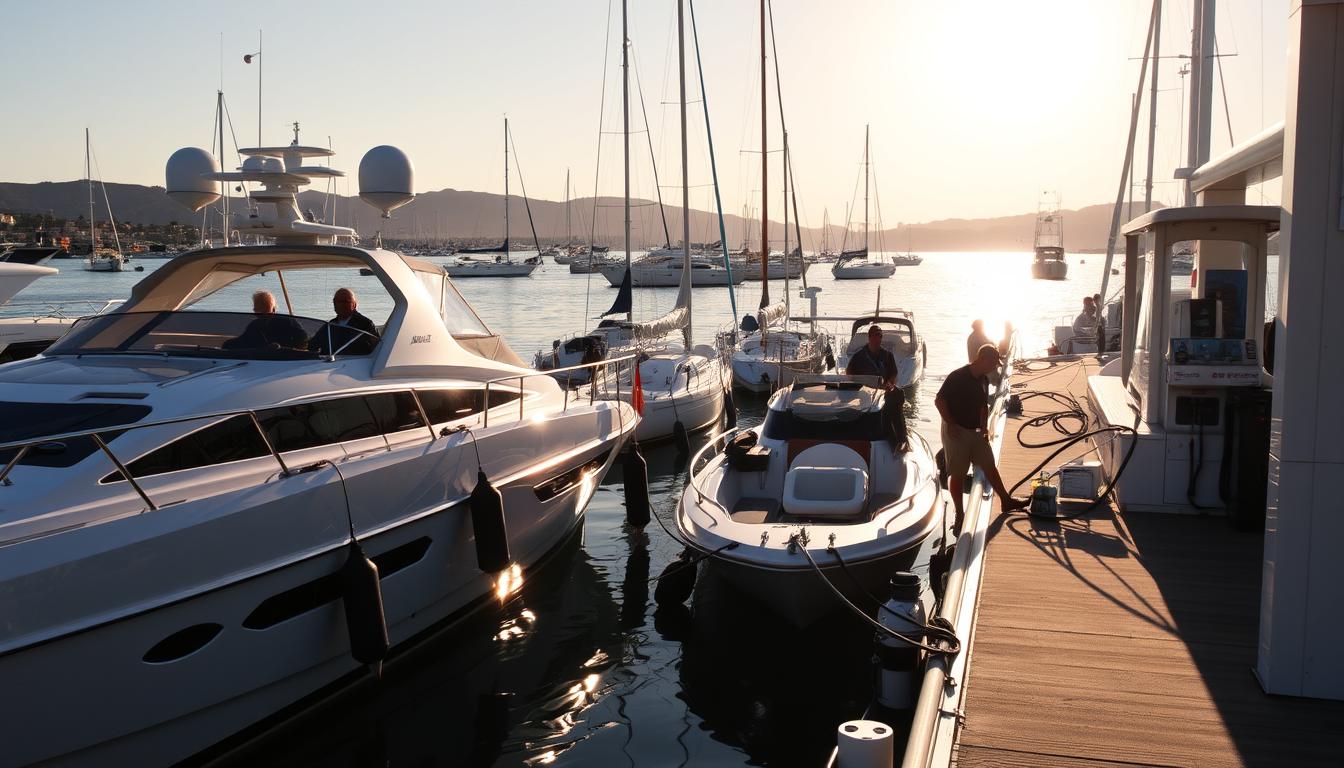
Locating the right marina fuel dock is like finding a secret spot for gas. It offers convenience, quality fuel, and the peace of mind that comes with avoiding a tow.
This isn’t just about fuel. It’s about knowing the costs, following safety rules, and giving your fuel plan the attention it deserves. It’s more important than your weekend playlist.
Types of Marine Fuels
Choosing marine fuels is like picking a drink at a bar. Each one has its own downsides. The old favorites are popular, but new options are changing the game.
Diesel is the reliable choice for the sea. It powers everything from small sailboats to big yachts. It’s great for long trips because it lasts longer.
Diesel is efficient because it has a lot of energy. You get more miles per gallon than other fuels. It’s also safer because it’s less likely to explode.
Petrol is the fast one. It gives you quick speed and power. But, it’s more expensive and can be dangerous.
Petrol vapors are very flammable. You need special systems to handle them. It also breaks down faster than diesel, which can be a problem.
Biodiesel is the green choice. It’s made from plants and cuts down on pollution. You can mix it with diesel without changing your engine.
But, biodiesel can gel in cold weather. It might also attract moisture. Some old engines might need updates to use it well.
Fuel use varies a lot. Sailboats use little fuel, like wine. Catamarans use a lot, like at a party.
Motor yachts use the most fuel. They drink it like it’s going out of style. Their fuel use is huge.
| Fuel Type | Best For | Consumption Rate | Cost Factor |
|---|---|---|---|
| Diesel | Long-range cruising, heavy vessels | Low to moderate | Medium |
| Petrol | Speed boats, small craft | High | High |
| Biodiesel | Eco-conscious boaters, newer engines | Moderate | Medium-high |
| Diesel-electric | Hybrid systems, luxury yachts | Very low | Very high |
Knowing what your engine likes is key. The right fuel boat choice depends on your boat and how you use it.
Marinas now offer many fuel options. You can find both traditional and new fuels at marine fueling stations. This lets boaters choose how to power their trips.
Hybrid systems are becoming popular. They mix diesel generators with electric motors. This gives quiet running at slow speeds and long range with diesel.
The world of marine fuels is always changing. The most important thing is to choose the right fuel for your boat and how you use it. The wrong choice can ruin a great day on the water.
How to Find the Right Fuel Dock
Finding the perfect gas dock is like navigating a political debate. You need facts, intuition, and skepticism. My journey started with GPS coordinates that promised diesel but gave a sandbar. I learned that technology often breaks its promises.
Here’s my guide to finding the right fuel dock:
- Depth charts over dating apps: A grounded hull can end romance fast. Always check digital maps against local advice.
- Operation hours matter: That 24/7 marina? It might not be open all the time. Always call ahead.
- Congestion calculus: A long line of boats? It’s like waiting in a DMV line on water. Plan your exit.

Modern tools like marine fuel apps give real-time data. But, they’re not always right. Use them to filter by region and status, unless you like surprises.
Paper charts are also valuable. They’re like old political memoirs—sometimes outdated but full of useful info. Mix old wisdom with new tech for the best results.
Ultimately, finding the right fuel stop is a mix of detective work and luck. It’s about avoiding bad experiences and keeping your tank and sanity full.
Fuel Dock Directory by Region
Let’s talk about fuel needs by region. The American coastline is not just one place for gas stations. It’s more like a map of different areas, each with its own fuel options and quirks.
The East Coast is known for being reliable. Here, marine diesel is everywhere, like votes in an election. From Maine to Florida, you’ll find plenty of fuel for all kinds of boats.
Out west, things change a lot. California’s marinas are all about trying new things, including alternative fuels. But for dependable power, marine diesel is the go-to.
The Gulf Coast is all about efficiency. With lots of commercial shipping, fuel docks here work hard. You’ll find deep drafts and good prices in this area.
Here’s a quick guide for navigating American waters:
- Northeast Coast: Mostly diesel, with depths 6-15 feet. Fuel can be harder to find in the north.
- Southeast/Gulf: Diesel is the main choice, with depths 8-20+ feet. Facilities are built for big ships.
- Pacific Coast: You’ll find a mix of fuels, with diesel at major ports. Depths vary from 5-18 feet.
- Great Lakes: Diesel is easy to find, with depths 4-12 feet. But fuel docks close in winter.
Remember, coordinates show where to go, depths tell if you can get there, and phone numbers are hopeful. It’s like voting in a big election—technically possible, but not always easy.
Tip: In the Pacific Northwest, fuel is like cell service—rare. Plan ahead or get ready to make friends with your emergency radio.
Price Comparison, Tips & Safety
Marina fuel prices can change a lot, like a politician’s promises. I learned this the hard way when I overfilled my tank. Now, seagulls give me side-eye when I go to that dock.
Fuel prices at marinas are weird. Island stations charge a lot, while mainland spots are cheaper. This difference can make you think twice about cruising around the harbor.

Fuel costs depend on where you are, the season, and how much they think you need it. Summer prices are as predictable as a reality show scandal. Always check the latest fuel reports before you buy.
Regional Marina Fuel Price Comparison
| Region | Average Regular Fuel | Average Premium Fuel | Seasonal Surge Period |
|---|---|---|---|
| Northeast Marinas | $4.25/gallon | $4.75/gallon | June-August |
| Gulf Coast | $3.80/gallon | $4.30/gallon | March-May |
| West Coast | $4.65/gallon | $5.15/gallon | Year-round |
| Great Lakes | $4.10/gallon | $4.60/gallon | July-September |
Save money by sailing more and motoring less. Plan your route with the wind and current. Your wallet and the planet will appreciate it.
Marina fuel safety is more than avoiding fires. It’s like casting a movie. Who’s on hose duty? Who’s paying? Who’s sneaking a beer?
Essential Fueling Safety Protocol
- Shut down all engines and electrical equipment
- Designate one person as fuel handler
- Keep fire extinguishers visible and accessible
- Close all cabin doors and windows
- No smoking within 50 feet of fueling area
Preventing spills is key. That sheen on the water is not pretty. Use absorbent pads and never trust automatic shut-off nozzles.
Going green means dolphins won’t judge you. Modern marinas have spill equipment. Use it. Nobody wants to be the boater who made the harbor look like an oil painting.
Marina fuel costs depend on location and demand. Sometimes, paying more is worth it to avoid running out. Other times, a discount is worth the extra trip. Choose wisely, fuel safely, and maybe wait to drink that beer until after you dock.
Boater Stories
Ever wonder what happens when Midwest meets marina? Imagine a couple from Ohio, new to boating, trying to fuel up in a storm. They thought a fishing dock was a fuel dock and almost caused a big problem with lobstermen. The key lesson? Always look for the bright yellow pumps, not the lobster traps.
Captain Rodriguez is the fuel sommelier of the Intracoastal. He can find premium diesel like a wine expert finds a fine wine. His secret is building good relationships with marina managers and knowing which stations have clean fuel. He treats fueling like a special ritual—because bad fuel far out at sea is a big problem.
I remember a charter guest who tried to help by grabbing the fuel nozzle. It was more like Jackass: The Maritime Edition than Deadliest Catch. The lesson is simple: sometimes the best thing to do is just watch the experts.
These stories are not just funny—they teach us valuable lessons. Each tale shows us the importance of being prepared, communicating well, and knowing that fishing docks don’t always sell gas. The stories of fueling show us more about being a good sailor than any book can.
What’s your most memorable marina fuel dock experience? We all learn from each other’s stories, both the good and the bad. After all, the best lessons often come from someone else’s mistakes.
Conclusion
Our journey has come to an end, and we’ve reached the shore safely. Fueling up is more than just about gas—it’s a way of life. It’s about planning, adapting, and being ready for surprises.
Smart fuel management means knowing your choices and using tools like marine fuel finder apps. It’s about turning worry into confidence by being prepared. Think of it as keeping your mind at ease.
The sea can be unpredictable, but your fuel plan doesn’t have to be. Whether you’re going for a weekend trip or a long journey, being prepared makes it easy. Now, get ready for your next adventure with a full tank and a clear path ahead.