Boating Weather Checks are not a formality; they are part of seamanship. I have watched calm mornings turn lumpy once tide, wind, and traffic met in the same narrow channel. A safe decision before departure means reading more than one forecast, matching it to the boat and crew, and accepting that weather products are guidance, not a promise. The aim is not to remove all uncertainty. The aim is to see enough of the pattern to make a conservative call.
Build Boating Weather Checks Before Departure
A useful predeparture routine begins on shore, where there is time to compare sources without spray on the screen or crew waiting for answers. NOAA’s recreational boating resources describe tools for boaters, including CO-OPS tide and current predictions at more than 2,700 tidal-current stations and tide predictions for more than 3,000 locations nationwide through NOAA recreational boating resources. Those predictions can support trip planning, but they still need to be matched against local observations, marine warnings, and the limitations of the vessel.
Boating Weather Checks At The Ramp
At the ramp or dock, Boating Weather Checks should become specific. Do not stop at a sunny sky or a land-based forecast. Ask practical questions: what wind direction will oppose the current, where will the fetch build, what happens if visibility drops, and how quickly can the crew return if conditions change? A smaller open boat, a tired crew, or an unfamiliar inlet should all lower the threshold for staying tied up.
I like to separate the decision into three parts: the forecast, the water, and the people aboard. The forecast tells you what is expected. The water tells you what is already happening. The people aboard tell you what margin you really have. A confident operator with cold, seasick, or inexperienced passengers still has a limited crew. Safety grows from matching the plan to the least prepared person on board, not the most experienced one.
Read Marine Forecasts In Layers
The National Weather Service separates marine forecasts into Coastal and Great Lakes, Offshore, and High Seas categories, and provides text and graphic forecast products through NWS marine forecasts. Recreational boaters close to shore should still be aware of the category that fits their route. A harbor run, a nearshore fishing trip, and an open-water crossing may all sit under different forecast products or zones.
Wind Waves Visibility And Warnings
Boating Weather Checks work best when wind, waves, visibility, and warnings are read together. Wind speed alone can be misleading. A moderate breeze blowing against tide can make steep chop in a pass or river mouth. Wave height alone can also mislead if the period is short or the direction places seas on the beam. Fog, smoke, heavy rain, or lightning risk can make a trip unsafe even when waves look manageable.
Marine warnings, watches, and advisories deserve careful attention. In the research used for this article, NWS warning language is described in plain terms: a Marine Warning points to dangerous conditions that are imminent, while a Marine Watch means conditions are favorable for a hazard to develop. That difference matters. A watch should not be treated as permission to leave; it should prompt a careful review of timing, route exposure, and return options.
- Check the marine forecast for the exact forecast zone you plan to use.
- Read wind direction, wind speed, gusts, wave height, and wave timing together.
- Compare predicted conditions with buoy, harbor, or shoreline observations where available.
- Review tide and current timing for departure, return, and any narrow channels.
- Set a firm go or no-go point before crew and gear are loaded.
Tides Currents And Local Water Clues
Tides and currents can quietly decide the character of a trip. A fair tide at departure may become a foul tide at return. A current that helps a sailboat clear a point may slow the same boat on the way home. For powerboats, current can change fuel planning, docking angle, and the amount of room needed to turn near slips or pilings.
Make Boating Weather Checks Local
Make Boating Weather Checks local by looking at the water you will actually cross. Tide predictions for a nearby station may not exactly match a shallow creek, marina basin, or inlet. Local effects can be shaped by channel depth, shoreline shape, recent rainfall, and wind setup. That does not make official predictions less useful; it means they should be read as part of a wider picture.
NOAA’s Tides and Currents services, as described in the research, provide official U.S. high and low tide predictions, real-time water levels, currents, and short-range oceanographic forecasts. For a recreational skipper, the practical lesson is simple: timing matters. If low water leaves little depth at the ramp, if current will run hard through a bridge, or if wind opposes the ebb at an inlet, the safer answer may be to delay or shorten the plan.
For a deeper weather workflow connected to route choices, this related article on marine weather monitoring fits well with the same safety-first habit: check, compare, and reassess before departure.
Use Apps Without Letting Them Decide
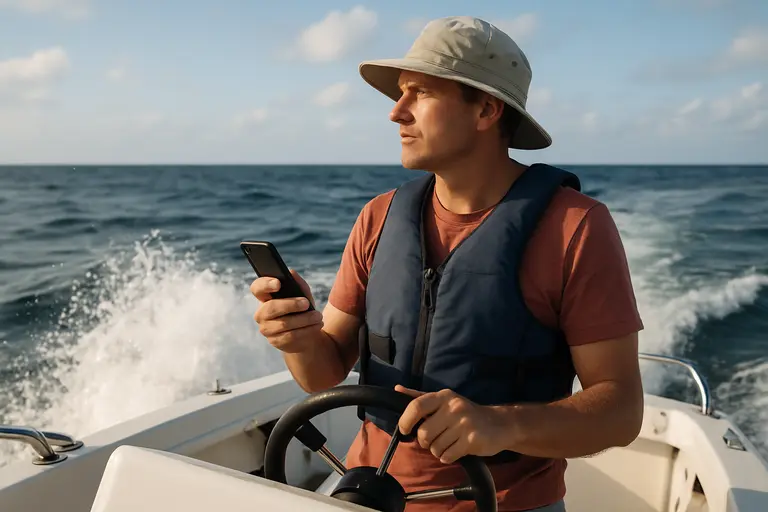
Weather apps can be helpful, especially when they show layers for wind, wave height, swell period, tide charts, buoy observations, harbor sensors, and alerts. The research notes that many apps in 2026 include those features. Still, an app is not the skipper. Different models can disagree, update times can vary, and poor cellular coverage can leave a crew with stale information. Downloaded data should be treated as a backup, not a reason to ignore official marine products or what the sky and sea are showing.
Keep Screens In Their Place
I use screens the way I use a compass bearing: as one input, not the whole decision. If an app shows improving conditions but the harbor entrance is already breaking harder than expected, believe the water. If radar suggests a line of storms is moving faster than the text forecast implied, reassess early. If a crew member asks whether the trip still feels right, listen. Good seamanship has room for caution.
For clubs, families, and community groups sharing boating safety habits, outside reading should support the same principle: decisions on the water need credible weather information and plain communication. Resources within the same network, like Talk and Play, can offer community support, while captains continue to base go or no-go calls on marine forecasts, observations, and local conditions.
Checking Weather Conditions Before Boating
Checking Weather Conditions Before Boating is not a single click. It is a repeatable routine: review the marine forecast, compare tide and current timing, check warnings, look at real observations, and decide whether the trip still fits the boat and crew. If the answer feels uncertain, shorten the route, stay closer to shelter, or wait for a better window.
A Conservative Weather Habit
The best Boating Weather Checks leave room for humility. Weather products are valuable, but small craft live in local details: a gust line crossing the bay, a confused inlet chop, a fog bank sitting low against the shore, or a return tide that will not favor a tired crew. A safe skipper does not need dramatic conditions to change plans. Sometimes the safest and most enjoyable boating day is the one saved for better water.
Before leaving the dock, write down the weather trigger that will send you home: a wind speed, a wave height, a visibility limit, a thunderstorm threat, or a time by which you must turn back. Share that trigger with the crew. Then keep checking. Weather judgment improves when it is treated as an active part of the trip, not a task completed before the engine starts.