Boating safety equipment is not just a storage-bin requirement; it is the physical backup for judgment, weather awareness, and crew discipline. Recent U.S. recreational boating accident reports point to the same lesson many experienced skippers learn quietly over time: trouble often grows from small gaps. A life jacket left under a seat, a lookout distracted for a minute, a weak navigation light at dusk, or a loose cut-off link can turn a routine outing into a preventable emergency.
I read accident data with a weather eye. Numbers do not predict what will happen on your next run across the bay, and they cannot capture every local current, wake, squall line, or human decision. They do, however, help boaters focus attention before leaving the dock. The safest crews I have known do not treat gear as decoration. They touch it, test it, fit it, and talk through how it will be used.
Boating Safety Equipment Lessons From 2024
What The Reported Numbers Can And Cannot Tell Us
The 2024 U.S. Recreational Boating Statistics, released on July 1, 2025, reported 556 fatalities, 2,170 injuries, and 3,887 reported incidents. Among fatalities with a known cause, 75% were drownings, and 87% of drowning victims were not wearing life jackets, according to the U.S. Coast Guard announcement on the 2024 boating fatality report. Those figures should be read carefully. They describe reported national data, not every event on every waterway. Still, they strongly support a practical habit: flotation needs to be worn or immediately usable, not buried under spare towels.
Other reported factors point beyond flotation. Alcohol use was attributed to 92 deaths in 2024, representing 20% of total fatalities where the primary cause was known. Operator inattention was the leading contributing factor in incidents, with 551 reported incidents, followed by improper lookout at 464 and operator inexperience at 436. The same federal report also listed navigation rules violations, inadequate onboard navigation lights, improper loading, overloading, machinery failure, hull failure, hazardous waters, and weather-related issues as factors in reported incidents and deaths, as detailed in the Coast Guard’s 2024 recreational boating statistics.
Those categories are not abstract to anyone who has watched a clean morning flatten into glare, chop, and confusion by midafternoon. Safety gear cannot replace sober operation or attentive boat handling. It can, however, give a crew more options when judgment, weather, or machinery is tested.
Life Jackets, Throwables, And Engine Cut-Off Links
Boating Safety Equipment Starts With Wearable PFDs
Boating safety equipment begins with a Coast Guard–approved wearable personal flotation device for every person aboard a U.S. recreational boat, as described in the research provided for this article. Boats over 16 feet must also carry a throwable flotation device. Federal requirements also state that children aged 13 and under must wear life jackets on vessels, while states may set stricter requirements. Because local requirements may vary, boaters should check the rules for the waters where they operate before departure.
The practical standard is higher than simply owning the gear. A life jacket must fit the wearer, be in serviceable condition, and be close enough to matter. Children, weak swimmers, cold-water passengers, and anyone moving around a small open boat are safer when wearing flotation from the start. In a sudden fall overboard, a person may not have the time, reach, or strength to retrieve and secure a stowed jacket.
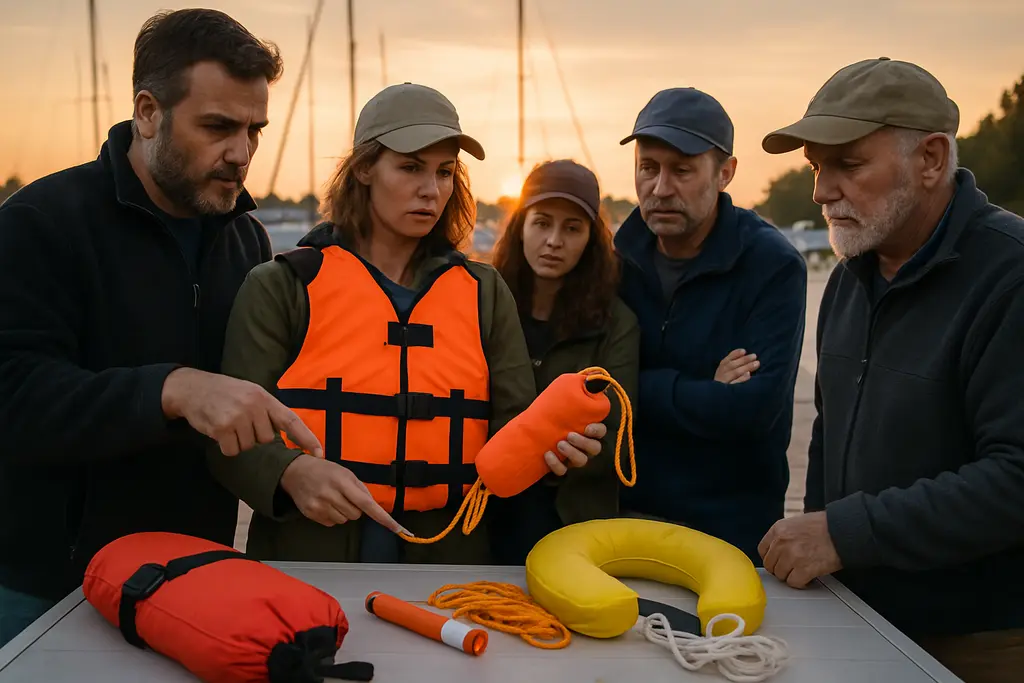
Before casting off, I like a direct crew check: point to each life jacket, match sizes to people, confirm the throwable is not tied down or trapped under gear, and explain who will throw it if someone goes overboard. This simple talk can feel slow at the dock, but it is far faster than confusion during a real recovery.
Cut-Off Links Are Part Of The Operator’s Routine
Engine cut-off switches are another area where the equipment has to be connected to behavior. As of April 1, 2021, covered recreational vessels less than 26 feet with an installed engine cut-off switch and 3 or more horsepower static thrust must be equipped with one, and the operator must use the associated link when the boat is on plane or above displacement speed, based on the research notes supplied. The link may be a lanyard or an equivalent device.
From a seamanship standpoint, the reason is plain: if the operator is thrown from the helm or displaced, the engine should stop rather than continue to drive the boat uncontrolled. The best routine is physical and repeatable. Clip in before advancing throttle, confirm the link does not snag on clothing or controls, and brief a second capable person on how to stop the engine. For more dockside gear habits, a related safety discussion on boating equipment and tragedy prevention pairs well with this approach.
Lights, Lookouts, Loading, And Weather
Night Lights And Lookout Discipline
Boating safety equipment includes navigation lights, but lights alone do not make a boat visible enough for every condition. The 2024 report data in the research notes identified navigation rules violations as contributing to 288 incidents and 17 deaths. Inadequate onboard navigation lights directly factored in 16 incidents and 7 deaths. Those numbers are a reminder to test lights before low visibility, dusk, or night operation—not after the sun has already dropped.
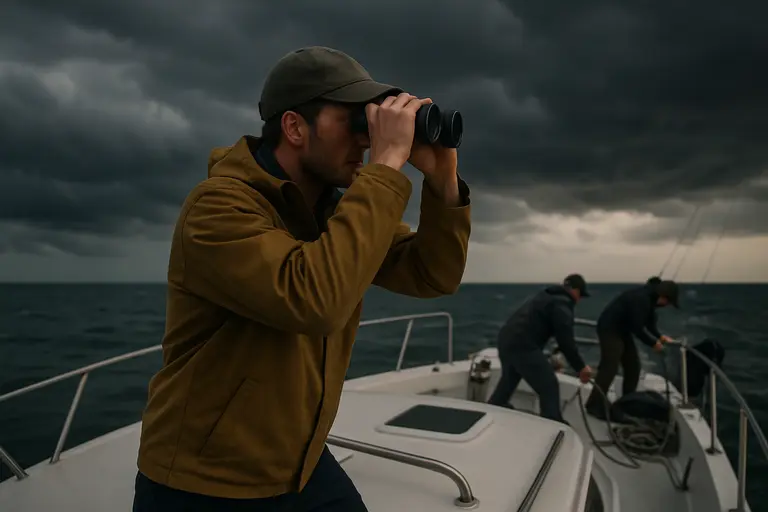
A proper check is simple: turn on the required lights, walk the boat if safe at the dock, and confirm lenses are clean, mounted securely, and not blocked by canvas, coolers, passengers, or fishing gear. Then assign lookout duties. Operator inattention and improper lookout were among the leading incident factors in 2024, so the human scan matters as much as the fixture. A lookout should understand the route, expected traffic, and where blind spots exist from the helm.
Weight, Machinery, Hull, And Weather Checks
Loading and balance deserve more respect than many crews give them. In 2024, improper loading was responsible for 54 incidents and 25 deaths, while overloading contributed to 27 incidents and 10 deaths, according to the research notes. That does not mean every heavy cooler creates danger, but it does mean weight placement, passenger movement, and capacity limits belong in the safety conversation.
Distribute weight low and evenly, keep heavy gear from sliding, and avoid crowding people into one corner during departure, docking, or wake crossings. If the boat feels sluggish, lists at rest, ships spray easily, or struggles to recover after crossing a wake, slow down and reassess. The weather side of this habit is just as direct. Weather-related issues were tied to 188 incidents and 55 deaths in 2024, while hazardous waters were tied to 172 incidents and 53 deaths in the research notes. A forecast check before departure is necessary, but it is not enough. Keep watching the sky, wind line, chop direction, and temperature shifts.
Machinery and hull problems also appear in the accident data. Machinery failure accounted for 289 incidents and 13 deaths, while hull failure played a part in 58 incidents and 3 deaths in 2024. A boater cannot inspect every internal part on a short morning trip, but basic checks are within reach: fuel level, bilge water, battery condition, steering response, engine alarms, hoses, through-hull fittings, and any sign of impact or cracking. If something sounds different from the last trip, treat that change as information, not background noise.
- Fit and stage wearable life jackets for every person before leaving the dock.
- Keep a throwable flotation device visible and free from tie-downs or loose gear.
- Connect the engine cut-off link when required and brief another adult on engine stop controls.
- Test navigation lights before reduced visibility, not after darkness arrives.
- Assign a lookout when traffic, glare, weather, or towing activity increases workload.
- Check load placement, hull condition, bilge, steering, battery, and fuel before departure.
- Recheck weather and water conditions during the trip, especially when wind or chop changes.
Boating Safety Equipment Habits After 2024 Reports
A Dockside Routine That Crews Can Repeat
Boating safety equipment works best as part of a repeated routine. A skipper who says, “We always keep life jackets aboard,” has not said enough. A safer version is, “We fit them before departure, children wear them, the throwable is clear, the cut-off link is used, the lights work, the load is balanced, and the weather is still acceptable for this boat and crew.” That sentence may sound plain, but plain language is useful when wind is rising and people are waiting to get underway.
There are limits to any checklist. It cannot guarantee calm water, prevent every mechanical failure, or correct poor judgment after departure. It also cannot substitute for training, sober operation, and knowledge of local rules. What it can do is catch common gaps before the boat is committed to open water. For families and clubs that teach newer boaters, shared reminders from resources such as the discussions available through Talk and Play can help keep safety discussions approachable, especially when mixed-experience crews are learning together.
The accident reports from 2024 point toward a steady, practical pattern: wear flotation, stay sober, keep watch, respect load limits, maintain machinery, show proper lights, and keep reading the weather. None of these habits require drama. They require attention. On the water, attention is often the quiet difference between a good story at the dock and a call for help that no crew expected to make.