Boat registration is often treated as paperwork, but it belongs in the same safety conversation as life jackets, sober operation, operator instruction, and equipment checks. After a serious accident, investigators and families often need clear vessel identification, accurate ownership records, and evidence that the operator understood basic responsibilities. Registration does not make a boat safe by itself. It does, however, create a practical link between the vessel, its owner, and the safety duties that should be reviewed before every outing.
The national data show why this matters. The National Safe Boating Council reported 11,674,073 registered recreational vessels in the United States in 2024, a 1.1% increase from 2023, and also reported that where instruction was known, 69% of deaths occurred on boats where the operator had not received boating safety instruction recreational boating facts. Those two figures belong together: more registered boats mean more people sharing waterways, and safe operation depends on more than owning a hull, motor, or trailer.
Why Boat Registration Fits Into Safer Boating
Boat Registration And Vessel Accountability
Boat registration gives a vessel a traceable identity. For everyday owners, that identity helps organize records, keep contact details current, and confirm that the boat being used is the one documented with the appropriate authority. Requirements vary by location and vessel type, so owners should check their state boating agency or local authority for current rules. This article is safety guidance, not legal advice, and it cannot determine whether a specific boat, tender, personal watercraft, or trailer is compliant in a given state.
From a marina service standpoint, clear identification also reduces confusion. A hull with legible numbers, current documents kept dry, and matching owner information is easier to manage during routine dock checks, haul-out scheduling, storm preparation, or emergency contact efforts. If a boat breaks loose from a slip or is reported overdue, accurate identification can save time. That is not a guarantee of a good outcome, but it removes avoidable uncertainty during a stressful event.
What Registration Does Not Replace
Registration should never be mistaken for seamanship. A properly documented vessel can still be operated too fast, overloaded, poorly maintained, or handled by someone with no safety instruction. The U.S. Coast Guard reported 556 recreational boating fatalities in 2024, the fewest in more than 50 years, with a fatality rate of 4.8 deaths per 100,000 registered recreational vessels. The same report stated that alcohol use was the leading known contributing factor in fatal boating accidents in 2024, accounting for 92 deaths, or 20% of total fatalities Coast Guard report.
Those numbers support a practical point: paperwork, sober operation, instruction, watchkeeping, and maintenance all need to work together. A registration decal on the hull will not prevent an impaired decision. It will not keep a lookout, interpret markers, or spot a mechanical problem. Treat boat registration as the starting file for a safety culture, not as proof that the boat is ready for open water.
Licensing, Instruction, And Operator Readiness
Licensing Rules And Safety Education
Operator licensing, boating safety cards, and education requirements are not identical across the country. Some states use age-based rules, some require approved safety education for certain operators, and some apply special requirements to personal watercraft. Because rules change and local conditions differ, owners should confirm current requirements directly with the agency responsible for boating in their area.
What is clear from the research is that instruction matters. The reported share of deaths involving operators without known safety instruction is a warning sign for every dock, club, and launch ramp. A new owner may know how to start an engine and steer out of a slip, yet still be unprepared for crossing traffic, restricted visibility, wake handling, passenger briefings, or sudden weather changes. Instruction is not only for beginners. Experienced boaters benefit from refreshers because habits can drift over time.
Licensing or safety-card compliance should be paired with practical readiness. Before departure, the operator should know the intended route, expected conditions, fuel plan, passenger count, communication method, and emergency gear location. Guests should know where life jackets are stored and how to put them on. Children and weaker swimmers should not be expected to find gear after trouble starts.
Passenger Safety And Life Jackets
The life jacket data are direct and sobering: in 2024, 87% of drowning victims in recreational boating accidents were not wearing a life jacket, according to the research provided. That fact should shape how owners brief guests. A life jacket stored under a cushion may satisfy an equipment check in some circumstances, but it cannot help a person who is already in the water, injured, panicked, or separated from the boat.
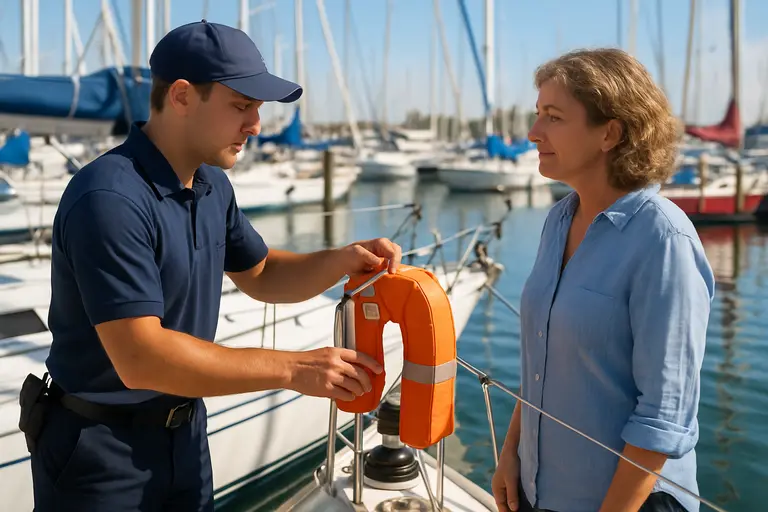
A sensible marina habit is to place wearable life jackets where they can be seen before lines are cast off. The operator should check fit, especially for children, and confirm that each person has a suitable device. If the trip involves cold water, night operation, high traffic, or limited swimming ability among passengers, wearing life jackets from the start is the safer practice. For night operations, slower speed, working lights, and route planning also matter; related guidance on nighttime boating safety expands on those habits.
Dockside Checks That Support Registration Records
Hull Numbers, Documents, And Contact Information
A practical safety routine begins at the dock with the paperwork and the hull in the same check. Confirm that the displayed numbers are readable, the registration document is dry and accessible, and emergency contact information is current. If ownership, address, or phone details have changed, update the record through the proper authority. In a marina setting, also make sure the dock office has a current emergency contact for the vessel if that service is part of the facility’s normal process.
Boat registration records are most useful when they match reality. A boat that has changed owners, moved slips, or had its identification damaged may create delays when quick information is needed. After storms, groundings, or breakaway incidents, responders and marina staff need reliable details. Owners can reduce confusion by keeping copies organized and by checking the hull markings during regular washdowns.
Mechanical And Safety Gear Review
Research identifies machinery failure among the top five primary contributing factors in boating incidents, along with operator inattention, improper lookout, operator inexperience, and rules violations. That list points to a balanced dockside routine. Do not focus only on forms and decals. Look at fuel, steering response, battery condition, bilge water, engine alarms, lines, fenders, lights, and communications gear before leaving.
- Confirm vessel documents and operator credentials required for the trip are aboard and readable.
- Check that hull identification markings are visible and not covered by grime, fenders, or damage.
- Place life jackets where passengers can reach them and confirm fit before departure.
- Review the route, weather, fuel, and return plan with at least one responsible person aboard.
- Do not operate after drinking alcohol, and do not assign an impaired person to safety duties.
Open motorboats deserve special attention because the research notes they were involved in 47% of reported incidents and accounted for 46% of deaths where vessel type was known. This does not mean every open motorboat is unsafe. It means owners should be honest about exposure, passenger movement, speed, wake, and weather. Smaller open boats can be especially sensitive to overloading, shifting weight, and sudden changes in conditions.
Tragedy Prevention Starts Before Departure
Using Data Without Overstating Certainty
Safety statistics help identify patterns, but they do not predict the outcome of a single outing. Florida’s 2024 figure of 632 boating accidents and 70 deaths, the highest in the nation according to the research, reflects heavy boating activity and real risk, but it should not be used to assume that danger is limited to one state. Local waterways, traffic density, weather, operator behavior, and maintenance condition all shape risk. Boaters interested in regional prevention habits may also find practical context in these Florida boating safety steps.
The same caution applies to the reported $88 million in property damage from recreational boating incidents in 2024. Property loss is serious, yet the human cost is greater. A damaged dock, hull, or engine can often be repaired. A missing life jacket, impaired operator, or untrained response during an emergency can have lasting consequences.
Building A Repeatable Safety Habit
The safest owners I see at marinas do not rely on memory alone. They build repeatable habits: confirm documents, review credentials, inspect the boat, brief passengers, wear life jackets when conditions call for it, and operate sober. Boat registration belongs in that routine because it keeps the vessel’s identity and ownership record clear, but it works best when paired with instruction and honest pre-trip judgment.
After a tragedy, it is common to ask what might have changed the outcome. The most useful answer is usually a chain of small decisions made earlier: current records, trained operators, sober judgment, working equipment, proper lookout, and life jackets worn before the emergency. Boat registration is one link in that chain. Keep it current, keep it visible, and treat it as part of a broader safety system every time the boat leaves the dock.