
Boat Fire Safety is not a single item clipped to a bulkhead. It is a set of habits: tested alarms, reachable extinguishers, clean escape paths, safer charging routines, and crew members who know what to do in the first minute of smoke or heat. Recent completed fire investigations, including the September 2, 2019 Conception fire and later vessel fire reports, showed how quickly small maintenance misses can become life-threatening onboard.
For recreational owners, some rules that apply to inspected small passenger vessels may not apply in the same way. Still, the maintenance lessons are useful for any skipper who sleeps aboard, charges batteries onboard, stores gear in lockers, or carries guests. Applicability depends on vessel type, passenger service, build, and operating route, so owners should verify requirements with the U.S. Coast Guard, a qualified marine technician, or the authority that inspects their vessel.
Boat Fire Safety Checks After Recent Fires
Boat Fire Safety Inspection Rhythm
A practical Boat Fire Safety routine begins with a fixed calendar. Monthly checks are easier to remember than checks done only before a long trip. Walk the boat from bow to stern and look at each fire extinguisher, detector, escape hatch, engine-room access point, battery area, and galley. Do not treat the inspection as paperwork only; touch the mount, read the gauge if fitted, check for damage, and confirm that gear is not buried behind bags, tools, or spare dock lines.
Fire safety equipment should also be checked after any yard period, electrical repair, battery change, or cabin refit. A contractor may move an extinguisher to reach wiring. A crew member may load supplies in front of an escape panel. A newly added charger may change the heat and electrical load in a compartment. These changes are common, but they should trigger a fresh look at fire readiness before the boat leaves the dock.
Learning From Completed Reports
The U.S. Coast Guard interim rules that took effect in March 2022 after the Conception fire required smoke detection systems in all accommodation spaces on covered small passenger vessels with overnight accommodations, with those systems interconnected, and also addressed escape routes and roving patrols Federal Register rule. That regulatory action was aimed at a specific vessel group, yet the safety lesson is wider: if people are sleeping, warning and escape cannot depend on one person noticing smoke by chance.
Recreational crews can apply the same mindset by placing detection where people sleep and gather, keeping doors and hatches usable, and assigning a clear nighttime check when anyone sleeps aboard. For more general maintenance routines that pair well with this work, the site’s safety equipment maintenance notes can help owners think through removal from service, records, and readiness checks.
Detection, Escape, And Overnight Watch
Smoke Detectors In Accommodation Spaces
Smoke detectors need more attention than a quick glance at the ceiling. Test them on the schedule recommended by the maker, replace batteries or units as directed, and document the check. If a detector is covered during sanding, painting, cooking, or cleaning, remove the cover as soon as the work is done. A covered or disabled alarm is a silent failure.
Interconnection matters because fire may start away from the people most at risk. If smoke reaches a galley or machinery space first, a person asleep in a berth may not wake in time unless the warning reaches the sleeping area. On vessels not required to carry an interconnected system, owners should still ask a qualified installer what arrangement is practical and suitable for the boat’s layout.
Escape Paths That Stay Open
Escape equipment is not only a hatch or ladder. It is the space around that hatch or ladder. Do not stow coolers, dive bags, folding chairs, or spare parts where they block an exit. Mark secondary exits so guests can find them without a tour of the boat in daylight. Practice opening hatches from inside, especially on boats where screens, curtains, cushions, or gear can get in the way.
Overnight operation calls for an added layer of discipline. A roving patrol or night watch should look for heat, smoke, unusual smells, charging problems, blocked exits, and unsafe galley conditions. The check should be verified, not assumed. A simple log entry with time, initials, and any correction made is often enough for a private owner’s record, while inspected operations may need a formal process set by regulation or company policy.
Extinguishers, Fixed Systems, And Charging
Portable Extinguishers And Fixed Systems
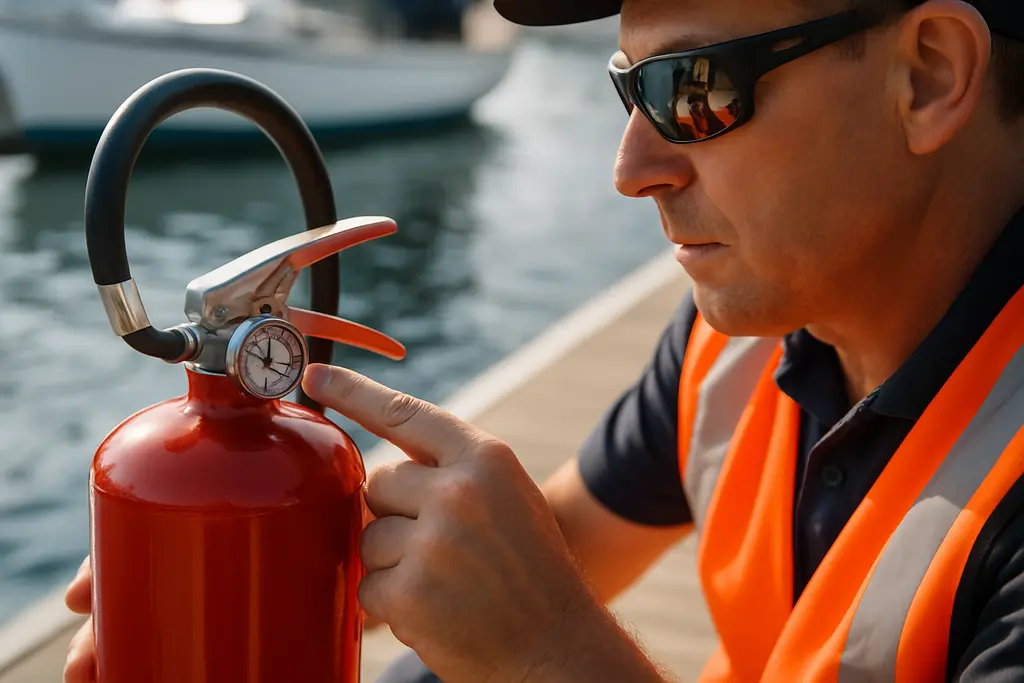
Portable extinguishers should be easy to see, easy to remove from the bracket, and suitable for the hazards carried onboard. Check the tamper seal, pressure indicator where provided, corrosion, dents, hose or nozzle blockage, label condition, and mount security. If an extinguisher has been used, even briefly, treat it as out of service until it is replaced or serviced by a qualified person.
Fixed fire-extinguishing systems need their own care. Owners should follow the approved marine installation, operating, and maintenance instructions for the exact system installed. Do not substitute parts because they appear to fit. Confirm that manual pulls are labeled, reachable, and not jammed behind stored gear. If the system protects an engine space, make sure crew understand shutdown steps, ventilation controls, and when not to reopen a hot compartment.
Lithium Batteries And Charging Control
Battery charging deserves special attention. The NTSB’s Safer Seas Digest 2025 described the Flagship yacht fire as involving thermal runaway in a lithium-ion battery bank, with inoperable battery management systems and manual, unsupervised charging noted in the report Safer Seas Digest 2025. The maintenance lesson is direct: battery management systems, chargers, wiring, ventilation, and operating practices all matter.
Do not leave unfamiliar charging setups running without oversight. Inspect cords and connections for heat damage, loose fittings, corrosion, or strain. Avoid daisy-chained power strips and long extension-cord runs through sleeping spaces. If a battery system uses a dedicated management system, verify that it is active and showing normal status before charging. If alarms, error codes, swelling, odor, heat, or repeated charger faults appear, stop using the system and seek qualified service.
Training, Records, And Work Control
Make Drills Practical
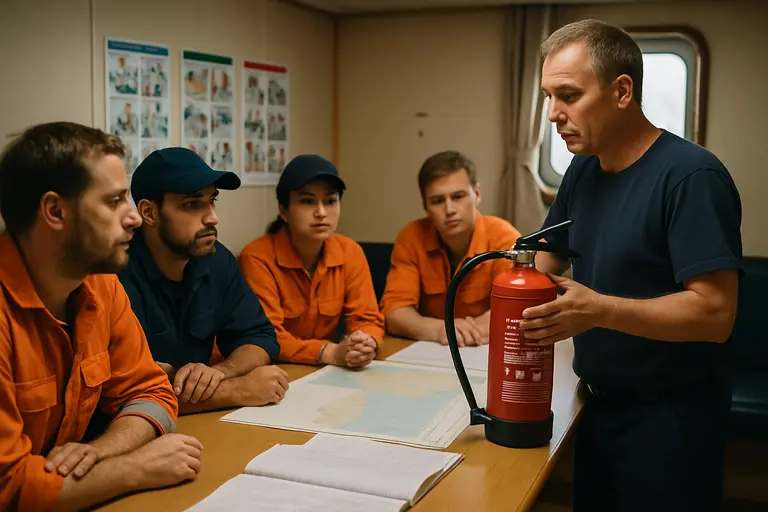
Fire drills should match the boat rather than a generic script. Crew and frequent guests should know where extinguishers are, how to raise an alarm, how to shut down engines or chargers if safe, where life jackets are kept, and how to leave the cabin without returning for personal items. A short dockside drill is better than a long briefing no one remembers.
Ventilation and fixed systems need special discussion. In a fire, opening the wrong hatch or running the wrong fan can worsen conditions. Owners should read the system manual and ask a qualified technician to explain the intended sequence. If the vessel has labels that are faded, missing, or unclear, replace them before the next trip.
Control Work During Repairs
Many fires begin during or after maintenance because wiring, fuel lines, insulation, hot work, or stored materials were disturbed. Before any repair period, remove unnecessary combustibles from work areas, keep extinguishers accessible, and confirm who is responsible for fire watch if heat-producing work is done. After work is complete, inspect the area again before closing panels.
Use manufacturer guidance and correct spare parts for engines, electrical gear, chargers, and firefighting systems. A part that almost matches can create a new hazard. Keep invoices, manuals, inspection tags, and photos of finished work in a Boat Fire Safety log. For those interested in maritime news, they might want to explore Old Norse News, a related site in the same network focused on similar topics; for onboard maintenance, keep the vessel log focused on dates, defects, corrections, and who performed the work.
Maintaining Fire Safety Equipment After Boat Fires
Maintaining fire safety equipment is steady work, not a once-a-year rush before launch. Start with detection in sleeping and accommodation spaces. Keep escape routes distinct, marked, and open. Inspect portable extinguishers and fixed systems on schedule. Treat battery charging as a controlled operation, especially where lithium-ion systems are installed. Train people who sleep or work aboard, and write down checks so missed items stand out.
Boat Fire Safety improves when crews accept limits. A small extinguisher cannot fix every fire. A detector cannot help if it has a dead battery. A fixed system cannot perform as intended if the manual pull is blocked or the wrong part was installed. The safer habit is to find those weaknesses at the dock, correct them with qualified help, and keep the boat ready for the first sign of trouble.