Marine safety initiatives are most useful when boaters treat them as working tools, not background information. A local marina bulletin, a boating class, a life jacket reminder, a harbor notice, or a debris report can change the way a crew prepares before leaving the slip. The value is practical: better planning, clearer communication, and fewer avoidable surprises on the water.
National programs help shape many of those local efforts. In May 2026, the U.S. Coast Guard and NORC launched the 2026 National Recreational Boating Safety Survey, inviting more than 50,000 households across all 50 states and the District of Columbia to participate. That type of data helps inform safety standards, boating policy, and local law-enforcement priorities. Still, a national survey does not replace the captain’s own responsibility to check vessel condition, crew readiness, weather, route, fuel, and emergency gear before departure.
How Marine Safety Initiatives Work Locally
Community Data Guides Local Priorities
Local boating programs often begin with accident patterns, vessel activity, and public-safety concerns. A national fisheries report noted that in 2022 the United States had 11,770,383 registered recreational vessels, with reported recreational boating accidents involving 636 deaths, 2,222 injuries, and about $63 million in property damage; the fatality rate was 5.4 deaths per 100,000 registered recreational vessels, according to the NOAA Fisheries report. Those figures do not tell a marina exactly what will happen on a given weekend, but they do show why local safety reminders are not just paperwork.
For a boating club, harbor office, or marina manager, data can point toward recurring needs: life jacket use, sober operation, better departure briefings, radio familiarity, ramp etiquette, and greater awareness around swimmers or paddlers. For an individual boater, the lesson is more direct. Treat every trip as a small risk-management exercise. Check what is known, name what is uncertain, and avoid letting routine create a false sense of security.
Turning Marine Safety Initiatives Into Habits
Marine safety initiatives become stronger when they are converted into repeated habits. A poster at the fuel dock is easy to ignore; a short crew briefing before lines are cast off is harder to miss. A marina email about changing water access has limited value unless the skipper also checks draft, fuel range, alternate stops, and crew comfort before committing to the route.
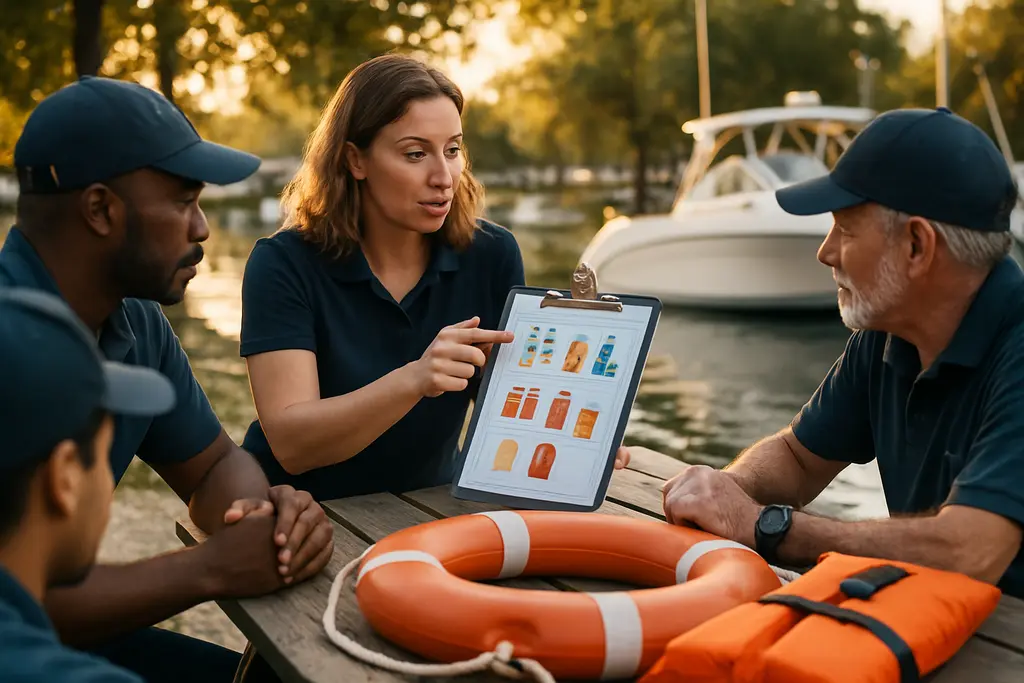
These marine safety initiatives also work best when everyone aboard has a role. One person can confirm life jackets are accessible and correctly sized. Another can handle dock lines. A third can monitor local notices or weather updates before departure. None of these jobs require expert seamanship, but they reduce confusion during the first few minutes of a trip, when many small mistakes begin.
Community Resources Boaters Can Use Before Leaving The Slip
Marina Checks And Education
Most recreational boaters already pass several safety resources before getting underway: the marina office, dockmaster, fuel dock, launch ramp signage, and local club bulletin board. Those resources are only useful if they are read and questioned. Ask about temporary hazards, pump-out status, restricted areas, unusual shoaling, or local events that may increase traffic. If the answer is uncertain, slow the plan down rather than forcing the outing to fit the schedule.
Boaters who want a simple starting point can pair their own vessel checks with local reference material such as marina safety resources. The best use of those resources is not passive reading. Keep a written or digital pre-departure checklist, then update it as your boat, crew, and waters change.
Drowning Prevention And Life Jackets
Drowning prevention is a core part of community water safety. The CDC Foundation’s June 2024 information on drowning prevention reported that from 2020 through 2022, more than 4,500 people died from drowning each year in the United States, about 500 more deaths annually than in 2019. The same research notes identify higher risk among American Indian and Alaska Native persons and Black persons. Local boating programs cannot solve every cause of drowning, but they can make life jacket access, swimming awareness, and emergency response planning more visible.
As of September 2026, the U.S. National Water Safety Action Plan included 98 evidence-informed action recommendations for community-level and state-level drowning prevention. NASBLA life jacket dashboards also provide state and national information on laws, wear rates, and drowning fatalities through the Boating Accident Report Database. For boaters, the safe choice is straightforward: check the rules in your state, carry properly sized approved life jackets, and make wearing them normal for children, weak swimmers, rough weather, cold water, night travel, and any situation where recovery would be difficult.
- Confirm life jackets are reachable, fitted, and appropriate for the activity.
- Give the crew a short briefing on falls overboard, fire, radio use, and return-to-dock plans.
- Check marina notices, local hazards, fuel availability, and any access limits before departure.
- Inspect bilge areas, batteries, lines, navigation lights, and basic engine condition before leaving.
- Leave a float plan with someone ashore who knows when to raise concern.
Maintenance And Debris Work That Supports Safety
Debris Is A Practical Hazard
Marine debris work is often discussed as an environmental issue, but boaters should also view it as a safety and maintenance concern. NOAA’s Marine Debris Program reported that its large-scale removal work has involved 113 projects across 30 states or territories, removed more than 50.19 million pounds of marine debris, and created or supported 1,372 jobs through the large-scale removal projects. Those figures show that debris is not a minor or isolated matter.
For the recreational skipper, the response is plain: keep a proper lookout, reduce speed when debris is seen, and avoid running through floating material when a safer route exists. If contact occurs, do not assume the boat is fine because the engine still runs. Once safe, check for vibration, steering changes, cooling-water issues, damaged lines, or unusual sounds. At the dock, inspect running gear or arrange a qualified inspection if anything feels different.
Post-Trip Maintenance As Prevention
Many safety problems start as maintenance delays. A weak battery becomes a failed start. A chafed line parts in a crosswind. A navigation light that was “probably fine” becomes a problem after sunset. Community reminders can help, but the owner or operator still has to act. After each trip, write down anything that needs repair before the next outing. Do not rely on memory, especially after a long day in sun, wind, and noise.
A useful post-trip rhythm is simple: secure the boat, note fuel and battery status, inspect dock lines and fenders, check for water where it should not be, and record any mechanical concern. If a marina or club shares safety notices, compare those notices with what you observed on the water. For community news habits outside the marina, related network resources such as Old Norse News demonstrate the importance of reliable local information. They highlight why clear information paths matter; prioritize official marina, harbor, and agency updates when making boating decisions.
Building A Local Contact Plan
What To Record
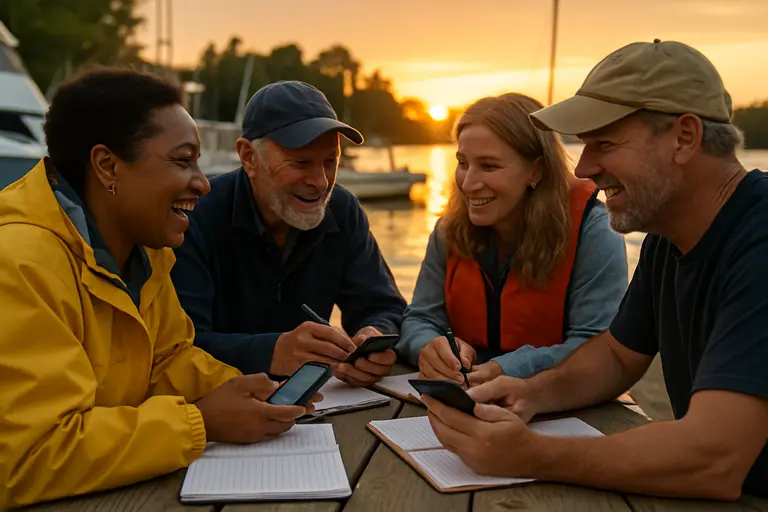
A local contact plan should be short enough that the crew will use it. Include the marina office, dockmaster or launch ramp contact, local non-emergency marine patrol number if provided by the proper authority, towing or assistance information if you subscribe to a service, and the person ashore who holds your float plan. Keep radio channels and emergency procedures where the crew can find them, not buried in a phone that may be wet, locked, or out of power.
Do not treat a contact list as a substitute for judgment. If conditions are beyond the crew’s skill, postpone the trip. If equipment is questionable, fix it before leaving. If crew members are tired, cold, impaired, or uneasy, shorten the route or stay dockside. Community programs can support safer choices, but they cannot make those choices from the helm.
How To Share Without Guesswork
Clear communication is one of the least expensive safety tools available. Before departure, tell the crew where safety gear is stored, who will call for help, and what the return plan is if weather, equipment, or health changes. Use plain language. Avoid long speeches. Ask one crew member to repeat the key points so you know the plan was heard.
For families and clubs, this same approach can support local learning. Share official water-safety materials, point new boaters toward recognized education programs, and encourage questions at the dock before problems appear underway. Keep the tone practical rather than alarming. Fear can shut people down; clear routines help them act.
Marine Safety Initiatives For Safer Marina Days
Marine safety initiatives are not a guarantee of a safe trip. They are a framework for better choices: using data, listening to local updates, maintaining the boat, wearing the right gear, and preparing the crew before small issues grow. Their limits should stay clear. Conditions change, reports may lag, and no directory or checklist can see every hazard.
The safest local boating culture is built through repetition. Read the notices. Ask the dockmaster. Check the boat. Brief the crew. Record defects. Respect water, weather, and fatigue. When community resources and individual discipline work together, a marina becomes more than a place to store boats; it becomes a steady source of safer habits for every departure and return.