
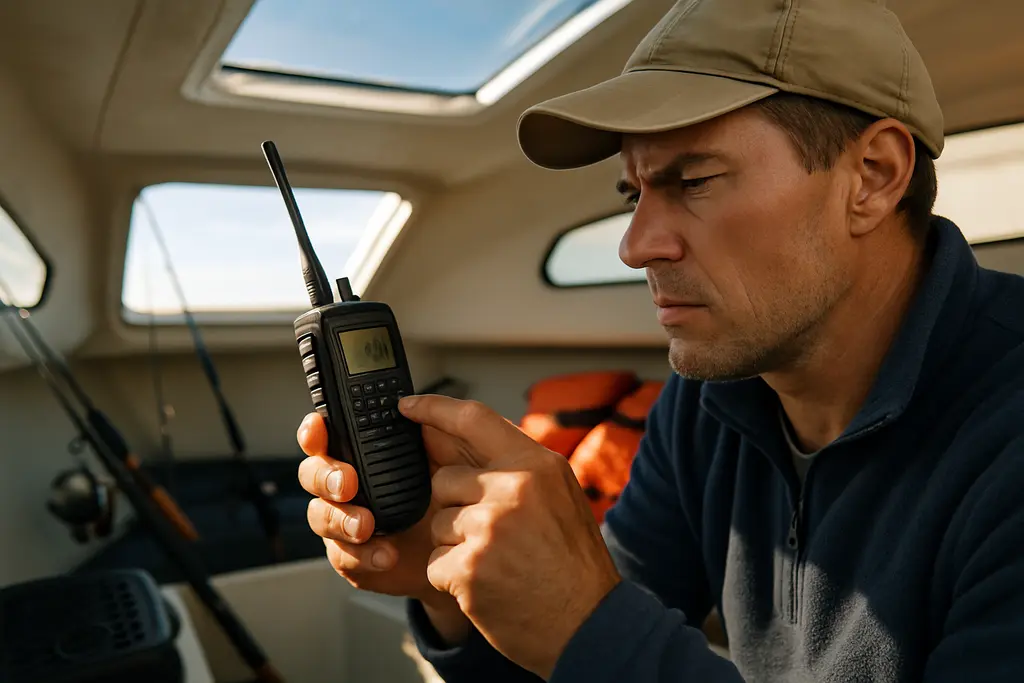
Reliable boater communication tools are not extra gadgets for a perfect day; they are part of the safety plan for the day that turns rough. A disabled engine, fast-changing weather, injury, fog, or a grounding can all leave a crew needing help before the situation becomes harder to manage. The safest approach is to carry more than one way to communicate, understand the limits of each device, and make sure the crew knows what to use before the boat leaves the dock.
Why Boater Communication Tools Matter
Recent Safety Data Gives Context
The U.S. Coast Guard reported 556 recreational boating deaths in 2024, compared with 564 in 2023, and a fatality rate of 4.8 deaths per 100,000 registered recreational vessels. The same report stated that overall incidents rose by 1.1 percent and non-fatal injuries rose by 2.1 percent, with about 3,887 total boating incidents reported in 2024, according to the Coast Guard’s 2024 boating safety report. Those figures do not prove that any single radio, beacon, or phone would have changed a specific outcome, but they do show why fast, clear contact with help remains a serious safety concern.
Communication is also about prevention. A working radio can help a skipper hear safety broadcasts, speak with nearby vessels, and request assistance before a minor problem becomes an emergency. It can help crews report position, vessel description, number of people aboard, and the nature of the problem in plain language. That information helps responders decide what kind of help is needed and where to send it.
How Boater Communication Tools Change Response
The practical value of boater communication tools comes from speed, reach, and shared awareness. A handheld device in a dry bag may help on a small boat close to shore, while a fixed-mount marine radio with a sound antenna may provide a better platform on larger boats. A distress beacon adds another layer when a vessel operates beyond easy radio or cell coverage. None of these devices guarantees rescue, and every system depends on range, battery power, setup, and conditions. Still, layers reduce the chance that one dead battery or weak signal leaves the crew silent.
Choosing The Right Communication Layers
VHF Radio Comes First
The Coast Guard describes a VHF marine radio as “the single most important radio system you should buy” for short-range communication, and says it should be supplemented by EPIRBs or satellite phones when venturing far offshore, as explained in its radio guidance for boaters. For most recreational boaters, that makes VHF the primary working tool for safety calls, bridge-to-bridge contact, and routine marine communication.
A fixed VHF radio is often paired with the boat’s electrical system and antenna. A handheld VHF can serve as a backup or as the main radio on smaller craft, but it depends on charge level, waterproofing, and range. If the radio has Digital Selective Calling, the skipper should understand how it works and make sure the unit is set up before relying on it. A distress button that has never been configured or tested according to the manual may not provide the benefit the owner expects.
Offshore Backups Need Range
Farther from shore, communication planning changes. The research supplied for this article notes that the Coast Guard recommends distress devices that notify the Coast Guard, including VHF radios, HF or MF radio systems, EPIRBs, and PLBs. It also notes that some devices, such as AIS-SARTs or SEND devices, do not directly alert the Coast Guard. For a recreational crew, the safe lesson is simple: know which device calls whom, know how it sends position information, and know whether it is meant for nearby vessels, search and rescue authorities, or both.
Cell phones can still be useful. They may help contact a marina, family member, tow provider, or emergency service in areas with service. They should not be the only safety plan because cell coverage can fade, wet touchscreens can fail, and a phone call may not alert nearby vessels that could help quickly. Keep phones charged and dry, but treat them as a backup rather than the core of the plan.
Using Boater Communication Tools Underway
Boater Communication Tools Before Leaving The Dock
A safe trip starts with checks that are short enough to be done every time. Turn the radio on, confirm power, inspect the antenna if accessible, and make sure handheld units are charged. Confirm that beacons are where the crew can reach them. Review the operator manual for any distress feature instead of guessing during a stressful moment. This habit fits naturally with broader pre-departure routines, including engine, steering, hull, and electrical checks covered in boat maintenance safety checks.
- Carry at least one primary marine communication device suited to the trip area.
- Keep a charged backup in a dry, reachable place.
- Brief the crew on where the radio, beacon, and phone are stored.
- Know the boat’s position and be ready to describe it clearly.
- Check weather information before departure and continue monitoring conditions.
Crew Briefings And Clear Calls
A radio is only useful if someone can operate it. Before leaving, tell at least one other person aboard how to turn the radio on, adjust volume and squelch, and make a basic call for help. Plain words matter: vessel name, location, number of people aboard, problem, and whether anyone is injured. If the skipper becomes hurt or is busy controlling the boat, another crew member should not be seeing the radio for the first time.
Clear communication also reduces confusion between nearby boats. If you are drifting into a channel, taking on water, or unable to steer, a direct safety call may help other operators avoid you while assistance is being arranged. Keep messages short, calm, and factual. Avoid chatter during a developing problem, and keep listening after a call because responders may ask for updates.
Maintenance Habits For Reliable Contact

Power, Placement, And Familiarity
Communication gear needs the same steady attention as bilge pumps, fuel systems, and steering gear. Batteries age. Charging cords disappear. Antenna connections corrode. Waterproof bags tear. A radio buried under loose gear is not truly ready. Build a small routine around your equipment: charge it after each trip, store it where it will not be crushed or soaked, and look it over before the next departure.
For fixed equipment, the owner’s manual should guide inspection and use. If wiring, mounting, or antenna condition is uncertain, have a qualified marine technician check it. This is especially sensible after electrical work, storm exposure, or a hard grounding. A radio that powers up at the dock may still perform poorly if the antenna system is damaged.
Limits Of Any Single Device
No one device solves every problem. A handheld radio may have limited range. A fixed radio depends on the boat’s power and antenna. A phone depends on coverage and battery life. A beacon may be excellent for distress alerting but is not a substitute for voice communication with a nearby vessel. Reliable planning means matching the device to the water, distance from shore, crew size, and weather risk.
- Near-shore day trips: VHF radio, charged phone, and crew briefing.
- Open water trips: VHF radio plus an appropriate distress beacon or satellite-capable backup.
- Small craft: waterproof handheld radio secured where it can be reached after a capsize or swamping.
- Group outings: agree on communication expectations before boats separate.
For readers comparing safety-minded resources across affiliated sites, the article suggests checking out a related site in this network for more information, but emphasizes that Coast Guard boating guidance and equipment manuals should remain the controlling references for marine communication decisions.
Boater Communication Tools For Every Boater
The right communication setup is not defined by boat size alone. A small skiff in cold water, a cruiser offshore, and a sailboat crossing a busy harbor all need a way to call, listen, and report position. The safest crews treat boater communication tools as working safety equipment, not storage-bin accessories. They carry layers, keep them powered, practice basic use, and brief everyone aboard.
Before the next trip, ask three practical questions: Can we call for help from where we plan to operate? Can more than one person aboard use the device? Do we have a backup if the first system fails? If any answer is weak, fix it before departure. Good seamanship is often quiet preparation, and reliable contact is one of the simplest preparations a boater can make.