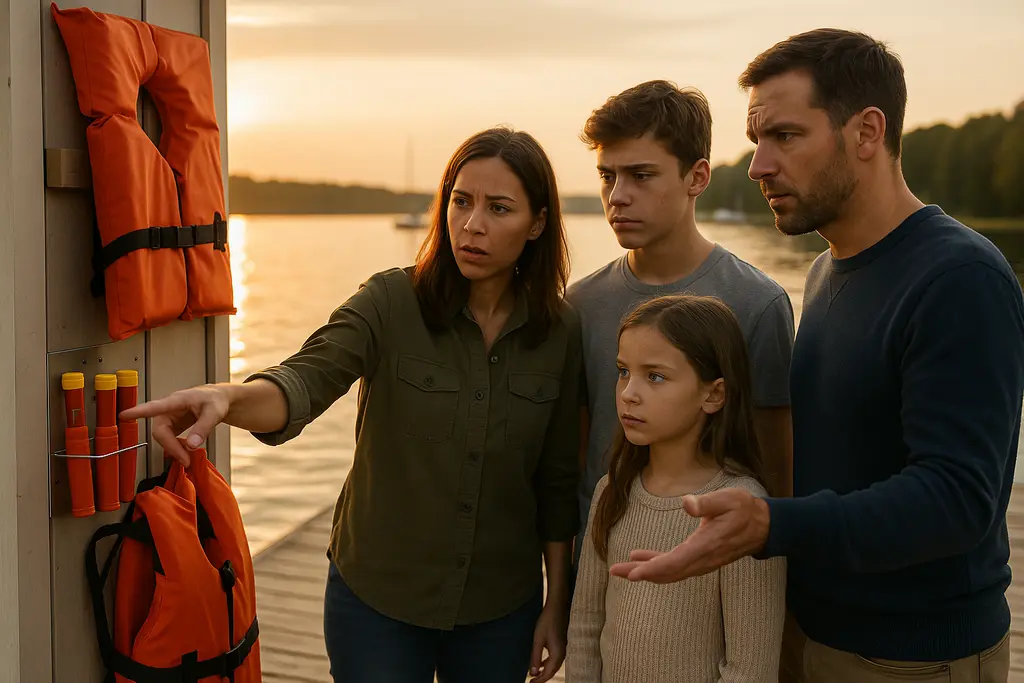
Boating safety equipment is not a formality tucked into a locker for inspection day. Recent recreational boating accident data points to a simpler lesson: gear only protects people when it is ready, reachable, and used before trouble starts. The strongest example is life jacket use. In 2024, drowning accounted for 76% of all boating fatalities, and 87% of drowning victims were not wearing a life jacket, according to the U.S. Coast Guard report.
Why Boating Safety Equipment Matters After Recent Accidents
Boating Safety Equipment And Life Jacket Use
The life jacket finding deserves plain language. A life jacket stored under a cushion does not help a person who is suddenly in the water, injured, cold, tired, or separated from the boat. The Coast Guard data does not say that every drowning would have been prevented by a worn life jacket, and no honest safety discussion should promise that. It does show that non-use was present in a very large share of drowning deaths.
That makes boating safety equipment a practical habit, not just a purchase. Before leaving the dock, every person aboard should know where their life jacket is and should wear it in higher-risk moments such as rougher conditions, cold water, low visibility, small craft operation, or when moving around the deck. Children, weak swimmers, and anyone on personal watercraft need special attention because a quick fall overboard can leave little time for a search through storage compartments.
What The 2024 Incident Numbers Show
The same 2024 data reported 3,887 recreational boating incidents, with 556 deaths and 2,170 injuries. The fatality rate was 4.8 deaths per 100,000 registered recreational vessels, a 2% decrease from the previous year. Property damage from reported incidents was approximately $88 million. These numbers show two things at once: recreational boating can be enjoyed more safely with care, and the risks remain serious enough to demand steady preparation.
Open motorboats, personal watercraft, and cabin motorboats were the most common vessel types involved in reported incidents. That mix matters because many families and casual boaters use those vessels. Safety planning cannot be reserved only for offshore crews or high-performance craft. A short ride, a familiar lake, or a calm afternoon can still involve inattention, a fall, a machinery problem, or a collision risk.
Connecting Gear To Known Accident Factors
Operator Attention And Lookout Discipline
The top five primary contributing factors in boating incidents were operator inattention, improper lookout, operator inexperience, machinery failure, and navigation rules violations. Equipment alone cannot correct inattention, but it can support safer decisions when paired with active watchkeeping. A life jacket, sound-producing device, and reliable communication plan are most useful when the operator and crew are alert enough to use them quickly.
Improper lookout is a reminder that every trip needs assigned awareness, not casual glances from behind the wheel. Passengers can help by watching for other vessels, floating debris, swimmers, paddlecraft, and changing conditions. The operator remains responsible for safe control, but a prepared crew can give early warnings. Boating safety equipment works best in that kind of shared safety culture, where people speak up before a close call becomes an emergency.
Machinery Failure And Maintenance Readiness
Machinery failure appearing among the top contributing factors links safety equipment directly to maintenance. A boat that loses power near traffic, rocks, current, or a crowded launch area can quickly become hard to control. Maintenance checks are not separate from safety; they are part of the same risk picture. For a deeper maintenance routine that stays focused on accident prevention, see these boat maintenance safety checks.
Before departure, a practical skipper should confirm that the boat can start, steer, shift, and stop as expected. Because the research provided here identifies machinery failure but does not break down each mechanical cause, it would be wrong to assign blame to one system more than another. The safe takeaway is broader: if the vessel is not mechanically ready, the crew’s margin for error shrinks.
Using Education To Make Gear Effective
Sober Operation Supports Every Safety Choice
Alcohol use was the leading known contributing factor in fatal boating accidents in 2024, accounting for 20% of deaths. This is one of the clearest limits of gear. A boat may carry the required equipment, yet impaired judgment can delay the decision to slow down, put on a life jacket, keep a lookout, or respond to a person overboard. For practical planning around sober summer operation, the safety principles in Operation Dry Water planning connect well with the Coast Guard findings.
Sober operation also helps passengers. A clear-headed operator is more likely to explain where equipment is stored, ask passengers to wear life jackets when conditions warrant it, and stop unsafe movement around the boat. Safety reminders should happen before departure, not after the first problem appears.
Training Turns Equipment Into Action
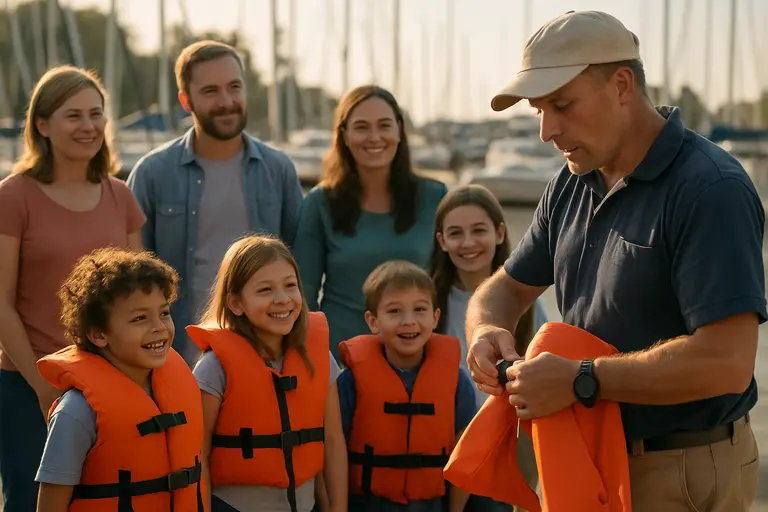
Approximately 69% of deaths occurred on boats where the operator had not received boating safety instruction. Training does not remove all risk, and the Coast Guard statistic does not tell us what would have happened in each individual case if instruction had occurred. It does support a reasonable safety habit: operators should learn how accidents happen, how to avoid common mistakes, and how to use the gear they carry.
Education can also spread through clubs, marinas, family groups, and community sites. A related community network such as Wakefield Rep illustrates how local information channels can keep public-interest reminders visible, though boaters should rely on official boating authorities for rules, carriage requirements, and course details.
Boating Safety Equipment Habits That Last
A Practical Dockside Routine
The best safety routine is simple enough to repeat. Treat boating safety equipment as part of departure, not as a last-minute scramble. A calm dockside check gives the operator a chance to spot missing gear, brief passengers, and decide whether the trip still makes sense for the crew and conditions.
- Wear life jackets rather than storing them where they cannot help during a sudden fall overboard.
- Assign lookout awareness before getting underway, especially in busy areas or around swimmers and small craft.
- Confirm the boat is mechanically ready, since machinery failure was among the top contributing factors in incidents.
- Keep the operator sober, alert, and focused for the entire outing.
- Seek boating safety instruction so gear, judgment, and response habits work together.
Recent accidents do not point to one magic fix. They point to a layered approach: worn life jackets, a sober operator, basic training, steady attention, and a boat kept in working order. None of those steps can guarantee a safe return, but each one improves the crew’s chance of handling a problem before it becomes a tragedy.