
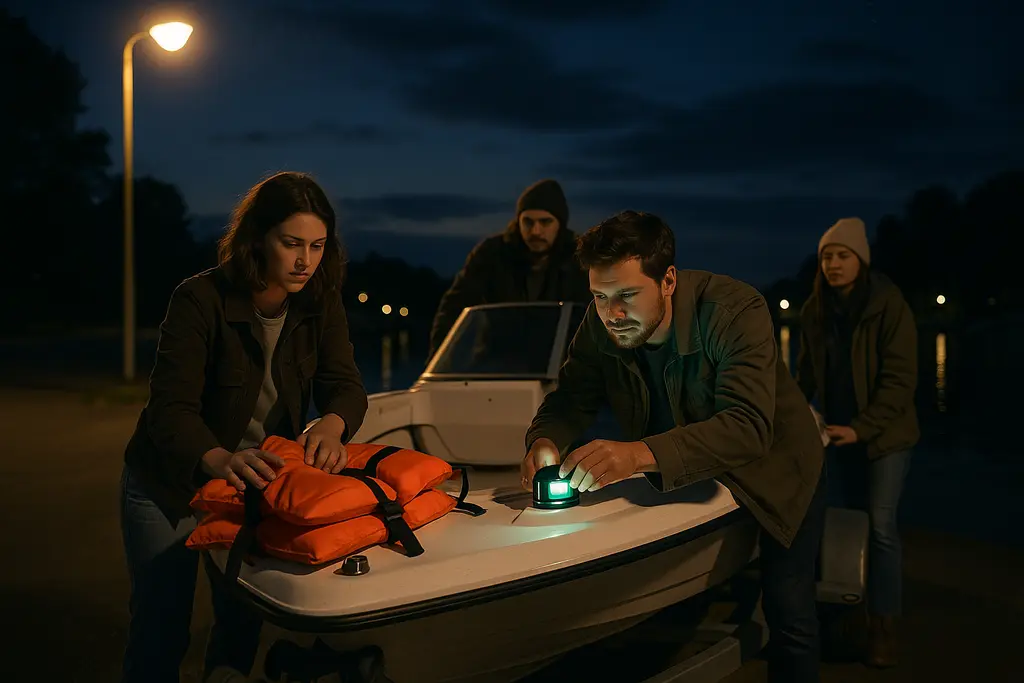
Nighttime Boating Safety is not just a matter of seeing the shoreline after sunset. It is a full departure routine: life jackets on, lights checked, crew briefed, weather reviewed, and the operator ready to slow down before a small issue becomes a capsizing risk. The National Safe Boating Council reports that in 2024, 87% of drowning victims in recreational boating accidents were not wearing a life jacket; alcohol use was the leading known contributing factor in fatal boating accidents, accounting for 20% of deaths where the primary cause was known; and where instruction was known, 69% of deaths occurred on boats where the operator had not received boating safety instruction recreational boating facts.
Nighttime Boating Safety Starts Before Departure
After dark, a boat feels different. Speed can feel faster than it is, shore lights can blend into background glare, and passengers may not notice a shift in balance until the boat reacts. A safe night outing begins at the dock because that is where the captain still has time, light, and stable footing to correct problems. This is especially true after public reports of capsizing incidents, which should push every operator to look at the simple factors that often decide whether a crew stays in control.
Nighttime Boating Safety Checks At The Dock
A dockside routine gives Nighttime Boating Safety structure. The goal is not to create a long ceremony. The goal is to make sure the essentials are handled before lines are cast off. As a marina service professional, I would rather see a captain delay departure by ten minutes than try to solve a preventable problem in the dark with passengers already aboard.
- Have every person put on a properly fitted life jacket before leaving the slip, not after conditions worsen.
- Confirm that required running lights are working and visible before the boat enters low-light conditions.
- Keep passenger weight balanced and avoid last-minute gear piles in one corner of the boat.
- Check that fire extinguishers, signaling equipment, and first aid supplies are aboard and ready for use.
- Review the weather and decide in advance what conditions will trigger a return to shore.
If the boat has had engine, steering, battery, or bilge concerns during the week, address those before a night trip. A broader pre-departure service routine, such as these boat maintenance safety checks, fits well with night operations because mechanical problems are harder to diagnose after sunset.
Lights, Lookouts, And Slower Decisions
Night operation demands patience. The operator should reduce speed early enough to identify traffic, wake patterns, buoys, and unlit hazards. A safe speed is not only about posted limits. It is about giving the crew enough time to understand what is ahead and enough room to respond without sudden steering or abrupt throttle changes that can unsettle the boat.
How Lights Reduce Guesswork
Sea Smart Safety explains that navigation lights help identify a vessel’s position and direction so other operators can assess right-of-way and avoid collisions boating safety facts. Good Nighttime Boating Safety also means checking that those lights are not blocked by canvas, passengers, coolers, fishing rods, or raised equipment. A working light that cannot be seen from the correct angle is not helping nearby traffic understand your movement.
Captains should also protect their own night vision. Bright deck lights, phone screens, and spotlight use can make it harder to see dark shapes on the water. Use the least light needed for the task, then return attention outside the boat. A spotlight may help identify a marker or object, but sweeping it across other operators can create glare and confusion.
Why A Dedicated Lookout Helps
The person at the helm should not be the only person watching. Assign a sober, attentive passenger as a lookout, especially in busy channels, near marinas, or during the return trip when fatigue sets in. The lookout should call out lights, floating debris, approaching wakes, and passengers who are shifting around the deck. Short, clear phrases work best: boat off starboard, slow wake ahead, passenger moving forward, or marker to port.
Capsizing Risks After Dark
Capsizing is often discussed as if it happens in one dramatic moment. In practice, risk can build in quiet steps: too many people on one side, gear stacked high, a late turn in a wake, or a passenger standing suddenly while the boat is moving. Darkness makes these small changes harder to notice. The operator may not see a wake until it is close, and passengers may misjudge footing when the boat rolls.
Weight, Movement, And Vessel Limits
Respect the boat’s capacity plate and the manufacturer’s guidance. Do not treat a calm evening at the dock as proof that the boat will handle the same load in open water after dark. Passenger movement matters more on small craft, where a few people shifting together can change trim quickly. Ask passengers to remain seated while the boat is underway and to move one at a time only when the operator approves it.
Gear should be secured low and centered when possible. Coolers, spare anchors, batteries, and tackle boxes can affect balance if they slide or collect on one side. Before leaving, walk the deck and cockpit with a simple question: if we take a wake from the beam, what could move, roll, or trip someone?
Weather Changes And Turnaround Choices
Weather deserves special caution at night because clouds, gusts, and chop can be harder to read visually. Check the forecast before departure, but do not rely on the forecast as permission to ignore what the boat is telling you. If the ride becomes rougher, visibility drops, or passengers become unsteady, reduce speed and reassess the plan. Returning early is a safety decision, not a failed outing.
Community boating groups that keep resource libraries sometimes point members to related network education hubs such as AGH EIRO, where they can find useful information to supplement their knowledge, but night-operation decisions should still be based on marine conditions, local requirements, vessel manuals, and recognized safety instruction.
Training, Sobriety, And Crew Communication
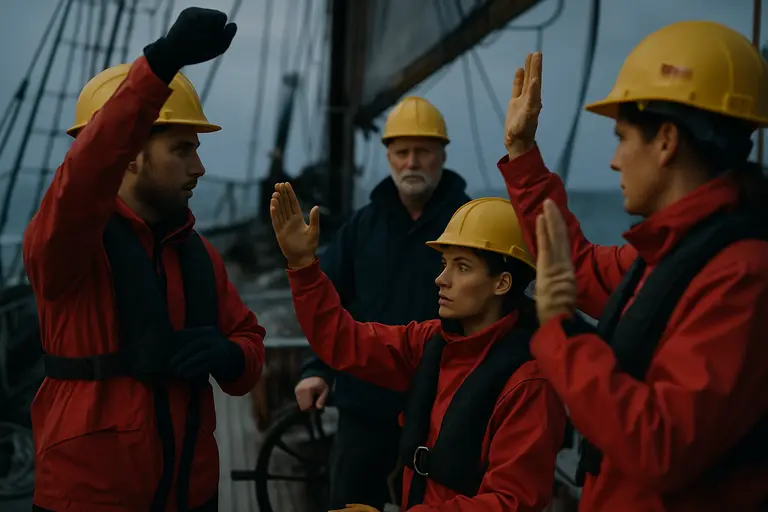
The safest night captains set rules before the boat is moving. Alcohol has no place at the helm, and a sober operator should remain ready for the entire trip, including docking at the end. Fatigue can also dull judgment, so the operator should avoid stretching a late outing simply because the first half of the trip went well.
Use Facts To Set Non-Negotiables
Use Nighttime Boating Safety as a crew standard, not a suggestion. Life jackets are worn, not stored. Lights are checked, not assumed. Weather is reviewed, not guessed. The boat is loaded within its limits, not packed to the point that passengers cannot sit securely. These rules may sound basic, but they are the same habits that give crews more time and stability when something unexpected happens.
A boating safety course is also a practical investment for operators who run after dark. Courses can reinforce right-of-way judgment, emergency communication, passenger management, and the meaning of lights and markers. Training cannot remove every hazard, but it can reduce hesitation when a captain needs to act calmly.
Give Every Passenger A Simple Role
Passengers do better when they know what is expected. Before departure, tell them where to sit, where life jackets are worn, how to move, and what to do if someone falls or the boat takes on water. Keep instructions short. In an emergency, people remember simple directions far better than long explanations.
For families and mixed-skill crews, assign one person to help children or less experienced guests stay seated and fitted correctly in their life jackets. Assign another person to keep the deck clear of loose bags or coolers. These small roles reduce distractions for the operator.
Night Capsizing Prevention Habits
Treat Nighttime Boating Safety as a set of repeatable habits. Before leaving, put life jackets on, test lights, balance weight, check the forecast, and brief the crew. While underway, slow down, keep a lookout, avoid sudden movements, and return early if conditions change. None of these steps guarantees that a night trip will be risk-free, and no article can replace formal training or local requirements. They do, however, give recreational boaters a safer framework for making decisions after dark.
The best night trips often feel uneventful because the crew prepared well. That is the point. A quiet return to the marina, with passengers dry, calm, and accounted for, is the standard every captain should aim for after sunset.