The Boating Safety Survey, known by many safety educators as the NRBSS, matters because recreational boating decisions should be shaped by more than habit, guesswork, or dockside opinion. As a sailor, I value practical seamanship: a properly fitted life jacket, a checked fuel system, working lights, a clear float plan, and a skipper who is willing to slow down when conditions change. National data does not replace those decisions on the water, but it helps agencies, instructors, clubs, and families understand where safety attention is most needed.
Why The Boating Safety Survey Matters
Good boating safety practice starts with knowing how people actually use the water. A small marina may see trends among its own members, and a state agency may know local accident patterns, but a national survey can show wider participation and vessel-use patterns. That wider view is valuable because recreational boating includes many different activities: sailing, powerboating, paddling, fishing, day cruising, and family outings from ramps and slips across the country.
Boating Safety Survey Facts To Know
The National Recreational Boating Safety Survey is described by the U.S. Coast Guard as the sole nationwide survey measuring recreational boating activity in all 50 states and the District of Columbia, including participation, vessel types, and usage patterns; the 2026 effort aims to interview more than 50,000 households and is funded through the Sport Fish Restoration and Boating Trust Fund, administered by the Coast Guard USCG NRBSS page. For boaters, that means the survey is not limited to one harbor, one type of boat, or one boating season. It is designed to build a broad picture of how recreational boating is practiced across the United States.
The survey also has history behind it. The National Safe Boating Council notes that the survey began in 1973, has been conducted periodically, and had recent versions in 2018 and 2020; the 2026 version is being discussed in the context of increased boating activity during the COVID-19 pandemic NSBC survey announcement. That history matters because safety planning benefits from repeated measurement over time, not a single snapshot.
What The Survey Can And Cannot Tell Us
Because the Boating Safety Survey measures participation and use, it can help safety educators ask better questions. Are more households using certain kinds of vessels? Are some activities growing faster than others? Are education messages reaching the people who need them? Those are planning questions, not guarantees. A survey cannot tell a skipper whether a squall line will reach the bay before sunset, whether a bilge pump will fail, or whether a guest will panic during a man-overboard drill. Those decisions still require current weather checks, local knowledge, sound maintenance, and steady judgment at the helm.
A Boating Safety Survey also should not be read as a substitute for hands-on training. Data can help point instructors toward topics that deserve attention, but boaters still need to practice docking, anchoring, radio calls, emergency shutoff use, and passenger briefings in real conditions. The best use of survey data is to support better habits before a boat leaves the dock.
Turning National Data Into Dockside Habits
National findings are most useful when they are translated into ordinary routines. If a club, family, or instructor sees that participation is broad and vessel types vary widely, the safest response is not a one-size script. A paddlecraft outing, a small center-console fishing trip, and a keelboat day sail all need preparation, but each has different risks, gear, and crew expectations.
Life Jackets, Crew Briefings, And Trip Planning
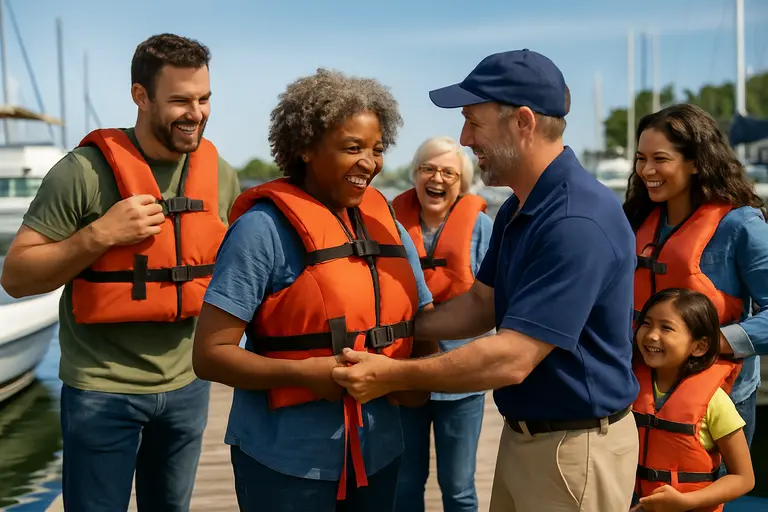
A practical starting point is the passenger briefing. Before casting off, every person aboard should know where life jackets are stowed, how to put one on, how to move safely around the boat, and what to do if the skipper gives an urgent instruction. That briefing should be short enough to remember and clear enough for a first-time guest. For evening or low-light operation, planning should be more conservative because reduced visibility changes how quickly hazards appear. Boaters who want a focused refresher can read about nighttime boating safety and apply the same cautious mindset to any trip where visibility, fatigue, or traffic may become a concern.
Trip planning should also reflect the vessel being used. A sailor should think about wind direction, reefing options, engine readiness, and safe return routes. A paddler should think about distance from shore, exposure, and whether conditions may exceed skill level. A powerboater should think about fuel, traffic, wake, and stopping distance. The survey data may be national, but the skipper’s checklist must fit the boat tied to the dock that morning.
Maintenance Checks Before Leaving The Slip
Survey information can encourage better education, but maintenance keeps small problems from becoming emergencies. Before departure, a skipper should give attention to steering, propulsion, electrical power, navigation lights, bilge systems, fuel condition, required equipment, and secure stowage. This is not about making the boat perfect; it is about reducing avoidable failures before people are aboard and lines are cast off. A simple routine, repeated every outing, often catches the loose connection, weak battery, missing plug, or damaged line that might otherwise be noticed too late. For a related safety routine, see these boat maintenance safety checks.
Why Participation Improves Safety Education
Participation in the survey supports better public safety planning because agencies and educators need current information. If selected households respond, they add detail about real boating behavior rather than leaving planners to rely on assumptions. That helps keep safety messages grounded in how people actually use boats, not how experienced sailors wish every outing were planned.
Better Reporting For Many Boat Types
One of the survey’s strengths is its attention to different vessel types and use patterns. That matters for safety because a message built only around large motorboats may miss paddlers, sailors, or families using smaller craft. Clearer data can help educators decide whether to emphasize life jacket fit, cold-water awareness, sober operation, equipment checks, or trip planning for specific boating audiences. The data still needs careful interpretation, but wider participation gives safety planners a better starting point.
How Clubs And Families Can Use The Findings
Clubs can use published survey findings to shape safety nights, dock talks, youth instruction, and pre-season reminders. Families can use the same findings as a prompt to review their own habits: who wears a life jacket, who knows how to call for help, who can shut down the engine, and who checks the weather before departure. Community publishers, including publications like Wakefield Rep, can also help repeat plain-language safety messages when national findings are released, as long as the information is presented without exaggeration.
Using Survey Results For Safer Trips
Survey results are most helpful when boaters treat them as a planning aid, not a headline to skim once and forget. A skipper can read the findings, compare them with local boating conditions, and then adjust checklists, briefings, and training goals. A club can do the same by reviewing whether its education schedule matches the kinds of boats its members actually use. A parent can use the findings as a reason to revisit life jacket sizing before the season begins.
Reading Survey Results Locally
The strongest use of the Boating Safety Survey is local action. If national data shows changing participation, the right response at the dock is practical: confirm equipment, teach guests, respect weather, maintain the boat, and avoid rushing departure. National numbers can guide attention, but safe boating still depends on the person making decisions before and during each trip. That is where data becomes seamanship.