

Boat maintenance safety begins before the lines come off the dock. A clean hull, a dependable engine, working steering, and ready safety gear all support a safer day on the water. No checklist can remove every risk, and weather or operator error can still create danger, but routine care helps reduce preventable mechanical problems and gives the skipper more time to respond when conditions change.
Good maintenance is not just a spring chore. Recreational boats sit in sun, rain, salt, freshwater, vibration, and changing temperatures. Parts age even when the boat is not used. Batteries lose charge, fittings loosen, hoses crack, and safety gear can expire or become hard to reach. The practical answer is a steady rhythm: inspect before the season, check before each trip, repair small issues early, and avoid leaving the dock when a fault affects control, flotation, fire protection, visibility, or communication.
Boat Maintenance Safety Starts With Core Systems
The systems that move, steer, power, and keep water out of the boat deserve first attention. Research on maintenance-related accident prevention points to annual engine inspections and tune-ups, seasonal steering checks, electrical testing, hull inspections, and pre-trip safety gear reviews as key practices for safer boating maintenance accident guidance. These tasks are useful for small runabouts, fishing boats, sailboats with auxiliary engines, and larger cruising vessels, though the exact service steps should match the manufacturer manual and the boat’s layout.
Engine Checks Before Trouble Starts
An engine problem can leave a boat drifting, stranded, or hard to control near traffic, rocks, docks, or current. An annual inspection and tune-up is a sensible baseline. Before routine outings, the skipper should also look for fuel leaks, loose belts, unusual smells, damaged hoses, low fluid levels where applicable, and weak battery signs. If the engine hesitates, overheats, smokes, or sounds different from normal, treat that as a safety issue rather than a minor annoyance.
Owners who perform simple work themselves should stay within their skill level. Replacing a worn hose clamp may be reasonable for many boaters; diagnosing fuel delivery, ignition, cooling, or charging faults may call for a trained marine technician. For a deeper maintenance routine focused on propulsion reliability, this related article on DIY boat engine maintenance fits well with a safety-first approach.
Steering And Control Inspections
Steering problems can develop quietly. Cable steering can stiffen or corrode. Hydraulic steering lines can leak or allow air into the system. Before the season begins, inspect visible cables, linkages, hydraulic lines, fittings, and the helm response. Turn the wheel from side to side at the dock and watch for binding, delay, leaking fluid, or unusual play. If steering feels heavy, uneven, or loose, do not treat it as normal aging. Loss of control on open water is serious, and loss of control in a channel or near a marina can become dangerous quickly.
Build A Pre-Departure Routine That Catches Small Failures
A short pre-departure routine keeps maintenance from becoming guesswork. The goal is not to create paperwork for its own sake; it is to make sure the same safety points are checked every time, even when guests are waiting or the weather looks inviting. For many owners, boat maintenance safety improves when the checklist is short enough to use and clear enough for another responsible adult on board to understand.
A Boat Maintenance Safety Checklist For Each Trip
- Engine area: Look for fuel smell, oil or coolant leaks where applicable, loose belts, damaged hoses, and secure battery connections.
- Steering: Turn the wheel fully in both directions at the dock and check for binding, leaks, or delayed response.
- Electrical system: Test navigation lights, bilge pump operation, horn, gauges, and battery condition before departure.
- Hull and bilge: Check for standing water, new cracks, damaged fittings, and signs of leaks around through-hulls or drains.
- Safety gear: Confirm life jackets are wearable, accessible, and sized for the people on board; check fire extinguishers and other required gear.
- Weather: Review conditions before leaving and be willing to postpone if wind, storms, or visibility create hazards.
This routine should be adjusted for the boat. A kayak, center-console, pontoon, cabin cruiser, and sailboat do not share the same equipment list. Still, every boat needs flotation, a plan for changing weather, and equipment that works when needed. If the boat has navigation lights, bilge pumps, radios, refrigeration, or other electrical loads, seasonal testing should be paired with simple pre-trip checks. Owners who want a focused primer can review this related piece on preventing onboard electrical malfunctions.
Safety Gear Is Maintenance Too
Safety equipment is often present but not ready. A life jacket buried under coolers is not truly accessible. A fire extinguisher with an expired inspection date or poor gauge reading may not help in an emergency. A whistle, horn, flashlight, or throwable device can be missed if the crew does not know where it is. Before each trip, the skipper should confirm that required gear is present, reachable, and in serviceable condition.
Life jacket use deserves direct attention. A boating safety article from Acuity reports that in 2023, 84% of drowning victims were not wearing life jackets, and it also advises checking weather before departure boating safety tips. Wearing a life jacket is a simple step, but it only works if the jacket fits, is fastened, and is worn before an unexpected fall or capsize. Children, weak swimmers, cold-water passengers, and anyone on deck in rough conditions need special attention from the operator.
Hull, Electrical, And Weather Checks Work Together
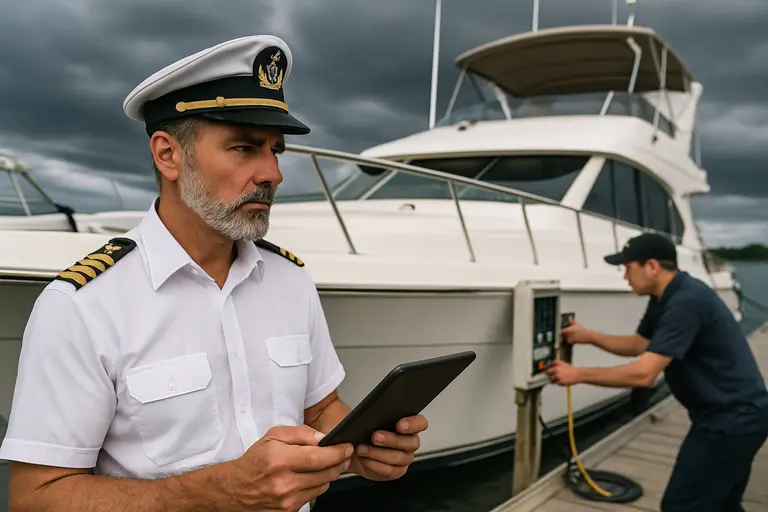
A boat’s structure and electrical system affect safety in different ways, but they often meet in the bilge. Water entering through a crack, loose fitting, or failed hose can reach wiring, batteries, pumps, and fuel-related components. An annual hull inspection helps identify cracks, leaks, and structural concerns before they become urgent. Between annual checks, the skipper should watch for new water in the bilge, soft spots, loose hardware, or changes in how the boat sits in the water.
Reading The Hull For Warning Signs
Hull checks do not require panic over every scuff. Boats get cosmetic marks. The concern is change: a crack that grows, a fitting that weeps, a drain that no longer seals, or bilge water that appears after the boat has been sitting. If water ingress is suspected, the safest choice is to keep the boat at the dock until the source is understood. Temporary fixes can fail under speed, chop, or load.
Structural concerns should be handled conservatively. A qualified repairer may be needed for fiberglass damage, through-hull issues, transom concerns, or leaks below the waterline. For trailer boats, include the drain plug, hull underside, trailer bunks, straps, and launch preparation in the pre-trip review. A sound hull inspection routine supports boat maintenance safety because it protects flotation, stability, and onboard systems at the same time.
Electrical Checks And Low-Visibility Risk
Electrical failures are more than an inconvenience, especially in low visibility. If navigation lights, bilge pumps, radios, or instruments do not work, the trip plan may need to change. Seasonal testing should include lights, pumps, switches, battery charge, clean terminals, and visible wiring condition. Before leaving the dock, test the equipment that matters for the actual trip. A short daylight run near home has different demands than a late return, but poor weather can reduce visibility faster than expected.
Community groups, clubs, and local organizations often share safety reminders for outings and volunteer events. A related site in the same network, Bethel NC UMC, emphasizes clear preparation information: ensuring everyone finds expectations easy to access.
Boat Maintenance Safety Habits That Last
The strongest boat maintenance safety routine is the one the skipper actually follows. Keep records of annual engine service, steering inspections, electrical testing, hull repairs, battery replacement, and safety gear checks. A simple notebook or digital log can show patterns, such as a battery that weakens each spring or a bilge pump that needs repeated attention. Records also help avoid relying on memory after a long off-season.
Set practical limits before departure. If steering is stiff, the engine is unreliable, the hull is leaking, the weather is worsening, or required safety gear is missing, postpone the trip. That choice may disappoint passengers for an afternoon, but it protects everyone on board. Maintenance is not separate from seamanship; it is part of the decision to leave the dock in the first place.
Safe boating depends on judgment as much as equipment. Annual inspections, seasonal system checks, and pre-trip reviews cannot guarantee an accident-free outing, yet they make problems easier to spot while there is still time to act. Treat each inspection as a conversation with the boat: what changed, what feels wrong, what needs service, and what would happen if conditions got worse? That mindset keeps maintenance practical, safety-conscious, and centered on getting every person back to shore.