
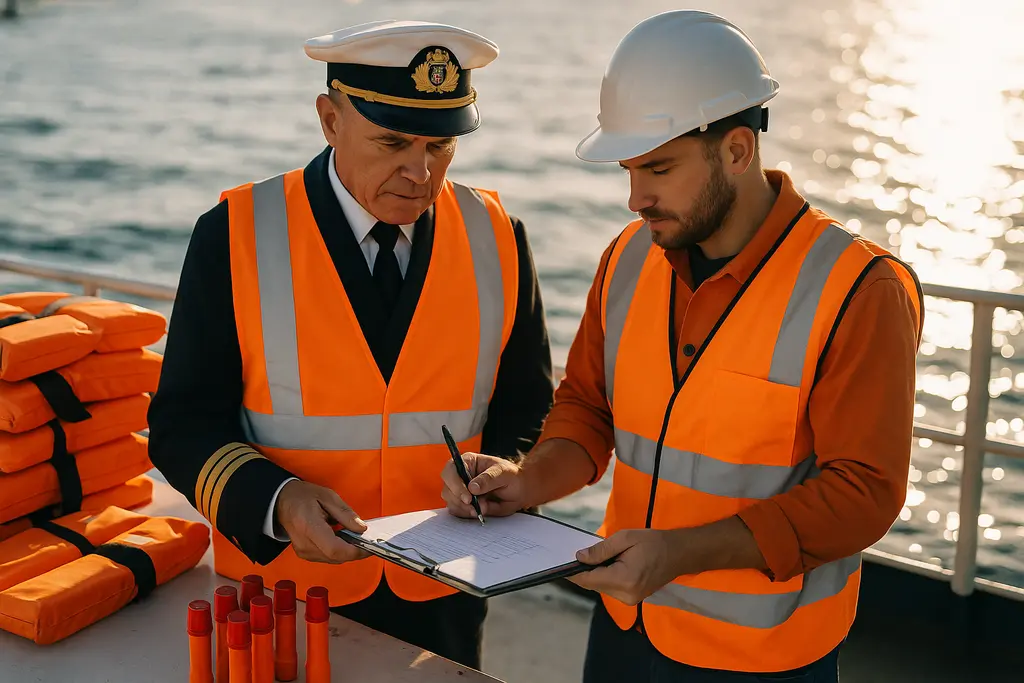
Keeping safety equipment up to standard is one of the most practical habits a boat owner, operator, or skipper can build. The goal is simple: gear should be in working order, easy to reach, and ready before the vessel leaves the dock. Regulations for certain vessels place that responsibility on the master or person in charge, requiring lifesaving equipment to be in good working order, ready for immediate use, and readily accessible before departure and during operation operational readiness rule.
For recreational boaters, the same principle still makes sense even when a specific commercial rule does not apply. Emergency gear that is buried under deck chairs, past its service date, or damaged by salt and sun may not perform when seconds matter. A steady maintenance routine helps remove uncertainty. It also gives crew members a clearer sense of what is aboard, where it is stored, and what condition it is in.
Safety Equipment Readiness Before Departure
How Safety Equipment Should Be Positioned
Before getting underway, check whether critical gear can be reached without moving heavy items, opening blocked lockers, or climbing over loose equipment. Readiness is not only about ownership; it is about access. If a flotation device, distress item, or lifesaving appliance is aboard but cannot be reached quickly, the vessel is not as prepared as it appears.
Start with the places where people gather: cockpit, cabin, helm, and sleeping areas. Think through a realistic emergency: reduced visibility, engine noise, a rolling deck, or a crewmember who is not familiar with the boat. Gear should be placed so that a brief verbal instruction is enough for someone to find it. Labels and consistent storage help, but they do not replace physical access.
Loose gear also deserves attention. An item that shifts during normal operation can block a locker or fall against a door. Before departure, walk the boat from bow to stern and look for anything that could prevent fast access. This is a plain safety habit, but it aligns with the regulatory expectation that lifesaving equipment remain ready and readily accessible.
Assigning A Responsible Check
A vessel benefits from one person taking ownership of the pre-departure check. That person does not need to do every task alone, but someone should confirm the inspection was completed. On vessels with a master or person in charge, regulations place responsibility on that individual for operational readiness of lifesaving equipment lifesaving equipment requirements. On a small private boat, the operator can apply the same structure by using a short, repeatable check before each trip.
A useful routine is to divide the check into three questions: Is it present? Is it usable? Is it reachable? These questions work for flotation devices, emergency communication items, firefighting equipment, and other onboard gear. They also keep the task practical enough to complete before a routine outing.
Inspection Intervals And Service Dates
Liferafts, Seals, And Damaged Containers
Service dates matter because some lifesaving appliances rely on packed components, seals, inflation systems, or protected containers. Inflatable liferafts or buoyant apparatuses covered by the cited rule must be serviced by the date shown on the servicing sticker, and also when the container is damaged or seals are broken liferaft servicing rule. Even if your vessel is not subject to that rule, the maintenance idea is sound: a visible date or broken seal should trigger action rather than guesswork.
Do not treat a clean-looking case as proof that the contents are ready. Damage may be subtle, and a broken seal may indicate that the appliance has been disturbed. If servicing is due, use the manufacturer’s instructions and the applicable rules for the vessel type. If the condition is uncertain, the safer choice is to have the item inspected by a qualified service provider rather than assume it will function.
Manufacturer Procedures And Vessel Records
Safety equipment maintenance should follow regulatory tables, servicing procedures, and manufacturer guidance where those apply maintenance and inspection standard. That matters because different devices can have different inspection points. A general glance is useful, but it may not satisfy the actual care instructions for a specific item.
A practical safety equipment log can be as simple as a dated notebook, spreadsheet, or printed checklist kept aboard. Record what was checked, what needed service, and what was corrected. For gear with service stickers, copy the date into the log and inspect the sticker itself for readability. If the sticker fades, the record gives you a backup reference, though it should not replace required labels or official service markings.
Records also help prevent maintenance from becoming seasonal guesswork. A skipper may remember replacing one item but forget whether another was inspected. Written notes reduce that risk. They are especially useful on boats with multiple operators, where one person may assume another has already completed the check.
Keeping Escape Routes And Access Clear
Cabins, Companionways, And Work Areas
Emergency readiness includes the spaces people must move through, not just the gear they may use. The cited federal rule requires escape routes from spaces where people may be employed or accommodated to remain unobstructed escape route requirement. For practical boat care, this means companionways, cabin exits, berth areas, and access paths should not become storage overflow.
Safety equipment cannot help if crew members cannot reach it or leave a space quickly. Soft bags, coolers, spare lines, and tools often migrate into walkways during a busy day aboard. Build a habit of restoring clear paths before departure and again while underway. If guests bring bags aboard, assign a storage spot that does not block movement.
Securing Gear Without Blocking It
There is a balance between securing items and keeping them accessible. Gear should not roll across the deck, but it should not be lashed so tightly or buried so deeply that it takes too long to use. Use storage locations that protect items from damage while allowing fast removal. Check latches, locker lids, and straps for corrosion, stiffness, or wear.
This is also a good time to look at related systems. An anchor that is ready for use can support safer decision-making if propulsion or weather creates a need to stop the vessel’s movement. For care routines tied to that system, see this practical discussion of anchor system maintenance.
Including Navigation And Electrical Readiness

Operational Gear Beyond Lifesaving Items
Safety equipment is not limited to items used after an emergency begins. Navigation and communication gear can help prevent a difficult situation from getting worse. Research notes for navigational-safety equipment point to the need for operators to maintain operative equipment, repair failures at the earliest practicable time, and record failures in the vessel log. The exact rule set depends on vessel type and operation, so owners should confirm the requirements that apply to their boat.
From a maintenance standpoint, the lesson is direct: do not ignore a known failure because the boat still runs. A nonworking light, unreliable instrument, dead backup device, or intermittent electrical fault can reduce options when conditions change. If a failure appears during a trip, note it clearly and set a repair plan before the next outing.
Power Supply And Dependable Access
Many emergency and navigation devices depend on electrical power, batteries, or charging systems. A clean inspection should include terminals, switches, visible wiring condition, and whether battery-powered items are ready for use. If a device is stored in a locker, confirm it has not been exposed to standing water or damaging heat.
Electrical issues can be difficult to diagnose without proper skill, and unsafe repairs can create new risks. Owners who are not confident with marine electrical work should use qualified help. For a broader maintenance routine, this related primer on preventing onboard electrical malfunctions explains why system planning and upkeep matter for safe operation.
A Practical Standard For Safety Equipment Care
Building A Repeatable Routine
The strongest maintenance routine is one you can repeat. Use the same order each time: check access, inspect condition, verify service dates, confirm routes are clear, and record anything that needs attention. This approach works because it turns safety equipment care from an occasional project into a normal part of operating the vessel.
Be realistic about limits. A visual check by the owner does not replace required servicing, manufacturer procedures, or inspection by a qualified person where those are required. It does, however, help catch obvious problems early: blocked access, damaged containers, unreadable labels, broken seals, missing items, and gear that was moved after the last trip.
What To Do When Something Is Not Right
If an item is damaged, out of date, inaccessible, or of uncertain condition, address it before relying on the vessel for another outing. Depending on the item, that may mean repositioning it, servicing it, replacing it, or documenting the failure and arranging repair. Avoid temporary fixes that hide the problem. A tied-shut container, a faded service sticker, or a device that works only sometimes should be treated as a warning sign.
Good maintenance does not remove every risk on the water, but it improves the odds that people aboard can respond quickly and calmly. Keep the routine simple, keep records honest, and give emergency gear the same attention you give the engine, hull, and lines. A vessel that is ready before departure gives everyone aboard a safer starting point.