
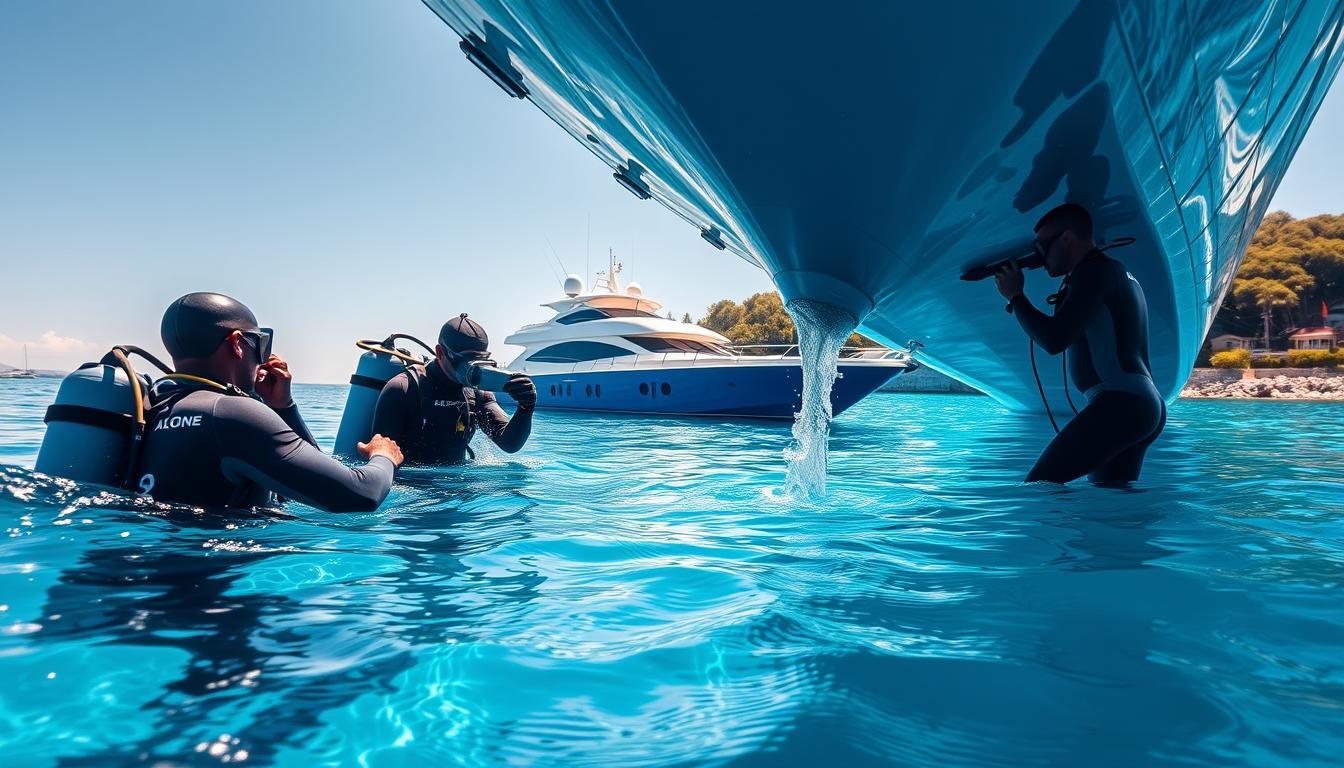
Keeping your vessel in top shape means years of fun. Regular care protects it from the sea and salt. It also stops dirt and grime from causing harm.
A clean boat shows you care and keeps it looking fresh. Dirt can hide problems that need fixing fast. Stay ahead to make sure your boat runs great every time you use it.
Keeping the hull smooth boosts speed and saves fuel. Learn how to maintain your yacht with a guide on yacht upkeep. Good antifouling solutions cut down on drag and repair costs.
Ignoring hull cleaning hurts performance and raises fuel costs. Biofouling can damage your boat’s structure if not treated. Regular hull cleaning is key to keeping your boat safe and valuable.
Understanding Hull Fouling and Its Impact
To keep your vessel in top shape, you must first recognize the biological processes happening beneath the waterline. A clean hull is not just about aesthetics; it is essential for the physics of how your boat moves through the water. When you ignore what happens below the surface, you risk damaging your investment and spending more on fuel.
What is Hull Fouling?
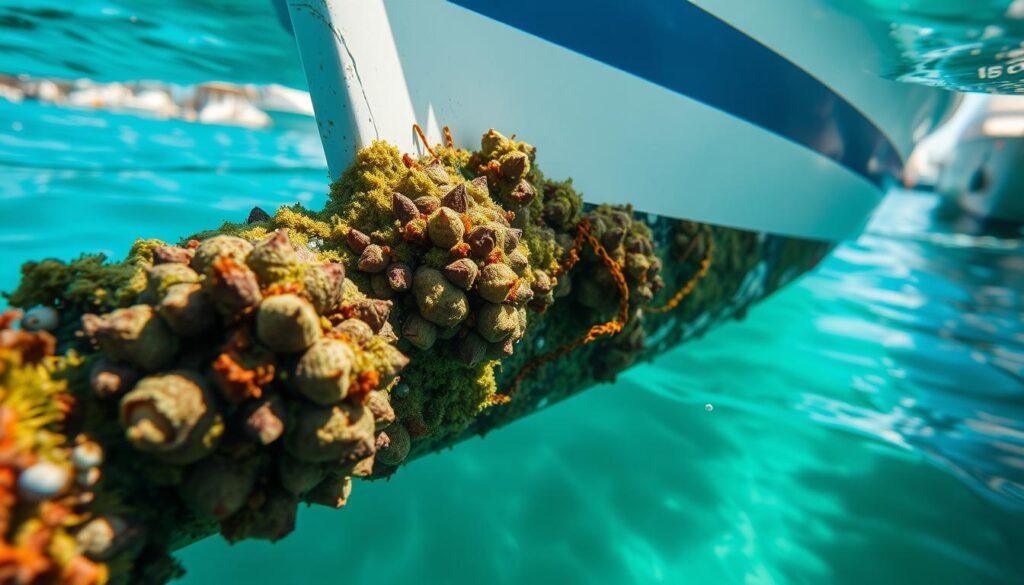
Hull fouling is the unwanted accumulation of biological organisms on the submerged parts of a boat. This process starts the moment your boat enters the water. It begins with a microscopic biofilm of bacteria and quickly escalates into larger, visible organisms.
Common types of marine growth include green and brown algae, hard-shelled barnacles, and mussels. These organisms find a home on your hull, rudders, and propellers. Once they attach, they create a permanent colony that becomes harder to remove over time.
Several environmental factors influence how fast this growth occurs. High water temperatures often speed up the reproduction cycle of these organisms. Also, salinity levels and the specific material of your hull can determine how easily these creatures stick to the surface.
| Factor | Impact Level | Description |
|---|---|---|
| Water Temperature | High | Warm water accelerates the growth of algae and barnacles. |
| Salinity | Moderate | Different species thrive in saltwater versus brackish water. |
| Hull Material | Variable | Porous or rough surfaces offer a better grip for organisms. |
Effects of Hull Fouling on Boat Performance
The impact of hull fouling on your boat’s performance is immediate and often expensive. As marine growth attaches to the surface, it creates a rough texture that disrupts the smooth flow of water. This creates significant drag, forcing your engine to work much harder to maintain speed.
Increased drag leads to a noticeable drop in top speed and maneuverability. You might find that your boat feels sluggish or heavy during sharp turns. Most importantly, your fuel consumption can skyrocket by as much as 40% if the buildup is severe.
Over time, heavy growth can even damage the hull material or clog vital intake valves. Regularly monitoring the condition of your boat’s bottom is the only way to prevent these expensive mechanical issues. Staying proactive ensures your boat remains fast, efficient, and safe for every journey.
Best Practices for Hull Cleaning
Mastering hull maintenance means using the right tools and following a specific order. Keeping your vessel in top shape requires a consistent approach to care. A clean hull reduces drag and saves you money on fuel over every trip.
By following a few simple steps, you can protect your investment and enjoy better performance on the water. Regular cleaning prevents the buildup of organic matter that slows you down. Efficiency and speed are the primary rewards for a well-maintained boat.
Pre-Cleaning Preparation
Before you start scrubbing, you must prepare the area and your vessel. Move the boat to a suitable location where runoff won’t harm the local environment. Gather all your supplies beforehand so you do not have to stop midway through the job.
Check your local regulations regarding wastewater and cleaning chemicals. Many marinas require specific eco-friendly soaps to protect marine life. Use the following table to ensure you have the necessary gear ready for the task.
| Tool or Supply | Primary Purpose | Recommended Type |
|---|---|---|
| Soft Brush | Removing slime | Telescoping handle |
| Mild Soap | General cleaning | Marine-grade biodegradable |
| Pressure Washer | Heavy debris | Low-pressure setting |
| Microfiber Cloth | Drying and polishing | High-absorbency |
Cleaning Techniques and Tools
Effective hull cleaning techniques start with a thorough fresh-water rinse to remove loose salt and debris. Use a soft sponge or a brush with soft bristles to avoid scratching the gelcoat. Work in small sections from the waterline down to ensure you do not miss any spots.
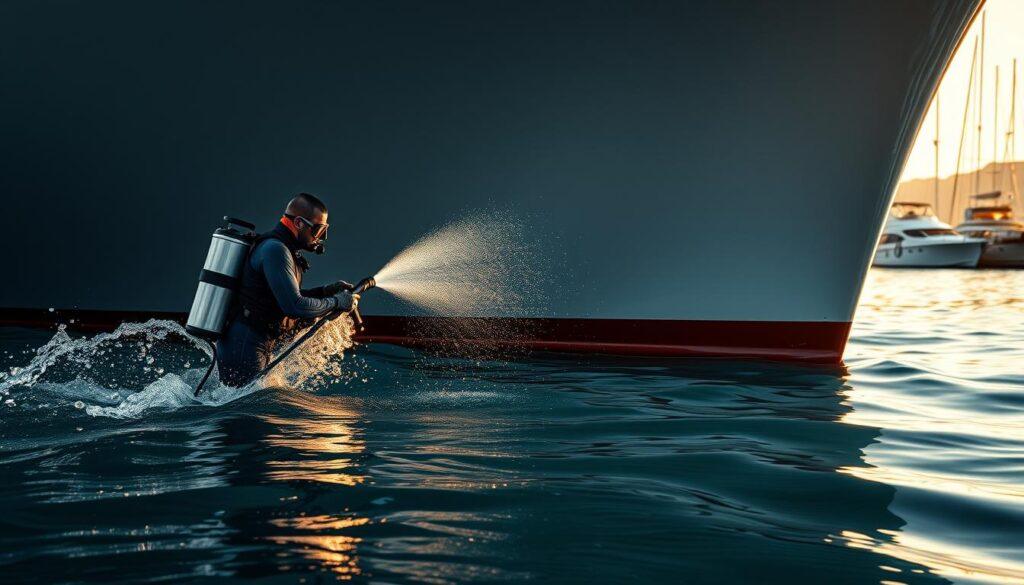
Apply a specialized hull cleaner to stubborn stains or algae growth. Let the cleaner sit for a few minutes to break down the grime before you begin scrubbing. Always rinse each section immediately after scrubbing to prevent the soap from drying on the surface.
Once the hull is clean, drying the surface is a vital step for a professional finish. Use a clean microfiber cloth to wipe away water spots and streaks. This process prepares the surface for a fresh application of antifouling paint if your maintenance schedule requires it.
Applying antifouling paint is a great way to prevent marine growth from sticking in the future. This specialized coating contains biocides that discourage barnacles and algae from attaching to your hull. Make sure the surface is completely dry and smooth before you begin the application process.
How Often to Clean and Inspect
Figuring out when to do boat maintenance is tricky. It depends on many things like weather. Regular checks keep your boat in top shape all season.
Experts say clean your boat every month. This stops marine growth from slowing it down. Looking after it now saves money later.
Checking your boat often helps avoid big problems. A clean hull cuts down on fuel costs. Stick to a cleaning schedule to protect your investment.
Factors Affecting Cleaning Frequency
The area around your dock affects growth speed. Warm water makes algae and barnacles grow fast. Boating in warm places means more cleaning.
How salty the water is also matters. Saltwater grows hard stuff like barnacles. Freshwater might get slimy, needing different cleaning plans.
The type of hull also matters. Fiberglass, aluminum, or wood each faces different fouling. Some need special care to avoid damage.
| Factor | High Growth Impact | Low Growth Impact |
|---|---|---|
| Water Temp | Warm / Tropical | Cold / Northern |
| Water Type | Saltwater | Freshwater |
| Vessel Usage | Stationary / Docked | Frequent Movement |
Inspection and Maintenance Tips
Do a hull inspection regularly. Look for paint issues and early barnacle signs. Catching these early stops them from sticking.
Knowing when to clean your hull helps budget for the season. Also, check zinc anodes often. They protect metal parts from corrosion.
Keep the waterline clean to avoid stains. Use a soft sponge for light cleaning. Being consistent keeps your boat fast and safe.
Choosing the Right Antifouling Paint
Finding the right barrier against barnacles and algae is key for boat owners. This layer helps your boat move smoothly through the water. It also saves fuel and protects the hull from damage.
Varieties of Protective Coatings
There are many formulas to choose from, based on how often you use your boat. Antifouling paint comes in two main types: ablative and hard bottom paint. Ablative coatings slowly wear away, revealing a new layer of protection.
Hard bottom paints last longer and don’t wear off easily. They’re great for fast boats or those that stay in the water a lot. Many are now looking for non-copper options to protect marine life.
Copper-based paints are popular for their effectiveness. But, silicone-based coatings offer a slick surface without harsh toxins. Choosing the right antifouling paint depends on your local water and sea conditions.
Best Practices for Application
Preparation is key when painting. Remove old paint and sand the surface for a strong bond. A clean, dry hull is essential for the best results.
Apply the coating in thin, even layers. Use a high-quality roller or spray gun. Experts recommend at least two coats, with extra on the waterline and keel.
Regular checks for chips or thin spots are important. If you see fading or growth, it’s time for a touch-up. Regular care keeps your antifouling paint working well all season.
| Coating Type | Ideal Vessel | Key Benefit | Maintenance Level |
|---|---|---|---|
| Ablative | Cruising boats | Self-cleaning layers | Low |
| Hard Bottom | Speedboats | Durable finish | Moderate |
| Copper-Free | Eco-conscious users | Non-toxic formula | High |
| Silicone | Frequent users | Ultra-slick surface | Moderate |
Tips for Preventing and Treating Hull Blisters and Eco-Friendly Cleaning Options
Keeping a boat in good shape is a big job. Small problems can turn into big, costly repairs. The right care protects your investment and the planet.
Understanding Osmosis and Surface Damage
Water trapped under the gelcoat can cause hull blisters. This is called osmosis. It happens when water gets into the fiberglass layers.
Using top-quality epoxy resins during building helps prevent blisters. Make sure your boat stays dry when it’s not in the water. Regular checks help catch small problems early.
Fixing these issues quickly keeps your boat strong. This way, you avoid bigger, more expensive repairs.
Sustainable Maintenance Choices
Safe products keep your boat looking great and protect the water. Baking soda removes stains on fiberglass without scratching. Worcestershire sauce is a natural polish for brass.
These eco-friendly cleaning steps stop toxic metals from harming the bay. Avoid harsh chemicals that can hurt fish and plants. Services like BayGreen offer mobile pump-out options for waste management.
Programs like the Boating Infrastructure Grant support eco-friendly boating. Proper fueling and waste disposal keep the ocean clean for future generations.