
Boating safety relies on your equipment’s durability against the elements. Keeping your gear in top condition stops unexpected drifting. It also keeps your boat safe during overnight trips.
Every captain knows a secure hold is essential for a stress-free journey. Peace of mind starts with the gear you trust.
Ignoring regular checks can lead to equipment failure at the worst time. A failure in the connection between your boat and the seabed can cause expensive damage or dangerous situations.
Experts stress the importance of regular inspections to avoid accidents. Vigilance is the key to longevity.
A standard setup includes the fluke, heavy metal chain, and powerful windlass. Regular anchor system maintenance is the only way to ensure reliable performance.
This ensures long-term safety for everyone on board. Taking time for these checks protects your investment and gives peace of mind while at sea. Reliability comes through consistent effort.
Key Takeaways:
- Consistent upkeep prevents gear failure and drifting.
- Proper care of the windlass ensures vessel security.
Key Components of the Anchor System
A good anchoring setup needs several key parts working together. This system, known as ground tackle, includes the anchor, the rode, and the machinery to deploy it. Each part must be in good shape to keep your boat from drifting in a storm or when staying overnight.
The rode is the chain or rope that connects your boat to the anchor. High-quality materials are essential because they handle the huge tension from wind and waves. If any part of this system fails, your boat and crew’s safety is at risk.
Keeping these parts in good shape is important. You should check the connections between the chain and the anchor often. Look for signs of wear, rust, or loose bolts that could cause a failure while you’re away.
Anchor Types and Chain Selection
Choosing the right gear starts with knowing the different anchor types for your boating area. Not all anchors work the same in sand, mud, or rocky bottoms. You need to match the anchor’s design to the seabed you usually travel on.
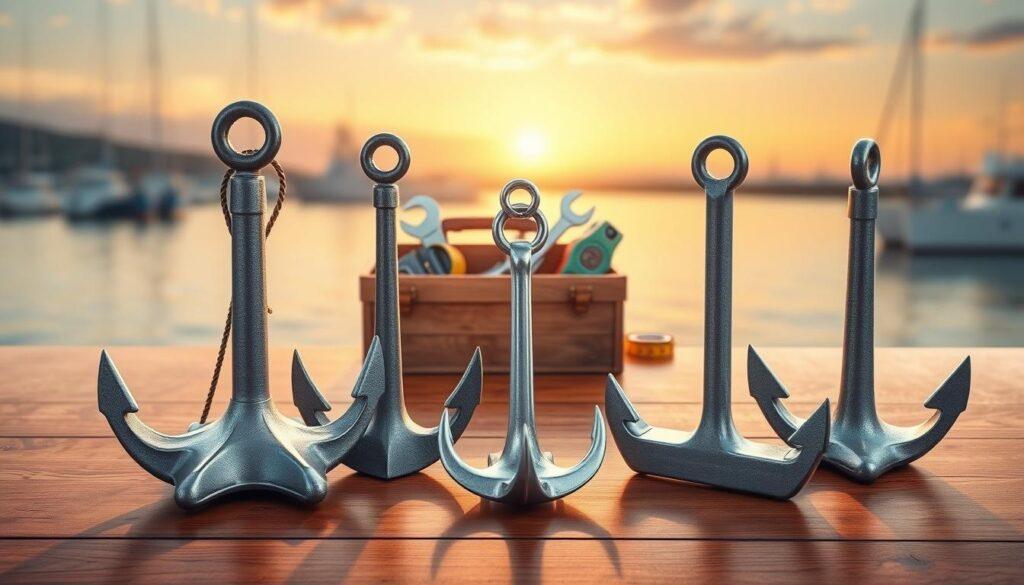
Your chain selection is as important as the anchor. A heavy chain helps the anchor shank stay low, digging deeper into the ground. Most use a mix of galvanized steel chain and nylon rope for weight and flexibility.
| Anchor Design | Best Bottom Surface | Main Advantage |
|---|---|---|
| Fluke (Danforth) | Sand and Mud | Folds flat for easy storage |
| Plow (CQR) | Grass and Rock | Resets well if the wind shifts |
| Claw (Bruce) | Varied/Mixed | Sets very quickly in most spots |
Effective windlass care is key for a smooth experience. The windlass is the motorized winch that raises and lowers your gear. Without a working windlass, getting hundreds of pounds of metal and rope back is hard.
To keep your system running well, follow these important maintenance steps:
- Rinse with fresh water after every trip to remove salt and grit from the chain.
- Check the anchor types for any bent flukes or cracked welds that might reduce holding power.
- Do regular windlass care by lubricating parts and checking electrical connections for corrosion.
- Make sure your chain selection is good by looking for rusted links that may need replacement.
By focusing on these core components, you build a safety foundation. Regular windlass care and gear checks will give you peace of mind on every trip.
Regular Inspection and Maintenance Routines
Keeping your anchoring gear in top shape is key for any weather. Saltwater and constant stress can weaken even the strongest metals. Regular checks help catch small problems before they become big risks at sea.
A well-kept system gives you peace of mind when the wind gets strong. Ignoring your gear can lead to unnecessary risks and costly fixes. A little effort now can save a lot of trouble later.
Inspection Schedules and Maintenance Tips
Setting up clear inspection schedules helps you keep an eye on your gear all season. Always do a quick anchor check before leaving the dock. Look for signs of damage like bent shanks or loose pins that could be dangerous.
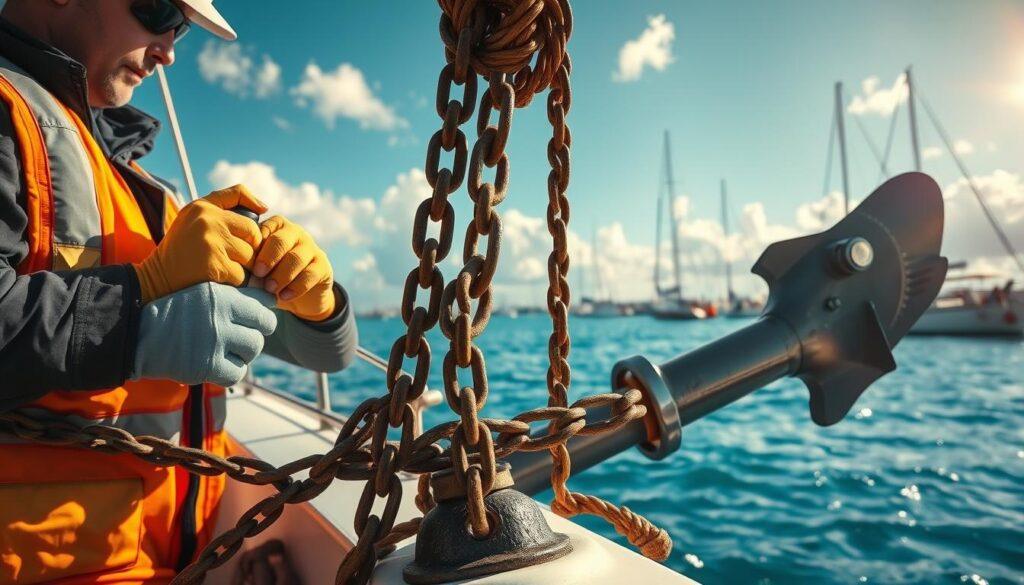
Follow this guide to stay ahead of your boat’s needs. These maintenance tips help spot wear early. Being consistent is the key to a durable anchor setup.
| Frequency | Component | Action Required |
|---|---|---|
| Monthly | Shackles & Pins | Tighten pins and check for corrosion. |
| Seasonal | Anchor Chain | Inspect for rust and galvanized wear. |
| Annual | Full System | Deep clean and lubricate all moving parts. |
Remember these maintenance tips to protect your investment:
- Rinse with fresh water after every trip to remove salt crystals and grit.
- Check for “galvanic corrosion” where different types of metal touch each other.
- Look for hairline cracks in the anchor shank or along the weld points.
- Replace nylon rope if you notice stiffening or excessive fraying.
Regular anchor checks help spot issues like “pitting” in metal. If you see deep rust or structural bending, replace it right away. Safety on the water relies on every link and bolt being sound.
Choosing the Right Anchor for Your Boat
Every captain knows that a reliable hold starts with choosing the right anchor for their specific boat and conditions. Your choice determines how well you sleep at night while at rest in a quiet cove. It is not a “one size fits all” decision because different environments demand specific tools for safety.
You must evaluate where you plan to spend most of your time on the water. For instance, selecting and preparing your anchor involves knowing if you will face sandy bottoms or rocky shores. A mistake in this assessment could lead to your vessel drifting unexpectedly during the night.
Boat size and weight are critical factors that dictate the physical size of your gear. A heavy cruiser needs significantly more holding power than a lightweight speed boat. You should also consider the windage, which is how much surface area your boat exposes to strong gusts.
Factors to Consider and Anchor Types
Weather conditions play a massive role in your overall safety and equipment longevity. High winds and strong currents can pull even a heavy anchor out of its bed if it is not designed for those forces. Always choose a model that can handle more than the average conditions you expect to encounter.
There are several anchor types designed for specific seafloors and vessel styles. The Danforth is excellent for sand and mud because of its large, sharp flukes. But, it may struggle on rocky or grassy bottoms where it cannot dig in effectively.
The CQR, or “plow” anchor, is a classic choice for coastal cruising and long-term stays. It handles changes in wind and tide well because of its unique hinged design. It remains a versatile option for many boaters who visit various locations throughout the season.
Modern designs like the Rocna offer high holding power across almost all seabed types. These “new generation” anchors set quickly and stay buried even under extreme pressure. They are often the preferred choice for sailors who need maximum reliability in remote areas.
Your system is only as strong as its weakest link, which is why the rope and chain selection is vital. A heavy chain helps the anchor lie flat, which significantly increases its grip on the bottom. Combining a nylon rope with a lead chain provides both weight and necessary elasticity.
This setup absorbs the shock from waves and prevents the anchor from jerking loose. When looking for anchorage tips near marinas, always check your rode’s condition first. Proper equipment ensures your boat stays exactly where you put it.
| Anchor Type | Best Seabed | Key Advantage |
|---|---|---|
| Danforth | Sand and Mud | Lightweight and folds flat |
| CQR (Plow) | Sand and Grass | Hinged shank handles tide shifts |
| Rocna | All Bottom Types | Sets quickly and holds firmly |
Windlass Maintenance and Rope Care
Your anchoring system needs the windlass and line to be in good shape. Without care, they can fail when you need them most. Regular upkeep keeps you safe on your voyages.
Essential Inspection and Line Preservation
Keeping your windlass in top shape is key. Saltwater can damage the parts and stop the motor. Always clean it with fresh water after each use to remove salt and grit.
Check the electrical connections for corrosion or loose wires. Also, grease the moving parts yearly to keep everything running smoothly. Regular windlass maintenance helps your motor last longer and avoids costly repairs.
Good rope care means keeping it clean and flexible. Salt and dirt can weaken the rope over time. Soak your lines in fresh water and mild soap to keep them strong.
Avoid harsh chemicals and high-pressure washers, as they can harm the rope. Check for chafing or stiffness, signs of wear. Never store a wet rope in a closed space, as it can mold and rot.
Regular anchor checks help catch problems early. Look for loose pins or wear on the swivel. Make anchor checks part of your pre-departure routine to ensure everything is secure.
| Maintenance Item | Recommended Interval | Primary Benefit |
|---|---|---|
| Fresh Water Rinse | After every use | Prevents salt corrosion |
| Electrical Inspection | Every six months | Ensures power reliability |
| Line Inspection | Monthly | Prevents rope failure |
| Gear Greasing | Annually | Smooth mechanical operation |
Do anchor checks to find any damage or rust. These quick checks keep your gear ready for any weather.
Best Practices for Anchoring in Various Conditions
Staying put is key for every boater. Different seabeds like mud, sand, or rock need special anchoring methods. Modern anchors like the Delta or Rocna work well with the right technique.
First, figure out your total depth by adding water depth to your bow’s height. Use a 5:1 ratio for day stops and 7:1 for overnight stays. For stormy weather, go up to a 10:1 ratio for safety.
Anchoring Techniques and Safety Tips
Choosing the right spot is the first step in anchoring. Many boaters find free spots by avoiding marinas. Natural spots can save you money.
Check your anchor’s set by reversing power and watching the shore. Slowly move the boat towards the anchor when pulling it up. This reduces strain on your windlass.
Your rope and chain need regular checks. Look for rust or wear each season and replace worn-out chain. Good gear from brands like Spade keeps you calm on the water.
Secure your anchor with a lashing when moving. Keep spare parts like shackle pins handy for quick fixes. Regular care of your rope and chain keeps your boat safe in any weather. This way, you can enjoy the water without worry.