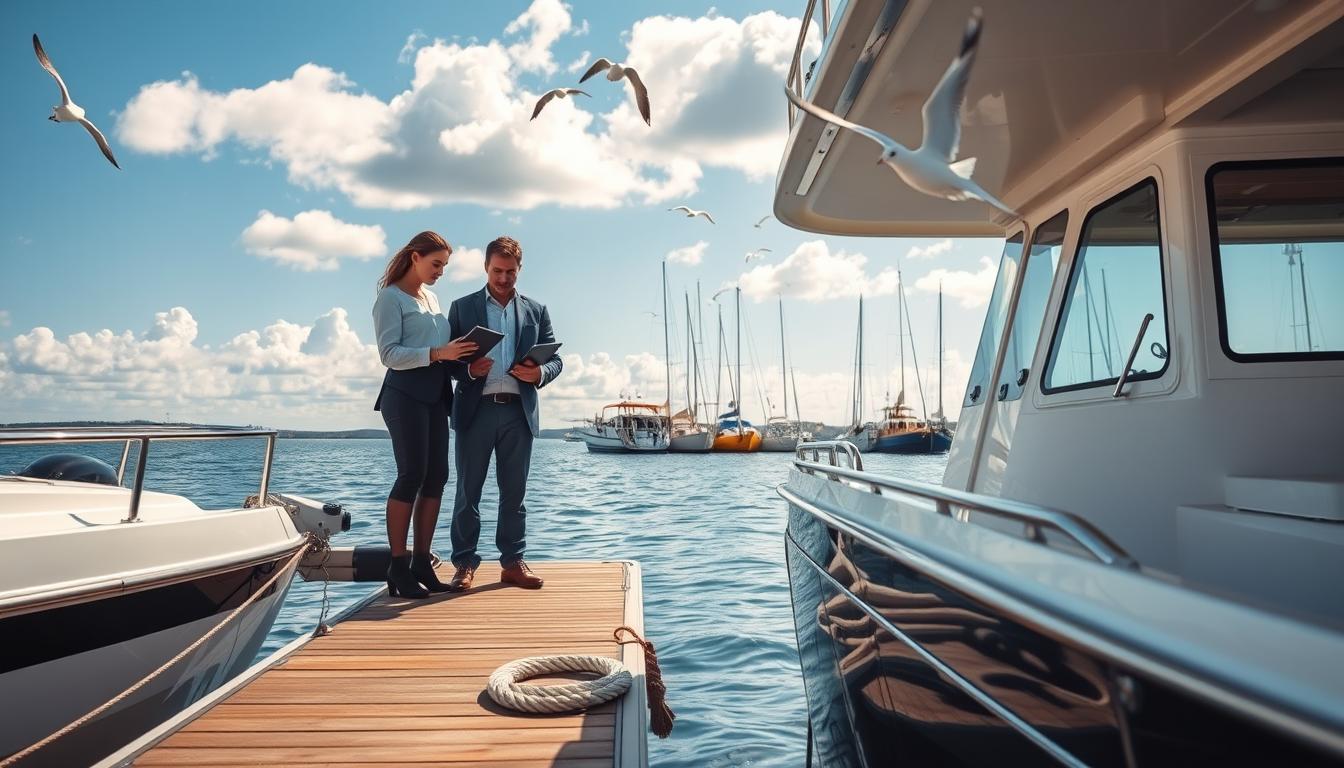
A general weather report tells you if it will rain. But it doesn’t warn you about the gust waiting behind the fuel dock. Safe operation in a confined waterfront space needs a different kind of intelligence.
Every inlet has its own unique character. Structures like breakwaters and piers create micro-forecasts—conditions that change by the minute. A calm area, or wind shadow, can sit right next to a strong acceleration zone. Unpredictable eddies swirl where you least expect them.
This unique harbor wind is key for a smooth docking maneuver or a safe fueling stop. These are high-stakes operations where knowing your surroundings is everything. Understanding the local airflow pattern makes these tasks routine.
Modern waterfronts are becoming smarter and more responsive. This shows a timeless truth: success relies on detailed local knowledge. Reading the water and air around your boat is the first, and most important, forecast you’ll need.
Crosswind Docking Tactics
Crosswind docking is not about fighting the wind. It’s about using it to your advantage. A well-planned step-by-step approach can make it smooth. This skill involves reading your environment and using basic boat-handling techniques.
Start by assessing the situation. Know the wind direction relative to the dock before you get close. This helps you decide if a windward or leeward approach is best for your boat and the space.
Preparation is key. Make sure everything is ready before you start your final approach. Rushing can lead to mistakes.
- Fenders should be deployed on the correct side.
- Dock lines must be flaked and ready to go.
- Assign clear roles to your crew if you have one.
Choosing your approach side is very important. In a windward approach, the wind blows you away from the dock. This gives you a safety cushion but requires careful control to “fall” onto the dock. In a leeward approach, the wind pins you to the dock. This is simpler but harder to exit if you miss.
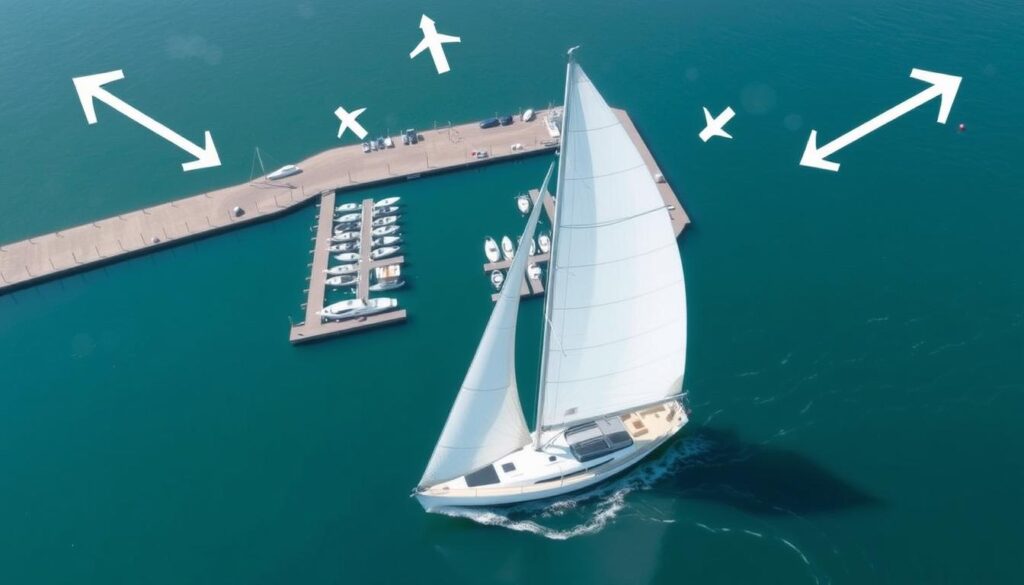
Execution is all about controlled inputs. Use short, firm bursts of throttle to steer. Your rudder works against the wind’s push. The key is your lines. Get a spring line on first to stop the boat from moving and pivot you gently into place.
Mastering docking in a crosswind takes practice. Start in lighter winds and build confidence. It’s a puzzle of physics, not strength. For more advanced wind strategies and tips, check out these resources. Your confidence at the helm grows with each successful maneuver.
Surge & Ferry Wake Warnings
Navigating a harbor safely means knowing about two water hazards: the slow surge and the sharp ferry wake. Both can test your docking lines and challenge your boat’s security. Knowing the difference is key to managing them.
Surge is the back-and-forth water movement in a confined space like a marina. It’s like water sloshing in a bathtub after the tap is turned off. This movement comes from external forces like storms or winds funneling energy into the harbor.
Ferry wake, on the other hand, is a sudden, localized disturbance. It’s the sharp wave train from a large, fast-moving vessel passing nearby. The wake hits your boat with a quick, successive pounding. Unlike surge, a wake arrives and passes quickly.
Certain harbor designs are more prone to dangerous surge. Look for narrow, long basins with a wide-open entrance facing the prevailing wind or open water. These layouts act like funnels, capturing wave energy and letting it bounce off the walls. Exposed harbors without natural or man-made barriers see the most significant effects.
You can read the water for clues long before docking. Observe the pilings and dock edges. Do they show a consistent, rhythmic rise and fall every 10 to 20 seconds? Are other boats rocking in unison, not randomly? These are clear signs of an active surge. For wake, watch the traffic patterns and listen for the approach of large commercial vessels.
When surge or wake is predicted, adapt your docking plan. Your goal is to allow movement while preventing damage. Follow these key steps:
- Use Long, Elastic Lines: Allow extra line length so your boat can rise and fall with the surge without snapping tight. Use nylon rope for its stretch.
- Deploy Extra Fenders: Place more fenders than usual, and adjust them to protect both sides if the surge direction shifts.
- Position for Strength: If a ferry wake is expected, try to point your boat’s bow or stern into the predicted wave direction. This presents a stronger, narrower angle to the force.
Modern harbor infrastructure is built with these forces in mind. Dock systems designed for storm surge resilience and smart wave attenuator design help protect exposed marinas. As a boater, your awareness complements this engineering. Understanding surge transforms it from a mysterious threat into a foreseeable force you can manage with preparation and the right techniques.
Best Times for Fuel & Service
Planning your marina stop is more than just picking a spot. It’s about matching your visit with the harbor’s best times and calmest harbor wind conditions.
Choosing the right time makes a big difference. It can turn a stressful task into a smooth one. It affects your safety, budget, and schedule.
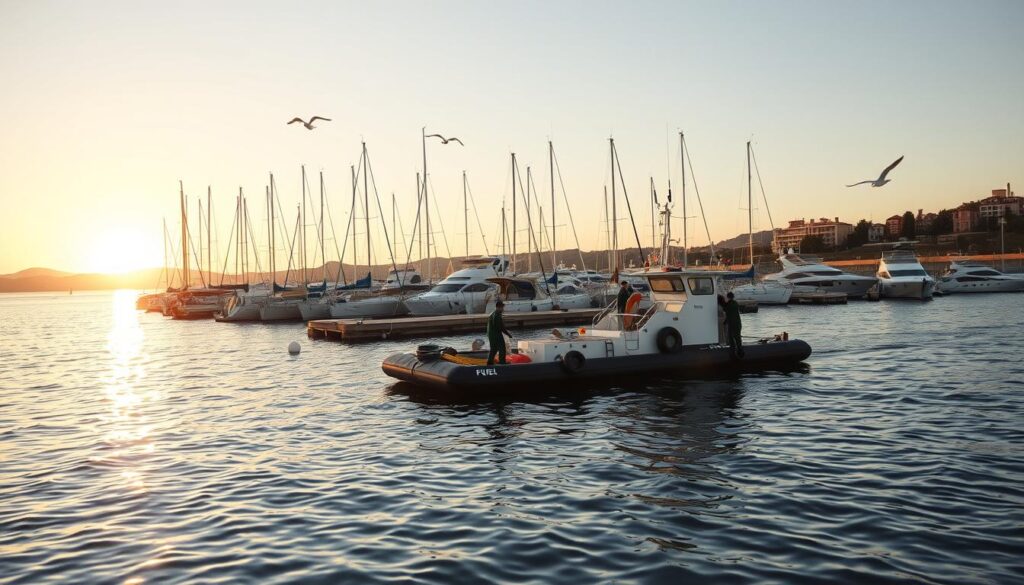
The best times for fueling and docking are early morning and late evening. The water is usually calm then. This means less boat drift and safer docking.
Staff are also more alert and focused during these hours. This is key for safe fueling, where following strict rules is essential.
On the other hand, try to avoid busy times. Mid-morning to early afternoon, and weekends, are usually the busiest. The fuel dock gets crowded.
This busyness raises the risk of accidents and misunderstandings. Staff might be too busy to watch each fueling closely. The first source says focused staff is vital for safe fueling.
For services like haul-outs or engine work, timing is also key. Modern marinas use smart tech to work more efficiently. The third source talks about new tools like remote-controlled lifts.
This tech helps set more precise appointment times. It cuts down on wait times and yard congestion. When booking a lift, ask if they use these systems. It usually means faster, more reliable service.
Here are some tips for planning your service visit:
- Check the Daily Forecast: Look for light wind in the morning or evening, not just rain.
- Call Ahead for Service: For maintenance, ask about their least busy days and if they use automated scheduling for lifts.
- Research Marina Protocols: Use resources like a detailed marina directory to learn about specific fuel dock hours and service specialties before you go.
- Avoid the Weekend Rush: Try to schedule fuel stops and non-urgent service for weekdays.
Understanding these rhythms can make your experience better. You’ll wait less and enjoy the water more. You’ll also know your boat was serviced safely and efficiently.
Calling Ahead: What to Ask the Harbor
A quick call to the harbor master is key. It turns uncertainty into a clear plan for docking, fueling, and maintenance.
Have a checklist ready. Focus on fuel and pump-out, dockage and conditions, services, and safety protocols.
Ask about fuel types available and pump-out station locations. Confirm their hours to schedule your service stop efficiently.
Inquire about transient slip availability. Always ask about current water conditions in the basin, such as wind-driven surge or wake activity from ferries. Knowing the dock construction helps plan your lines and fenders. For real-time insights, check resources like the local boating conditions page.
Clarify service hours for the office, restrooms, and showers. Ask if lift service or mechanics are on-site for urgent repairs. Confirm WiFi access and security patrols.
Discuss safety. Find the location of emergency shutoffs, spill kits, and fire equipment. Request specific docking instructions for your assigned slip, if it’s known for tricky crosswinds. Ask about environmental rules for waste disposal to ensure compliance.
This call ensures you arrive informed and ready. It connects the planning from earlier sections with on-the-water execution.