
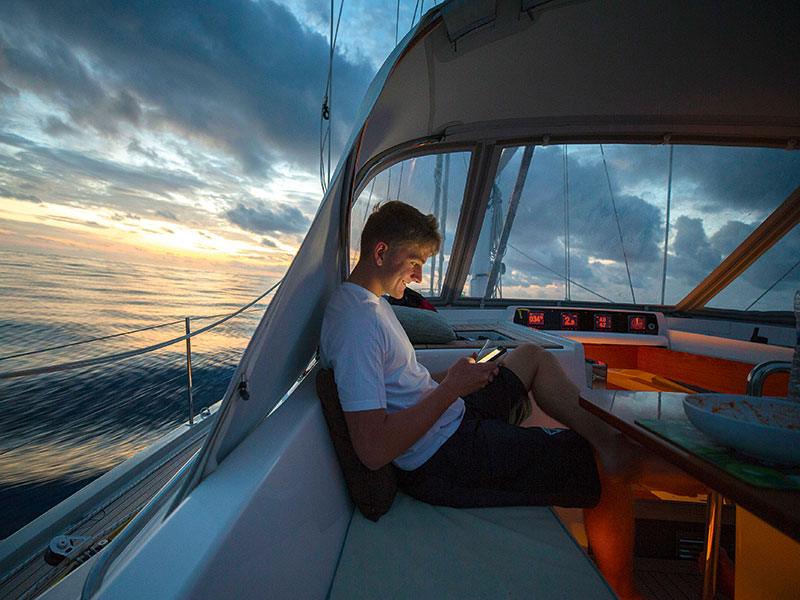
Nothing beats the thrill of dropping lines and leaving the home port behind. We all love the peace that comes with finding a quiet, remote anchorage, but going completely off the grid simply does not work for most modern boaters. You need reliable access to local marina contacts, critical safety updates, and emergency alerts. A robust internet connection also keeps crew morale high during those inevitable rainy weather delays. Whether you want to stream a movie below deck during a coastal squall or figure out where to bet on sports in Alaska while cruising the Inside Passage, modern marine Wi-Fi keeps you tied to your favorite land-based hobbies without sacrificing your nautical adventure.
The Evolution of Marine Connectivity
In the past, heading offshore meant relying solely on crackly VHF radios and single-sideband setups to catch basic marine weather reports. Today, the landscape of marine communications looks completely different. We have shifted from basic radio frequencies to high-speed cellular networks and low-earth orbit satellites. This technological leap allows captains to pull down complex GRIB files and high-resolution radar maps in real time. Accessing up-to-the-minute data from reliable sources like the National Weather Service fundamentally changes how we plan our routes and avoid dangerous offshore conditions. You no longer have to guess what the sky might do tomorrow; you just look it up and adjust your course.
Choosing the Right Hardware for Your Needs
Upgrading your onboard network requires an analytical look at where you actually take your boat. If you spend most of your weekends skipping between local marinas, a standard Wi-Fi booster or a marine-grade cellular router easily does the trick. These systems grab weak signals from shore towers and amplify them safely throughout your cabin. However, if your itinerary includes crossing blue water or hiding out in deep coastal fjords, you will need a dedicated satellite internet system. Reviewing local navigational guides helps you determine exactly how far off the grid you truly plan to travel before you commit to expensive satellite hardware.
| Connectivity Type | Ideal Cruising Area | Upfront Cost | Monthly Fees | Speed & Reliability |
| Wi-Fi Booster | In-port and near marinas | Low | None | High (if near a good source) |
| Cellular Router | Coastal waters (up to 10 miles) | Medium | Medium | Very High |
| Satellite Internet | Offshore and remote passages | High | High | High (global coverage) |
Installation and Power Consumption Realities
You cannot just strap a router to your mast and expect flawless streaming. Installing marine internet requires careful planning, especially regarding your vessel’s power consumption. Satellite domes and high-powered cellular amplifiers draw significant energy, which can quickly drain your house battery bank if you do not run the generator or main engine. You must calculate your daily amp-hour usage and potentially expand your solar array or battery capacity to handle this new continuous electrical load. Furthermore, you must mount antennas as high as possible while carefully avoiding signal interference from your radar array. For onboard safety and compliance, always consult the marine electrical standards provided by organizations like the American Boat and Yacht Council before you start cutting wires or drilling into fiberglass.
Balancing Screen Time With Sea Time
A fast internet connection makes life on the water safer and significantly more comfortable, but it requires a bit of discipline. The ultimate goal of cruising is to experience nature, hone your seamanship, and connect with your crew. Use your new marine Wi-Fi to download weather updates, secure your next marina slip, and enjoy some evening entertainment. Just remember to turn the screens off when the sun sets over the water, because no digital stream can ever replace the real-world magic of a quiet, starlit anchorage.