
Shoreline Boating Safety deserves close attention after the July 14, 2026 capsizing of the 49-foot, three-deck boat Volare in San Francisco Bay near Alcatraz. The reported facts are sobering: 20 people, mostly family members, were aboard; 16 were rescued; one person died; and three people remained missing and presumed dead after the boat capsized after passing under the Golden Gate Bridge, according to the AP report. The public record cited in the research does not prove a single cause, so safe operators should treat the event as a reminder to manage several risks at once: weather, water movement, loading, mechanical condition, passenger readiness, and exit planning.
Near shore, a boat can feel deceptively close to help while still being exposed to cold water, chop, rocks, traffic, and limited recovery time. A bridge, island, point, or steep shoreline can change the way wind and current meet the hull. The safe choice is rarely based on one factor. It comes from stacking conservative decisions before departure and adjusting early when conditions worsen.
What The July 14 Capsizing Shows
A Sudden Problem Leaves Little Margin
The Volare case shows how quickly a social outing can become a survival situation. A vessel with multiple decks may offer comfort, but height, passenger movement, and water ingress can reduce stability if conditions deteriorate. That does not mean every tall cabin boat is unsafe; it means the operator must know how the boat behaves when loaded, how it handles chop, and how quickly bilge systems, alarms, and crew action can address incoming water.
San Francisco Bay can combine wind, current, ferry traffic, and reflected waves from hard edges or nearby landforms. When a boat is returning toward shore, the crew may feel the trip is nearly finished. That is exactly when attention can slip. Keep watches posted, maintain steady communication, and resist last-minute route shortcuts near islands, bridge structures, or rocky points.
Do Not Treat Proximity To Shore As Protection
Being within sight of land does not remove the need for self-rescue planning. If a boat capsizes or sinks, people in the water may separate fast, especially if they are not already wearing flotation. Radios, flares, lights, and visible signaling equipment help responders locate people, but those tools must be reachable after a sudden list or rollover. Gear locked below may be unavailable when the deck angle changes.
For related Bay-specific risk discussion after this incident, the companion safety article on San Francisco Bay safety connects weather checks, passenger placement, closures, and conservative route choices.
Shoreline Boating Safety Starts Before Departure
Shoreline Boating Safety Checks At The Dock
A practical Shoreline Boating Safety routine begins before lines are cast off. Check the latest local forecast, but also compare that forecast with what you can see: whitecaps, flags, wind against current, fog banks, and other boat traffic patterns. If the planned route passes under a bridge, around an island, or close to rocks, identify a wider alternative before leaving the dock. A safe plan should include a turn-back point, not just a destination.
Inspect the boat with water entry in mind. Confirm that bilge pumps are working, through-hulls and hoses are secure, deck drains are clear, and hatches close properly. Make sure the load is reasonable and balanced. Passengers should not crowd one side for photos or views when the boat is in chop, turning, or slowing. If gear, coolers, or people shift suddenly, the operator may have less time to recover than expected.
- Assign one person to watch the water ahead and another to watch passenger movement if the boat is carrying a group.
- Keep life jackets out, fitted, and worn rather than stored in hard-to-reach compartments.
- Brief passengers on where to sit, what to hold, and what to do if the operator gives a short safety command.
- Set a return time that avoids known rougher periods when possible, especially in areas where afternoon wind chop builds.
- Tell someone ashore your route, passenger count, and expected return time.
If your club or crew uses written float-plan forms or safety briefing sheets, plain language helps prevent confusion. To improve written communications with your boating club or crew, see resources on Top Ten Writing Services. For operating decisions, rely on official marine information, local rules, and the conditions in front of you.
Reading Wind, Chop, And Shoreline Exposure
Watch The Water Near Points And Bridges
For San Francisco Bay, Shoreline Boating Safety often comes down to respecting small changes before they become large ones. A point of land, bridge opening, or island edge can concentrate wind or current. Waves may stand up, meet from different angles, or rebound from hard structures. A course that was comfortable on the outbound leg can be wet, steep, and unstable on the return if wind has increased.
Slow speed is not always enough by itself. Operators should choose an angle that reduces pounding and keeps water from boarding the deck. If spray starts crossing the bow, passengers are bracing hard, or the boat begins to roll sharply near a shoreline feature, increase distance from the hazard if sea room allows. Avoid running close to rocks, seawalls, or bridge bases simply to shorten the route.
Use Conservative Turnaround Triggers
Good seamanship includes deciding in advance what will end the trip. Triggers can include sustained spray over the bow, bilge alarms, difficulty holding course, passenger distress, falling visibility, or a forecast that no longer matches the water. These signs do not require panic. They require an early, calm change: reduce exposure, return by the safer route, or seek a suitable refuge if one has already been identified.
The public facts from the July 14 event do not allow outside observers to assign blame. They do support a clear lesson: near-shore waters are not automatically forgiving. A boat can take on water quickly, and once stability is lost, even nearby land may be too far away for people who are cold, injured, or without flotation.
Passenger Briefing And Emergency Response
Life Jackets Work Best When Already Worn
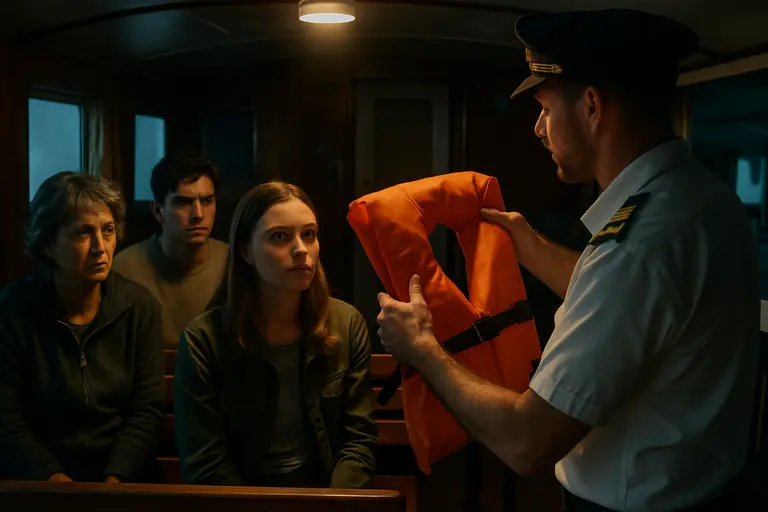
California State Parks has promoted SMART boating habits and reported that 87% of drowning victims in 2024 were not wearing a life jacket, according to its California State Parks safety release. That figure supports a simple operating rule: the best life jacket is the one already on the person before the emergency begins. Sudden capsizing rarely leaves time for passengers to find the right size, read a label, and put it on correctly.
Adults sometimes resist wearing flotation in calm water, but calm water at the dock is not the same as wind chop under a bridge or near an island. Children, weak swimmers, older passengers, and anyone on an exposed deck should receive extra attention before departure. The operator should make the safety briefing short, direct, and repeated if new passengers board.
Keep Emergency Gear Reachable
Radios, lights, sound signals, and distress gear should be placed where the operator or a designated passenger can reach them without going below in rough water. A handheld waterproof radio can be a valuable backup if the fixed radio becomes inaccessible. Phones may help, but wet hands, poor reception, shock, or a dead battery can make them unreliable as the only plan.
Practice the words people should use in an emergency. A passenger should be able to state the boat name, location, number of people aboard, and nature of distress. Near landmarks such as Alcatraz or the Golden Gate Bridge, do not assume the landmark alone is enough. Give the best position information available and describe nearby hazards or drift direction if known.
Golden Gate Capsizing Lessons For Safer Trips
Shoreline Boating Safety is not about avoiding the water; it is about leaving less to chance. The July 14, 2026 Volare capsizing near Alcatraz is a painful reminder that a capable-looking vessel, a familiar landmark, and a short distance to shore do not erase risk. Operators should check weather and water, keep distance from hard shoreline hazards, balance passengers and gear, maintain systems that keep water out, and require life jackets before trouble starts.
The safest trips use conservative judgment throughout the outing. If the wind comes up, the boat feels different, passengers are moving around, or water appears where it should not be, act early. Turn away from the hazard, reduce exposure, call for help when needed, and focus on keeping people afloat and visible. These habits cannot guarantee a safe result, but they give every person aboard a better chance when conditions change fast.