Let’s be honest. You didn’t buy that captain’s hat just for backyard barbecues. You’re here to understand the lay of the liquid land.
Think of this as the “meet cute” between you and your regional waters. Is it a summer fling with the warm, predictable Great Lakes in July, or a more complicated relationship with the moody, shoulder-season currents of early fall? We’ll analyze the seasonal personality of your aquatic scene.
Using Ontario as our case study—a province with the emotional range of a Shakespearean drama when it comes to water—we see a season generally running from late May to October. For smoother sailing, July and August are your safest bet.
Your choice of vessel is a direct reflection of your aquatic aspirations. From the floating cottagecore of a Lake of the Woods houseboat to the stable, family-friendly pontoon platforms of Muskoka, the menu is diverse. Marinas and launches are widespread, ready for your departure.
Consider this your pre-departure briefing. For a deeper dive into regulations and hotspots, the official introduction to boating in Ontario is your next logical port of call.
Navigating Important Routes
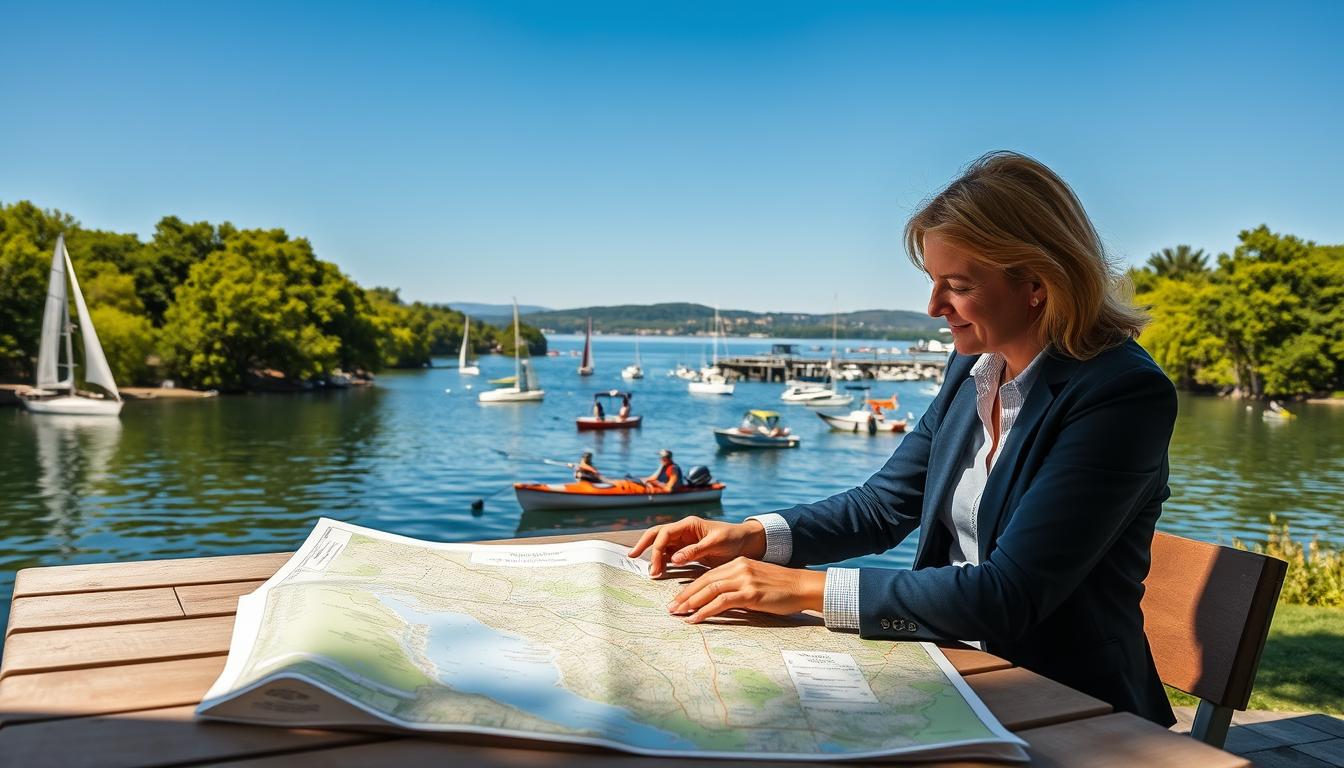
Exploring the sea can be thrilling, but it’s important to know the rules. This is where boating maps, or marine charts, come in. They are more than just pretty pictures.
Forget about navigating by sight alone. It’s a method that’s best left in the past. Today, we need more precise ways to find our way.

Your marine chart is like a map for the sea. It shows dangers underwater, not mountains. The scale helps you understand how far things are.
Colors on the chart are key. White areas are safe, deep water. Blue means shallow water, so watch out. Green areas are marshes, not safe for all boats.
The Buoyage System: Your Road Signs at Sea
“Red, right, returning” is a rule to follow at sea. It helps you avoid getting stuck. Always keep red buoys on your right side when heading back.
Buoys are more than markers. They guide you through the water:
- Lighted buoys: Blinking lights that guide you at night
- Sound-making buoys: Sound signals that warn of dangers
- Daybeacons: Visible markers for the daytime
Codes like “Fl R 4sec BELL” are easy to understand. It means a red light flashes every four seconds with a bell.
Chart Symbols: The Waterway’s Vocabulary
Landmarks are important for navigation. They help when technology fails. Look for buildings or towers to guide you.
Water depths are shown as numbers. But remember, tides can change these numbers. Always check the tide.
Navigating local waterways is an art. It’s not just about reading a chart. It’s about understanding the ever-changing sea.
Before you go, study your charts. Plan your route and know the dangers. This way, you’re in control of your journey.
The key to a great day on the water is knowing your maps. Or, as we now call them, proper boating maps.
Key Regulations
Boating regulations are not just rules. They are there to protect you from making big mistakes. Think of this section as your legal shield at the boating party.
First off, you need a Pleasure Craft Operator Card. It’s the law in Canada for anyone driving a motorized boat. It proves you know how to navigate safely.
Renters have a safety checklist to follow. But owners have no excuses. Skipping this card could cost you $200 and a lot of trouble.

Now, let’s talk about the gear you need. Transport Canada has a list of essentials for staying safe on the water. It’s important to know what you need versus what’s nice to have.
The gear list changes based on your boat’s size. But everyone needs some basic items:
- Personal Flotation Devices (PFDs) for every person on board
- Visual distress signals (flares, smoke)
- Navigation lights for nighttime use
- Fire extinguishers (to prevent burning boats)
- Sound-signaling devices
- Bailers or bilge pumps
This gear is not just for show. It’s for when your engine fails far from shore during a storm.
Lifejackets are a must. That old neon orange vest is not stylish; it’s a safety must. Transport Canada has approved PFDs for different activities and water conditions.
Choosing the right PFD is important. Inflatable vests are good for calm waters. Foam-filled jackets are better for cold, rough waters.
Make sure your PFD fits right and you wear it. A PFD under a seat is useless.
Booze and boats don’t mix well. Canada’s blood alcohol limit for boat operators is 0.08%. But alcohol affects you faster on water.
Adding sun, wind, and waves makes things worse. The legal penalties are harsh, but the human cost is even higher.
Speed limits are also important. They protect swimmers, wildlife, shorelines, and other boaters. Knowing these limits is key.
Boating laws change. Your understanding of boating laws should include these changes.
Regularly check official sources to stay up to date. It’s like updating your marine charts for the latest legal markers.
These rules are your guide on the water. They come from those who learned the hard way. Follow them to have good stories to tell, not tragic ones.
Local Hazards
What makes a cruise more than just a trip? The local hazards that test your readiness. They’re like the supporting actors in your boating tale—sometimes a nuisance, sometimes dramatic, but always key to the story.
The weather is the main character in this drama. It can change as quickly as a social media trend. A sunny morning can turn into a stormy afternoon in no time.
Smart boaters always check local boating conditions before they leave. It’s not being paranoid; it’s just being smart.
Then there’s the water, which can be cold, even in spring or fall. Lakes in places like Ontario can be very cold. Cold water shock can happen fast, even to strong swimmers.
Knowing the local area is very important. Each place has its own dangers:
- The Canadian Shield’s granite ghosts: These rocks can be hidden underwater, waiting to hit your boat.
- Estuary sandbars: They move with the tides, making navigation tricky.
- Narrow channel traffic: Busy areas can be like a bumper car arena, but with bigger risks.
Rental boats can also be a challenge. A big boat might not be as easy to handle as it looks. Not knowing how it works can be a big problem.
Arriving at the marina on a busy day is like playing Frogger. It’s all about avoiding obstacles and docking safely.
Knowing about these hazards isn’t about being scared. It’s about being prepared. When you understand the risks, you can handle them better. You become the hero of your own story.
This knowledge is why navigating local waterways is more than just following a map. It’s about respecting the water and its challenges.
So, this is your guide to the challenges you might face. Know them, respect them, and outsmart them. That’s how you turn ordinary trips into unforgettable adventures.
Resource Directory (marinas, shops, services)
Your boat’s true home isn’t the water. It’s the land-based support that keeps your day smooth. Think of this as building your on-shore support network.
A good marina does more than just offer a place to park. You need a fuel dock that works like clockwork, not a hostage situation. Reliable pump-out services are a must. No one wants to be known for harming the environment.
Find mechanics who fix problems, not treat your engine like art. Showers that don’t feel like a prison are a luxury you’ll love.
Don’t ignore the municipal boat launch. These spots are the practical, sometimes rough, start to your adventure. They offer parking and a concrete path to freedom. Check local government sites for locations and fees.
Finding a boat rental is like detective work. That “fully equipped” fishing skiff might have old tackle. Use regional boating guides and official safety apps. The Discover Boating app is a digital first mate, packing rules and marina finders into your phone.
This directory turns panic into a checklist. Cultivate these resources. They make a stressful day on the water a simple story, not a long saga for the coast guard.