
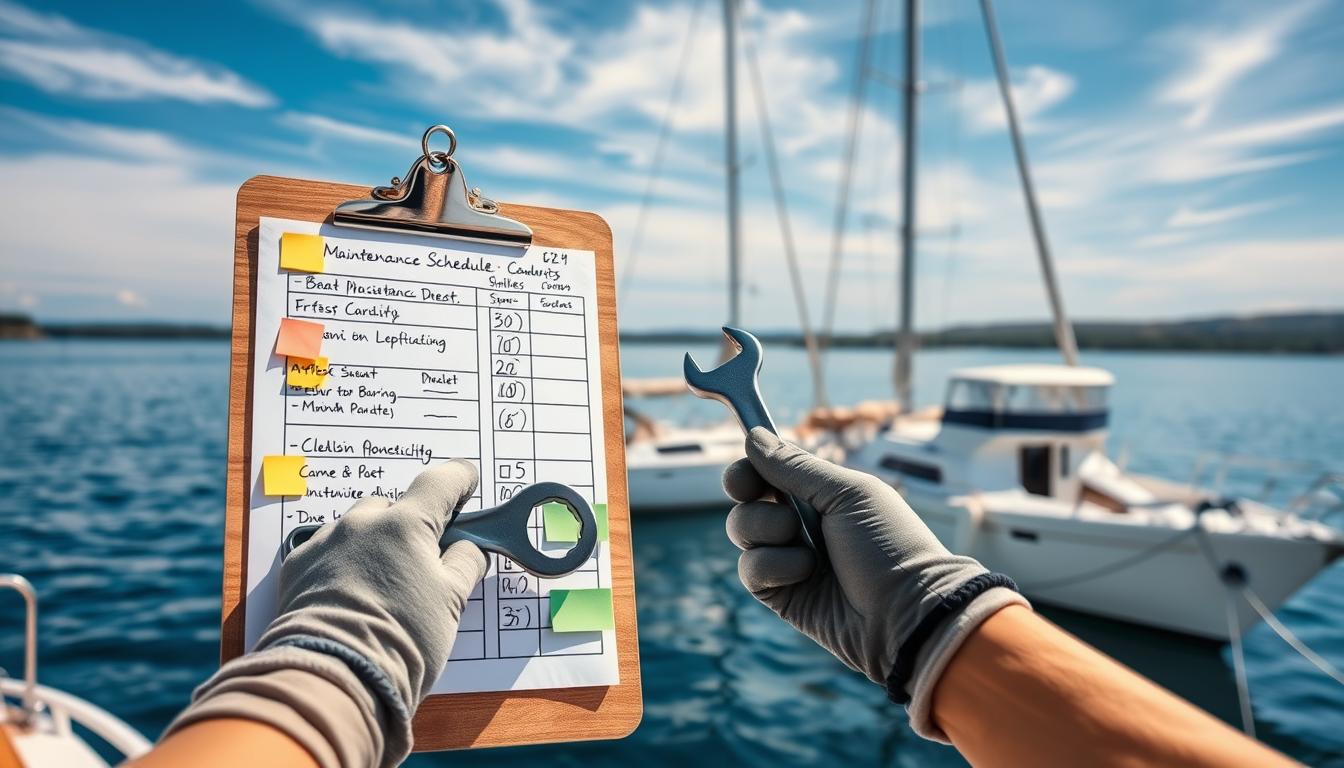
A boat without a maintenance schedule is like a ship without a rudder. You’ll just go in circles. You might keep the engine running, but you’ll never reach your destination.
Think of a maintenance schedule as a rhythm, not a rigid to-do list. It’s about keeping your vessel in perfect harmony. It’s more like a jazz improvisation, where each note is an oil change, hull cleaning, or system check.
This isn’t about creating more work; it’s about working smarter. It’s the difference between a pre-flight checklist for a spaceship and just hoping the engines start. A good schedule is your boat’s personal wellness plan, blending the analytical with the intuitive.
Seasonal changes are key, as many preventive maintenance schedules show. Spring commissioning and winterization are more than chores. They’re seasonal movements in the symphony of upkeep. We’ll explore creating a schedule that’s a curated playlist for your boat’s health.
Tools to Keep Onboard
Forget duct tape and baling wire. Modern sailing needs better tools for repairs. Having the right tools can prevent big problems. Your boat has many parts, and things can break. A good toolkit is your first defense against the sea.
What makes a good marine toolkit? It’s not about having lots of tools. It’s about having the right ones. A good toolkit helps with small problems, not just big ones. It’s for quick fixes, not for becoming a shipwright at sea.
Your goal is to be like MacGyver of the mainsheet. Be ready to solve problems with what you have.
The Indispensable Core: Your Non-Negotiables
Let’s look at the must-haves. These tools are like your crew in tough times.
- The Multi-Tool of the Sea: A good multi-tool is key. It has pliers, screwdrivers, and a file. It’s like a Swiss Army knife for the sea.
- The Wrenching Duo: An adjustable wrench is a must. But ratcheting box wrenches are better. They help with tight fasteners.
- The Cordless Drill/Driver: This tool is powerful. Choose a compact, high-torque model. It’s for drilling and driving screws.
- Duct Tape (the “Marine-Grade” Myth): It’s not a fix, but it’s good for now. Use it for quick repairs.
- The Electrical Savior: A good multimeter is essential. It helps find problems with your electronics.
Beyond the Basics: The Niche Necessities
Now, let’s talk about special tools for serious sailors. These tools make your repairs better.
| Tool | Why It’s Essential | Pro-Tip |
|---|---|---|
| Headlamp (with red light mode) | It’s for working in dark places. The red light mode helps you see better at night. | Make sure it’s waterproof and hands-free. |
| Vise-Grip Pliers (Locking Pliers) | They’re not just for gripping. They can also act as a clamp or a tool for turning bolts. | They’re great for when you need an extra hand. |
| Battery-Operated Oscillating Tool | This tool can do many things. It’s perfect for quick fixes. | It’s great for when you can’t use a hacksaw. |
| Marine-Grade Sealants & Tapes | Use butyl tape for hatches and 5200 for tough jobs. Self-amalgamating tape is good for emergency repairs. | Know what each is for. 5200 is a strong choice. |
Having a good toolkit isn’t about having everything. It’s about having the right tools for the job. A good onboard repair kit helps you fix problems quickly. It turns a crisis into a manageable situation.
Think of your toolkit as a crew member that never sleeps. Check your tools before you leave port. A wrench is useful only when you need it. Then, your onboard repair kit becomes a source of solutions.
Locating Parts on the Water
You’re a day’s sail from the nearest chandlery, and a key part has broken. The local marine supply is two hours away. This isn’t a survival thriller; it’s Tuesday for boaters. The dream of self-reliance meets the harsh reality of a broken part.
Welcome to the ultimate scavenger hunt: marine DIY sourcing. It’s not like a trip to the hardware store. It’s a quest, where your smartphone is key.
Forget the treasure map. Today’s marine DIY sleuth uses digital tools. Your phone is the most important tool. Online forums, social media groups, and apps are like a digital ship-to-ship radio.
Post a picture of the broken part, and you might get help fast. A fellow boater could identify the part and find a supplier for you.

The marine DIY spirit shines here. It’s not just fixing things; it’s solving a puzzle. You’re not just looking for a bilge pump; you’re searching for a specific model.
This is detective work. You’ll learn about part numbers and find a way to fix your boat. It’s a challenge where the reward is a working boat.
The Digital and Analog Toolkit
Your success depends on a mix of digital and analog tools. Start with the digital: websites and forums. But don’t forget the local marine consignment shop and retired machinists.
Your phone is your command center. Use it to find parts and watch tutorials. This is modern seamanship, combining digital and analog skills.
It’s like using navigation aids. You need to find the right part and supplier, using your phone and online resources.
The Thrill of the Find
There’s a unique satisfaction in finding the right part. It’s a victory, not just a purchase. You’ve solved a puzzle and connected with a community.
This is the essence of marine DIY. It’s not a chore; it’s a quest. You’re not just a captain; you’re a detective, keeping your vessel afloat.
Essential DIY Repairs
Your boat is like a home, needing occasional fixes. It’s not about big repairs but quick, on-the-spot fixes. Think of it as maintenance on the go, where you become a mechanic, plumber, and electrician with what you have. Experts like Gio and Julie say a good DIYer is a mix of mechanic and MacGyver.
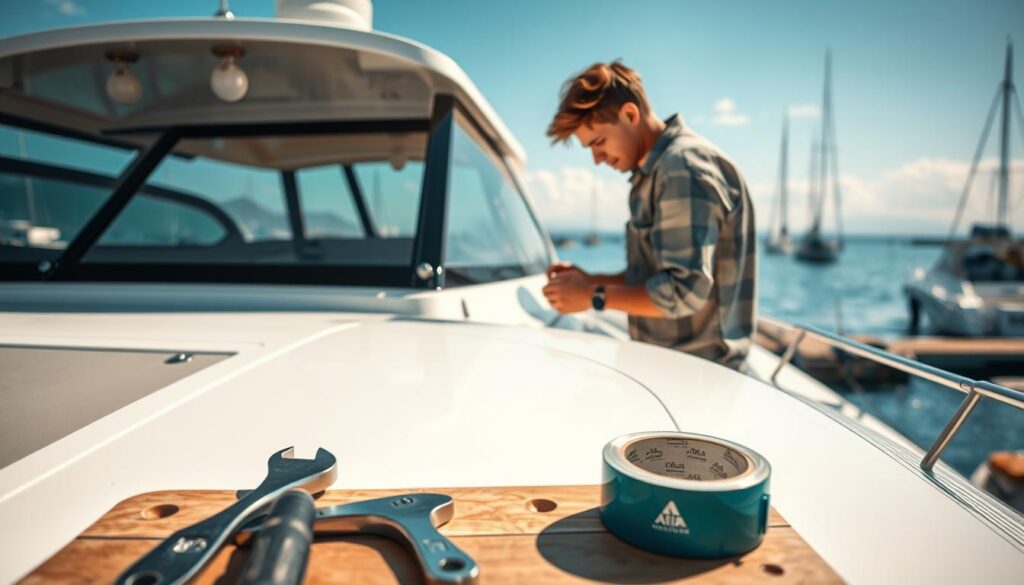
Let’s get our hands dirty. A clogged fuel line is like a bad internet connection. It stops everything. Fixing it is simple: just change the fuel filter with a wrench and a spare filter. This is maintenance on the go at its best: finding and fixing the problem fast.
For these fixes, you need the right tools. Check out this list of DIY tools and.
Electrical issues are common too. A light flickers, or a pump stops working. Often, it’s just a bad connection. Clean the terminals or replace a fuse with a screwdriver. It’s like fixing a wire, but it’s more important.
Here’s a quick guide for common repairs. It’s your first defense before calling for help.
| Problem | Likely Culprit | DIY Fix (On-the-Go) | Gearhead Wisdom |
|---|---|---|---|
| Engine won’t start, but turns over | Fuel, Air, Spark, Compression | Check fuel lines for clogs, prime the bulb, inspect spark plug connection. | Remember: An engine needs fuel, air, and spark. It’s not magic, it’s mechanics. |
| Clogged bilge pump | Debris in the pump or float switch | Clear intake grate, manually lift float switch to test. Keep spare pump on board. | A silent bilge pump is a sinking feeling. Listen for the hum. |
| Minor gel coat or fiberglass crack | Impact or stress fracture | Clean, dry, and apply marine-grade epoxy putty as a field repair. | A temporary patch can keep the water out until a permanent, on-shore repair. |
| Loose or wobbly hardware (cleats, rails) | Vibration and stress over time | Tighten or replace fasteners. Use marine sealant on the threads to prevent corrosion. | Check all hardware regularly. A loose cleat is a projectile in rough seas. |
This isn’t about being a certified engineer. It’s about knowing your boat’s basics and fixing them. It’s the difference between being stuck and being able to fix things. It’s knowing a clogged fuel line is just a bad connection, and you can fix it with basic tools and a cool head. This is maintenance on the go at its best: keeping your adventure going.
When to Call a Pro
The most important tool in your maintenance kit isn’t a wrench. It’s knowing when to stop and call a pro. The difference between a DIY success and a disaster is often small. A frayed wire or a tiny crack can make a big difference.
Look out for red flags. Electrical work, plumbing, structural issues, and big HVAC or pest control jobs are not for DIY. These tasks are complex and can lead to safety risks, voided warranties, or lease violations. A practical guide on when to call a pro explains that mistakes with electricity can start fires. A bad plumbing fix can cause huge water damage.
The key to smart maintenance is knowing your limits. It’s about being honest about what you can handle. A pro has the right tools, licenses, and experience to do the job right.
So, the final rule for smart maintenance is to call a licensed professional when needed. It’s a smart move, not a defeat.