
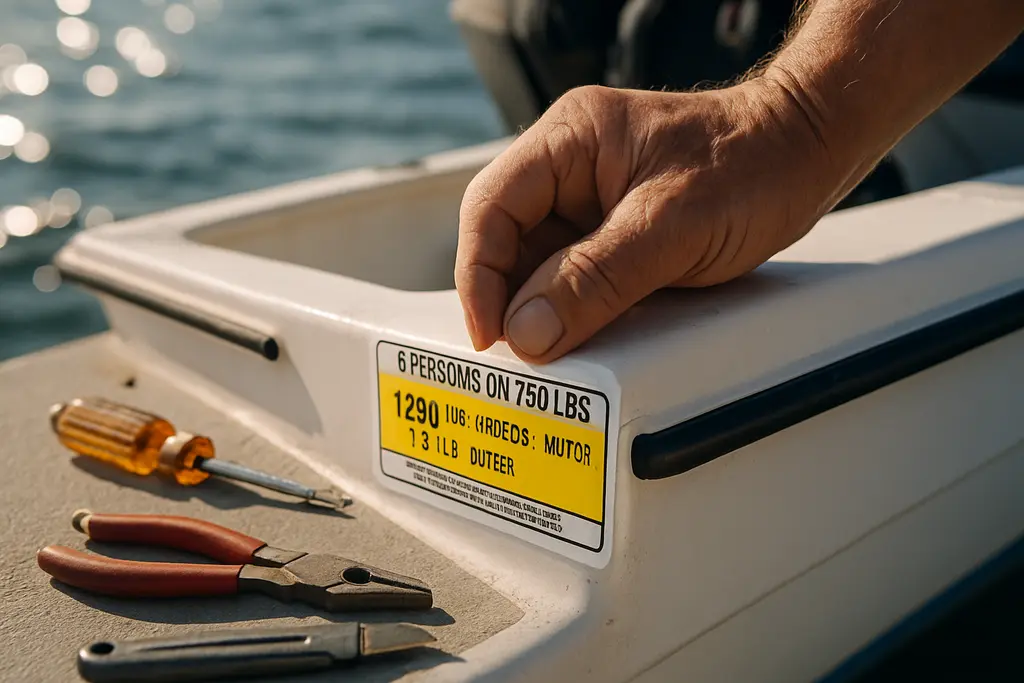
Boat capacity labels are small plates with large safety value. They help owners and operators compare planned passengers, gear, engine power, and weight against the limits set for a specific boat. In 2026, the U.S. Coast Guard recognized ABYC S-7 2026 as providing an equivalent level of safety to federal capacity-label rules in 33 CFR Part 183, Subpart B, and manufacturers were allowed, but not required, to use the new design from July 15, 2026, onward, according to the ABYC capacity label update.
For recreational boaters, the main point is practical: a label is not decoration, and a newer-looking label does not raise the boat’s safe limits by itself. The values shown on the plate remain the values to follow. If a boat is older, repaired, repowered, or recently purchased, the owner should read the label before loading the boat and should treat damaged or unclear markings as a maintenance item that needs attention before the next trip.
What Boat Capacity Labels Changed In 2026
The updated standard is named ABYC S-7 2026, Boat Capacity Labels. The ANSI listing identifies it as the 2026 ABYC standard for capacity labels and shows it as replacing or revising the earlier ABYC S-7-2020 standard, as listed by ANSI’s ABYC S-7 2026 record. The change matters most for manufacturers and repair professionals who support new builds, repowers, and owner documentation, but it also gives owners a clearer way to understand posted limits.
Boat Capacity Labels And Safe Loading
The updated design uses clearer “not exceeding” wording and pictograms. The purpose is to make limits easier to understand for persons, total weight, horsepower, and gear. A label still needs to show the maximum number of persons in whole persons, the maximum weight capacity in pounds, and, where the boat is powered, the maximum horsepower capacity. These values are not interchangeable. A boat may be under the passenger count but still overloaded by coolers, batteries, fishing gear, fuel, water, or other equipment.
Safe loading should be checked at the dock, not after the boat feels heavy or slow to respond. A passenger limit is easy to see, but weight can creep up during routine use. Added storage, replacement seats, heavier anchors, spare fuel, and large coolers all count toward the total carried load. If the label’s wording is clearer, it helps; if the crew ignores the numbers, the safety benefit is lost.
Optional Use, Not A Retrofit Order
The 2026 design was permitted for manufacturers beginning on July 15, 2026, but it was not described in the research as a mandatory retrofit for every existing boat. For owners, boat capacity labels already installed on older vessels still deserve the same attention: they should be readable, securely attached, and consistent with the boat’s configuration. If a label is missing, painted over, badly faded, or altered, owners should avoid guessing and should seek help from the manufacturer or a qualified marine service professional.
This is especially relevant for buyers of used boats. A bright new plate on an older hull should not be accepted without context, and a missing plate should not be dismissed as a cosmetic issue. Capacity information is tied to stability, flotation, engine rating, and safe operation. If any value is uncertain, the conservative choice is to reduce load, delay the outing, and verify the boat’s correct information.
Maintenance Checks At The Helm
Capacity information is useful only if the operator can see and read it. Existing display requirements remain part of the safety picture: the label is expected to be permanently affixed, legible, visible from the helm, and made with required contrast, a yellow background, and specified type sizing. Research also notes that the label must resist removal or alteration without leaving obvious signs and must be made from materials able to withstand exposure to water, sun, oil, and related marine conditions.
Readability, Attachment, And Condition
During seasonal maintenance, treat boat capacity labels the same way you treat lights, batteries, steering, and fuel fittings: inspect them before they are needed. Look for peeling corners, UV fading, scratches through printed numbers, paint overspray, cracked laminate, or fasteners that no longer hold the plate flat. If a helm renovation, console repair, or electronics upgrade hides the plate, the operator may no longer have the information in a useful place.
- Confirm the label can be read from the helm in normal daylight.
- Check that the maximum persons, weight, and horsepower values are still clear.
- Look for signs of removal, alteration, fading, or damage from cleaners, oil, or sun.
- Compare the displayed horsepower limit with the installed engine rating.
- Record the label condition in the boat’s maintenance log after inspections or repairs.
Matching The Label To How The Boat Is Used
Maintenance changes can affect the way a boat is loaded. Repowering, adding heavy electronics, installing extra batteries, changing seating, or carrying more safety and fishing gear can shift how much remaining capacity is available for people and equipment. These changes do not automatically change the posted limit. They make it more necessary to calculate the planned load honestly before departure.
For owners who keep written service records, a simple note about capacity-label condition can prevent confusion later. A photo of the plate, the date inspected, and any work near the helm can help future maintenance decisions. For those interested in creative recordkeeping, The Sketchbook Project illustrates the value of clear observations recorded in an orderly way.
Capacity, Engines, And Repair Decisions
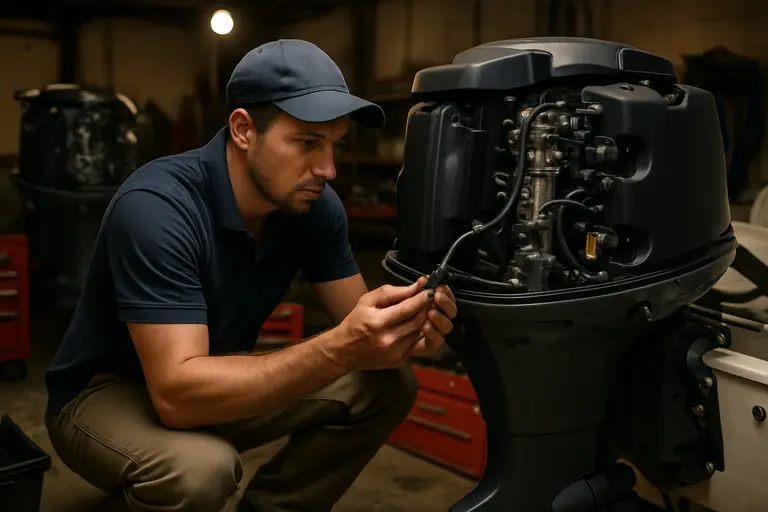
One practical 2026 change involves outboard-powered boats. The revised label can provide a maximum outboard motor running weight, reflecting the fact that modern engines may be heavier than older engines with the same horsepower rating. This matters during repower planning because horsepower is not the only engine-related figure that can affect safety. Weight at the transom can influence flotation and stability.
Outboard Running Weight Matters
A repower should not be judged by horsepower alone. If an owner replaces an older outboard with a newer, heavier model, the engine may fit physically and still raise safety questions. The research supports one clear action: compare the engine’s running weight with the label information where that value is provided. If the label does not include that newer style of information, owners should not assume the heaviest available motor is suitable.
Repair shops and owners should be careful after structural or helm work as well. Replacing a console panel, refinishing a helm area, or installing new upholstery should not damage, cover, or relocate required safety information without proper attention. If the work affects visibility of the plate, the job is unfinished from a safety standpoint. For related dockside review habits, this site’s 2026 capacity label safety checks can help owners think through inspection timing and recordkeeping.
What Owners Should Not Assume
Owners should not assume that the new 2026 standard makes older labels invalid. The research describes the updated ABYC standard as an option recognized by the Coast Guard, not a blanket replacement of existing federal obligations. Owners should also avoid assuming that a boat’s safe load is the same in every condition. Weather, sea state, operator experience, and how weight is distributed still matter, even though the label gives a fixed maximum reference point.
The safest habit is to stay below the posted limits, distribute weight evenly, and reduce load when conditions are less favorable. Capacity information is a boundary, not a performance target. If a boat handles poorly, lists, ships water, struggles to accelerate, or feels unstable, the operator should reduce risk rather than rely on the fact that the numbers appeared acceptable at the dock.
Practical Checks For Boat Capacity Labels
Checking boat capacity labels should become part of routine ownership. Before the first outing after storage, after any helm repair, after a repower, and before carrying a larger group, read the plate and compare it with the planned load. Count people, estimate gear weight, and include equipment that tends to be overlooked, such as spare anchors, tool kits, coolers, batteries, portable tanks, and fishing equipment.
A Calm Dockside Routine
A calm dockside review is better than a rushed decision at the ramp. Start with the label, then look at the actual boat: engine, batteries, gear, fuel, and passengers. If a number is unreadable or does not seem to match the boat’s configuration, pause and verify it through reliable manufacturer or service channels. The 2026 update was meant to make capacity information clearer, but the operator still has to apply it with care.
Good maintenance protects more than machinery. It protects the decisions made before the lines come off. A clean, legible, accurate capacity plate gives the skipper and crew a shared reference point, helps prevent overloading, and supports safer operation every time the boat leaves the dock.