Emergency equipment checks are best handled before ramps, fuel docks, and anchorages get crowded. A boat may look ready from the dock, but safety gear can fail quietly during storage: straps stiffen, batteries corrode, flares expire, pumps clog, and loose equipment shifts into places where crew cannot reach it. A practical pre-season review gives the skipper time to repair, replace, label, and brief the crew before the first high-traffic weekend.
This type of check is not a substitute for federal, state, or local carriage requirements, and it cannot replace a qualified marine technician’s inspection when damage, fuel odor, wiring heat, or steering trouble is found. It is a working routine for recreational boaters who want emergency gear ready, accessible, and understood by everyone aboard.
Why Busy Season Prep Starts With Emergency Equipment Checks
Busy boating periods leave less margin for confusion. More vessels on the water can mean more wake, more radio traffic, longer waits at the ramp, and less time to sort out a missing whistle or dead flashlight. These emergency equipment checks should begin with two simple questions: what must be carried on this boat, and can the crew reach and use it quickly?
Start with a written inventory stored with the vessel documents. List life jackets, throwable flotation, sound signals, visual distress signals, fire extinguishers, first aid supplies, flashlights, spare batteries, bilge pumps, navigation lights, and any detector fitted aboard. Mark service dates, expiration dates, battery types, and storage locations. A written list helps prevent the common problem of gear being moved during winter work and never returned to the same locker.
Set A Dockside Baseline
Run the check at the dock with the boat still secured, ventilated, and quiet. Open every locker. Remove each safety item rather than looking at it in place. This makes damage easier to see and confirms the gear is not trapped behind coolers, lines, or cleaning supplies. If an item is wet, moldy, badly corroded, expired, or unreadable, set it aside so it does not return to service by mistake.
A dockside baseline should also include a crew briefing. Show passengers where life jackets, throwables, first aid supplies, fire gear, and sound signals are stored. Do not assume guests know marine terms or locker locations. Clear labels and a short explanation are safer than a long talk once weather or traffic becomes distracting.
Life Jackets, Signals, And Fire Gear
Flotation is the first safety category to verify because it only helps if it fits, floats, and can be reached. The Texas boating safety manual states that life jackets should be properly sized, in good condition, and available as one wearable personal flotation device per person aboard; it also notes that a throwable device is required on boats over 16 feet Texas boating safety manual. Check the rule that applies where you operate, since carriage details can vary by waterway and vessel type.
Emergency Equipment Checks For Life Jackets
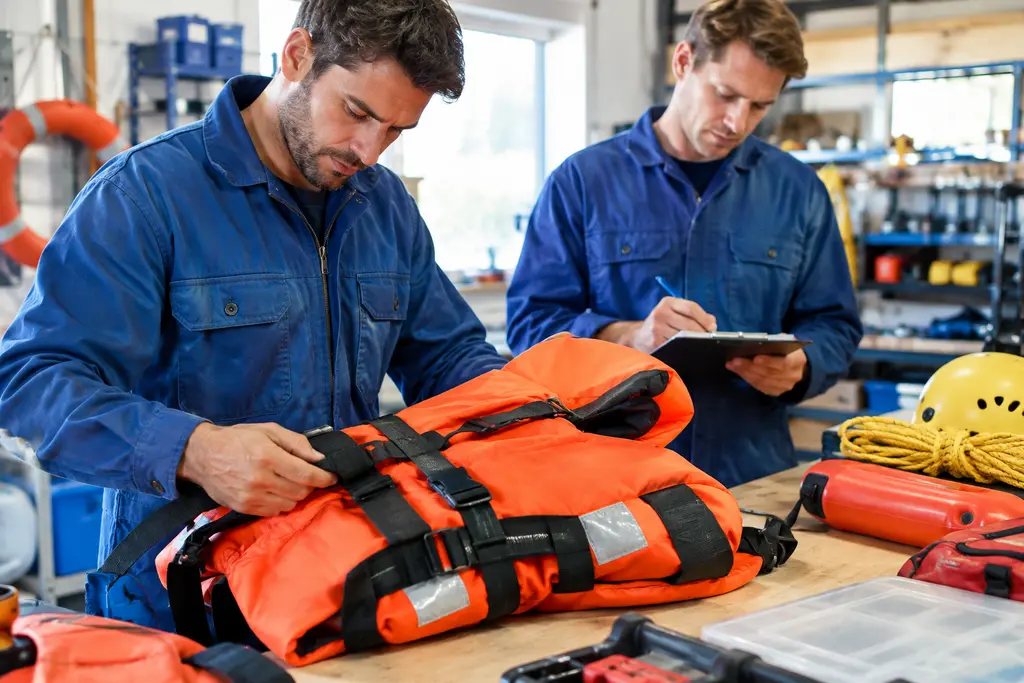
Inspect each jacket by hand. Look for torn fabric, broken buckles, stiff or missing straps, crushed flotation, mildew, or labels that can no longer be read. Match each person to a properly sized jacket before leaving the dock, not after conditions change. Children, weak swimmers, and guests unfamiliar with boats need special attention because a poorly fitted jacket can ride up or be difficult to secure.
Good emergency equipment checks also include placement. Life jackets buried under seat cushions, fishing gear, or canvas are not truly ready. Keep wearable flotation in a dry, marked, easy-open compartment. The throwable device should be immediately available from the deck or cockpit, not sealed inside a storage bin.
Signals And Fire Equipment Condition
Emergency signaling gear deserves the same hands-on review. Check distress signals, mirrors, strobes, horns, and whistles for damage, battery condition, and expiration dates where applicable. Test sound devices at the dock in a safe and courteous way. Confirm navigation lights operate before a late return forces the issue. Replace bulbs or batteries before departure rather than carrying them as a future task.
Fire extinguishers should be mounted where they are visible and reachable. Check the gauge or indicator, the pin or tamper seal, the body, the hose if fitted, and the printed service or date information. If the extinguisher is past its marked service life, damaged, discharged, badly corroded, or uncertain in any way, remove it from service and replace or service it according to the unit label and applicable rules.
Pumps, Power, Fuel, And Crew Access

Emergency gear is not limited to items in a safety locker. A boat’s bilge pump, steering, throttle, ventilation, fuel system, shore-power connections, and detectors all affect whether a routine outing stays controlled. Inspecting these systems before the busy period gives owners time to correct small faults before they become on-water problems.
Bilge Pump And Mechanical Readiness
Test the automatic bilge pump and the manual switch. If the boat carries a manual backup pump, check that it is aboard, assembled, and reachable. Clear debris from the bilge area without placing hands near moving parts or live electrical components. If the pump fails, cycles oddly, has damaged wiring, or discharges weakly, treat that as a repair item before use.
Steering and throttle controls should move smoothly and return as expected. A sticky throttle, unusual resistance at the wheel, or delayed shifting is not a minor inconvenience in close quarters. Ventilation should be checked before starting gasoline engines, and carbon monoxide or smoke detectors fitted aboard should be tested according to their instructions. Fuel tanks, hoses, shut-off valves, and visible fittings should be checked for cracks, leaks, and odor. Shore-power cable ends and receptacles should be examined for burn marks, melting, or other signs of overheating.
Storage, Labels, And Crew Briefing
Once the equipment passes inspection, put it back with purpose. Heavy items should not be able to slide into pumps, wiring, or fuel spaces. First aid supplies should stay dry. Flashlights and sound signals should be where the helm or cockpit crew can reach them without leaving control of the vessel.
- Mark lockers for life jackets, first aid, fire gear, and signaling devices.
- Keep expiration dates visible on flares, batteries, and medical supplies.
- Remove damaged gear from the boat so it cannot be mistaken for usable equipment.
- Record repairs, replacements, and battery changes in the vessel log.
- Repeat the check after major maintenance, heavy rain, or long storage.
For a broader departure routine that pairs well with safety gear review, a practical pre-departure checklist can help keep inspections consistent from trip to trip.
Busy Season Emergency Equipment Checks
The last step is stocking and refreshing the emergency kit. The Oregon State Marine Board advises boaters to keep seasonal emergency supplies such as first aid items, fresh batteries, flares, blankets, and extra drinking water, and to check for corrosion, expiry, mold, or damage Oregon preparation guidance. That advice fits most recreational boats because emergency kits often sit untouched between trips, exactly when batteries weaken and packaging breaks down.
Keep the kit simple, dry, and visible. If crew members cannot find it, the contents have limited value. Separate emergency gear from picnic supplies, fishing tackle, and cleaning chemicals. If your crew also uses shore-side planning resources, keep those separate from the boat’s safety file. Websites like related community sites such as Talk and Play can offer valuable insights but should not replace vessel-specific emergency records carried aboard.
Before the first crowded launch day, repeat the full inventory from bow to stern. Touch each item, test what can be tested safely, read dates, confirm access, and brief the people aboard. Emergency equipment checks work best when they are plain, repeatable, and written down. The goal is not to create paperwork; it is to make sure the right gear is aboard, usable, and known before the water gets busy.