Marina Safety Resources help boat owners turn recent rule changes into practical dockside habits. After new education requirements, renewed federal-state safety efforts, and recent boating incident data, the marina office, dockmaster, and local safety partners are useful starting points. Their guidance does not replace official state rules, and requirements vary by location, vessel type, and operator. Still, a well-run marina can help boaters find current course information, understand equipment reminders, and prepare for vessel safety checks before leaving the slip.
Why Local Rules Changed The Dock Routine
Recent changes have made safety information more visible at the dock. A marina that once focused mainly on slip assignments, launch timing, and basic facility notices may now need to post education deadlines, direct boaters to approved courses, and keep staff aware of state agency updates. That is especially true where laws have shifted from voluntary education toward certificate requirements.
What The Massachusetts Date Shows
Massachusetts offers a clear example. The Hanson-Milone Boater Safety Act went into effect on April 1, 2026. It requires people born after January 1, 1989, to hold a boating safety certificate to operate motorized vessels, while people born on or before that date must secure certificates by April 1, 2028, according to the state’s boater safety act FAQ. For marina users, that means the question is not only whether the boat is ready, but whether the operator has met the applicable education requirement.
What Safety Numbers Say
The 2024 recreational boating figures in the research notes show why local outreach still matters. There were 556 deaths in U.S. recreational boating incidents, a 1.4 percent decrease from 2023. Reported incidents rose slightly to 3,887, injuries increased to 2,170, and property damage was about $88 million. Alcohol remained the leading known contributing factor in fatal boating accidents, accounting for 92 deaths, or about 20 percent of all boating fatalities. Those numbers do not explain every local hazard, but they support a practical message: education, sober operation, and basic equipment checks should be repeated often at the dock.
How Marina Safety Resources Fit New Rules
Local boating offices, dockmasters, state agency notices, and posted marina materials should work together. Used well, Marina Safety Resources give boaters a reliable path from a new rule to a safe habit. A sign about a certificate deadline is useful, but it works better when paired with course information, staff who know where to direct questions, and reminders that vessel safety checks are separate from operator education.
Marina Safety Resources At The Dock
A dockside safety board should be simple, dated, and limited to current information. Boaters should be able to tell which notices are official, which are marina policies, and which are general safety reminders. For related planning habits, a local article on safer crew resources can help owners think through how marina programs, vessel checks, and outreach fit together. A marina notice board should not mix official safety updates with unrelated community links; if a club also shares arts or local-interest pages such as The Sketchbook Project, ensure those are placed separately so rule notices stay clear.
- Ask the marina office where current state boating education requirements are posted.
- Check whether certified boater safety courses are being hosted locally or promoted through state-approved providers.
- Ask about free vessel safety checks, especially before heavy-use periods.
- Confirm that life jackets are available for all people aboard and that throwables are addressed for vessels over 16 feet where applicable.
- Review sober-operation reminders before departure, since alcohol remained a leading known factor in fatal incidents in 2024.
These steps do not create a guarantee of compliance or safety. They do, however, reduce confusion at the point where many trips begin: the dock gate, the fuel dock, or the launch ramp.
Maintenance Checks Marinas Can Support
Safety rules are only useful if the boat is ready to move, dock, and return. Marina teams can support boat owners by encouraging maintenance checks that are easy to repeat: secure dock lines, clear walkways, working boarding areas, readable safety signage, and access to current local contacts. The research notes also identify infrastructure programs, including recent Boating Infrastructure Grant activity in FY 2026, that supported projects such as safe harbors, dock repairs, launch ramps, and transient boater services through state channels. Marina users should treat grant-funded improvements as helpful facility upgrades, not as a substitute for checking their own vessel.
Signage, Briefings, And Vessel Checks
Good marina practice separates three items that are often confused. First, signage tells boaters what has changed or where to get official instructions. Second, staff briefings help dockhands and office teams give consistent directions without guessing. Third, vessel safety checks give boat owners a structured review of onboard readiness. A free check is a helpful educational tool, but boaters should still confirm state and federal requirements for their own trip, vessel size, and passenger count.
Funding And Planning Limits
The State Recreational Boating Safety Grant Program listed up to $12 million in awards for the FY2027 funding period, with an eligibility floor of $400,000 per state, and its application closing date was October 30, 2026, as shown in the Grants.gov notice. Because that date had already passed by November 5, 2026, marinas should not treat that specific notice as an open application. The practical lesson is to assign someone to watch future official notices, coordinate with state boating agencies, and document which safety upgrades or outreach needs are being considered.
Using Official Bulletins Without Confusion
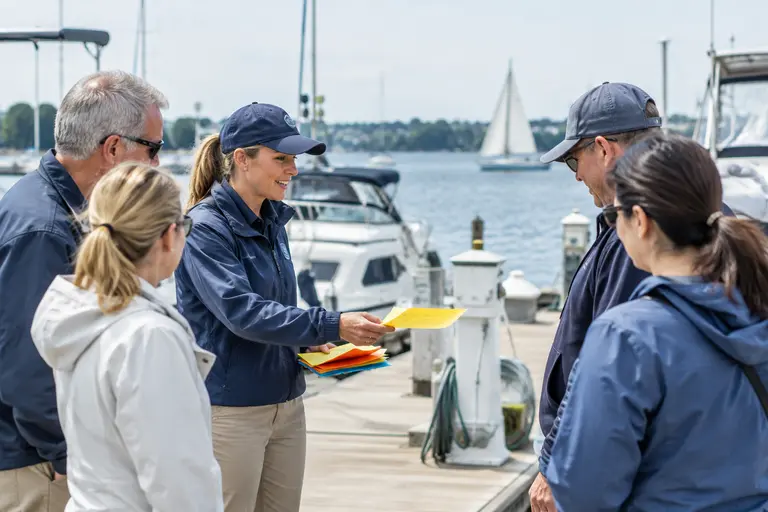
Marina operators and boating clubs should build a routine for checking official updates. The research notes describe Coast Guard Boating Safety Circulars that include advisories on newly identified hazards, recall notices, rule changes such as boat capacity labeling, and safety trends. They also note that the U.S. Coast Guard and the National Association of State Boating Law Administrators renewed a memorandum of agreement on January 21, 2026, with work areas that include education requirements, boating under the influence laws, and life-jacket use.
Keep The Message Current
The safest bulletin system is boring and consistent. Post the date received, remove outdated flyers, keep a copy in the marina office, and make clear who checked the source. If a rule applies only in one state, label it that way. If a course is approved only by certain authorities, say so without overstating it. Marina Safety Resources work best when they point boaters back to official agencies for final answers and keep local advice limited to practical preparation.
Engaging With Marina Safety Resources
Boat owners can make this simple. Before departure, ask three questions: has any operator education rule changed, is the boat’s required safety gear ready, and has the marina posted any new local safety notice? Treat Marina Safety Resources as a first stop, not the last word. The marina can help organize information, promote checks, and connect boaters with courses, but each operator remains responsible for confirming current requirements and making safe choices on the water.