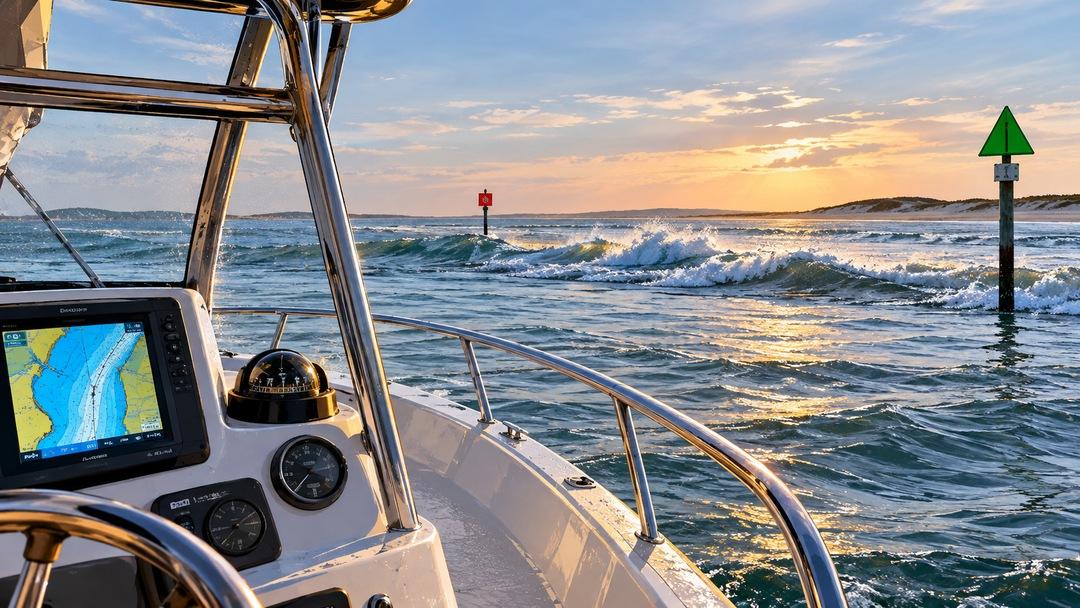
Coastal inlets and river bars represent some of the most dynamic, unpredictable, and hazardous navigation environments encountered by recreational boaters and offshore cruisers. Formed by sediment deposition where river channels, estuaries, or tidal bays meet the open sea, an inlet bar creates an abrupt transition in water depth that reshapes incoming swell. Under the wrong conditions, even moderate ocean waves transform into steep, towering breakers that overwhelm small craft, induce broaching, or pitchpole vessels entirely. Navigating these narrow choke points safely demands sound judgment, an intimate knowledge of tidal mechanics, and strict adherence to proven seamanship protocols before committing to a passage.
Skippers routinely run into trouble not because of mechanical breakdowns, but because of poor passage timing. As tidal waters ebb from an inlet, outgoing current rushes directly into incoming ocean swells. This hydraulic confrontation abruptly shortens wave periods, stacks up wave heights, and produces breaking crests across shallow channels. Maintaining safety begins with understanding local hydrography and consulting reliable navigation notices before untying the dock lines. Reviewing verified marine conditions alongside foundational passage recommendations, such as those outlined in Boating Conditions & Safety resources, establishes the necessary baseline before approaching any challenging bar.
The Hydrodynamics of Coastal Bars and Inlets
A coastal bar is essentially a submerged sandbank formed by the interaction of littoral drift, river discharge, and tidal currents. When water flows through an inlet, it carries sediment that settles when the channel widens into the ocean, creating a horseshoe-shaped shallow rim. Water depth over this bar changes continuously throughout the lunar cycle, influenced by astronomical tides, seasonal storm surges, and river discharge rates.
The primary hazard of any inlet crossing is wave transformation caused by shoaling and current opposing swell. As an ocean wave approaches shallow water, friction against the seabed slows its forward velocity. Because wave energy must be conserved, the kinetic energy converts into potential energy, causing the wave height to increase and the wave face to steepen dramatically. When water depth becomes less than roughly 1.3 times the wave height, the wave can no longer support itself and breaks violently.
When an ebb current flows against an incoming sea, this shoaling effect intensifies exponentially. An outgoing current of just three to four knots running against an open ocean swell can double wave steepness and induce breaking conditions in water that would otherwise remain navigable during slack or flood tides. The National Weather Service Marine Forecast provides essential data regarding regional swell direction, swell period, and offshore winds, enabling navigators to calculate when inlet conditions are expected to deteriorate into hazardous chop.
Pre-Departure Risk Assessment and Route Planning
Executing a safe bar crossing starts long before sighting the fairway buoy. A thorough pre-passage assessment requires evaluating three key operational factors: hydrographic timing, sea-state mechanics, and vessel preparation. Skippers must resist the temptation to maintain arbitrary shore schedules when sea conditions at the bar are marginal. For recreational boaters exploring Alaska’s coastal waters, trip planning may also involve researching local entertainment options, including where to bet on sports in Alaska, although these activities should remain secondary to monitoring marine forecasts, tidal conditions, and navigational safety.
Timing the transit around slack water is the most reliable strategy for minimizing risk. High-water slack provides maximum depth over the shoals and eliminates current-driven wave steepening, presenting the calmest surface window. Crossing during peak ebb should be avoided whenever significant swell is present. If arrival coincides with an unfavorable tide, waiting offshore or anchoring in protected inland waters until the flood begins is the only prudent decision.
The operational decision framework below outlines key risk indicators and recommended operational responses across different inlet phases:
| Bar Condition Phase | Tidal Current Direction | Swell vs. Current Alignment | Observed Sea State | Recommended Skipper Action |
| Optimal Window | High-water slack or early flood | Aligned or negligible current | Rolling swells, smooth faces, unbroken channel | Proceed at controlled displacement speed; maintain situational watch. |
| Moderate Risk | Mid-flood tide | Opposing light wind, incoming current | Short chop, occasional whitecaps on outer shoals | Confirm transit track via chartplotter; station crew with lifejackets. |
| Elevated Hazard | Late ebb tide (light swell) | Ebb current running into swell | Steepening waves, standing waves in channel center | Hold position offshore or inland; re-evaluate depth sounder readings. |
| Severe Danger / Impassable | Maximum ebb tide (heavy swell) | Strong ebb meeting moderate-to-heavy ocean sea | Continuous breaking breakers, obscured navigation marks | Abort transit immediately; divert to designated deep-water harbor refuge. |
Vessel Preparation and Safety Checklist
Prior to entering the inlet approach zone, the skipper must secure the vessel against potential broaching, excessive rolling, or downflooding. An unexpected breaking wave breaking over the stern or quarter can flood an open cockpit and destabilize the boat in seconds. Preparing the vessel ensures that crew members remain secure and machinery responds instantly under stress.
The following pre-crossing steps should be completed while still in open water or protected harbor channels:
- Secure Hatches and Ports: Dog down all forward deck hatches, companionway washboards, and hull opening ports to prevent water ingress from green water breaking over the deck.
- Lifejacket Verification: Ensure every crew member dons an inherently buoyant or automatically inflating Coast Guard-approved personal flotation device, with harnesses secured if stationed on deck.
- Bilateral Bilge and Engine Verification: Test electric bilge pumps on manual override, confirm fuel filters are clear of sediment stirred up by rough water, and run engines at responsive maneuvering speeds.
- Free the Decks and Cockpit: Stow loose anchors, dock lines, fenders, coolers, and deck gear that could slide, block scupper drains, or foul helm controls during a sharp maneuver.
Navigators should cross-reference regional bathymetric changes using hydrographic updates published through the USCG Local Notices to Mariners. Sandbars shift rapidly following seasonal northeasters or tropical depressions, often rendering charted ranges or aid positions unreliable until dredging or repositioning takes place.
Techniques for Outbound and Inbound Bar Crossings
Piloting a boat across an inlet bar requires distinct operational techniques depending on whether the vessel is heading outbound into open ocean or returning inbound toward the harbor. In both scenarios, the helmsman must avoid operating at either extreme—neither idling helplessly nor running at reckless wide-open throttle.
When running outbound, the vessel heads directly into oncoming waves. The objective is to maintain steerage and forward momentum without launching the bow off wave crests or slamming violently into the trough behind. Throttle control must be dynamic: ease back slightly as the bow rises up the wave face to avoid launching, and add throttle as the crest passes underneath to regain steerage down the back side. Never let an oncoming breaker catch the boat on the beam, as roll angles can exceed survivable stability limits.
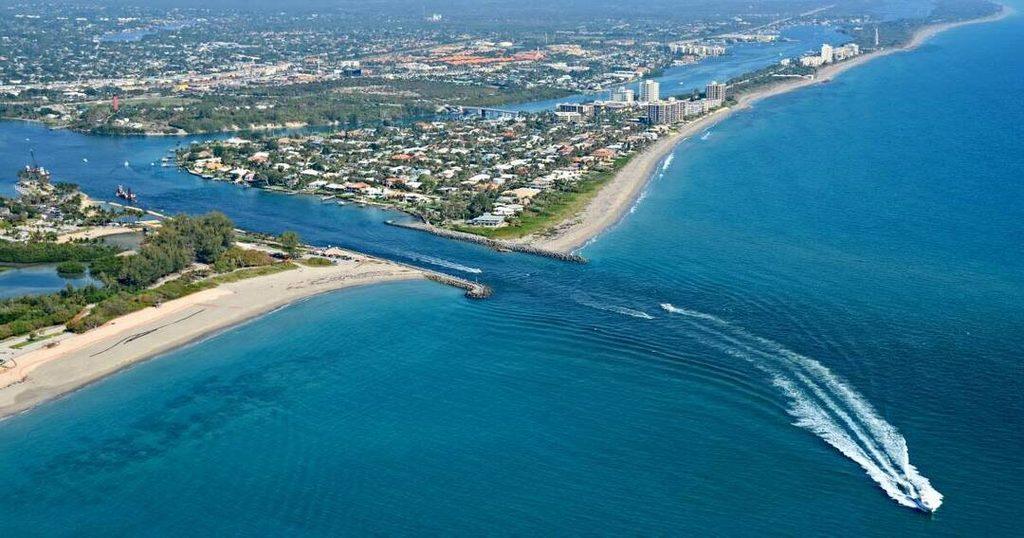
Inbound crossings present a distinctly different hydrodynamic challenge: following seas. As waves approach from astern, the vessel is susceptible to surfing down wave faces, losing rudder authority, and broaching—swiveling broadside into the wave trough where subsequent breakers roll the hull. When negotiating an inbound bar, match vessel speed to the wave train, positioning the craft on the backside of a wave just behind the crest. Ride that back slope into the harbor, maintaining enough throttle to preserve positive rudder bite without accelerating down the steep face.
The comparative matrix below illustrates key tactical considerations between outbound and inbound transits:
| Transit Dimension | Outbound Passage (Head Seas) | Inbound Passage (Following Seas) |
| Primary Hydrodynamic Threat | Pitchpoling, wave slamming, bow submergence | Surfing, rudder loss, rapid broaching in troughs |
| Target Boat Positioning | Perpendicular to approaching crests; centered in deeper channel | Directly on the back slope of a wave, trailing the crest |
| Throttle Management Strategy | Dynamic modulation: power up wave face, back off at crest peak | Match speed to wave propagation; keep steady forward thrust for rudder authority |
| Visual Blind Spots | Trough depths immediately behind oncoming vertical faces | Approaching swell sets closing rapidly from astern |
| Abort Protocol | Turn around in protected inland water prior to outer bar entrance | Remain offshore in deep water; loiter outside breaking shoals until conditions improve |
Handling Critical In-Channel Emergencies
Even with thorough preparation, unexpected hazards can arise in a congested or rough inlet. Rogue breakers, sudden machinery failure, or overtaking commercial traffic can force a skipper into split-second emergency maneuvers. Maintaining situational control requires anticipating these scenarios in advance.
If an engine stalls inside a breaking channel, the helmsman must act instantaneously. Deploying an anchor with adequate chain directly off the bow can prevent the boat from drifting broadside into shallow shoals, turning the vessel into oncoming seas to take breakers over the bow rather than the transom. Simultaneously, the crew should broadcast an immediate emergency call over VHF Channel 16 to alert Coast Guard stations and nearby mariners. The U.S. Coast Guard Boating Safety Division emphasizes that clear distress communication and early vessel anchoring prevent grounding casualties before emergency rescue units can arrive.
Should the vessel take green water into the cockpit, never panic and abandon the helm. Keep the bow oriented into or along the wave train while gravity scuppers and high-capacity bilge pumps clear the standing water. Free-surface effect from trapped water degrades stability quickly; maintaining headway and steering into deeper, non-breaking water is critical to avoiding a rollover.
Mastering Inlet Seamanship for Coastal Cruising Longevity
Mastering inlet transits is an essential milestone in every coastal skipper’s development. While sandbars and tidal rips can appear intimidating, their underlying mechanics are governed by predictable physical principles. By planning passages around slack high water, analyzing real-time swell and current interactions, securing vessel systems before arrival, and executing disciplined throttle and rudder work, navigators transform dangerous choke points into manageable gateways. Prudent mariners remember that the sea rewards patience above all else; when an inlet bar turns white with violent breakers, waiting out the tide is never a sign of hesitation, but the purest expression of seasoned seamanship.