Navigational Alerts were a central safety tool for recreational boaters during San Francisco Fleet Week 2026, which ran from October 4-12, with the Air Show and Parade of Ships held October 9-11. As of October 20, 2026, those event dates have passed, so this review looks back at what prudent skippers needed to monitor and what lessons remain useful for future high-traffic events on the Bay. This is not a live advisory. Before any departure, boaters still need current National Weather Service marine forecasts, Coast Guard notices, local harbor instructions, tide data, and direct observations at the dock.
Why Navigational Alerts Mattered During Fleet Week
Fleet Week compressed several risk factors into a short operating window: regulated areas, dense spectator traffic, Navy vessel security zones, fog, changing wind, and busy channels near high-interest viewing locations. The value of Navigational Alerts was not just that they identified a closed or controlled area. Their greater safety value was helping captains make earlier decisions about whether to depart, where to hold position, when to slow down, and when to abandon a viewing plan that had become unsafe.
Navigational Alerts Before Leaving The Dock
During the October 8-11 enforcement period, special local regulations applied to the Parade of Ships and Blue Angels demonstrations. The Alpha regulated area was enforced from 10:00 a.m. to 1:00 p.m. on October 9. The Bravo regulated area was enforced from noon to 6:00 p.m. on October 8 and from 9:00 a.m. to 7:00 p.m. on October 9-11. For future events, Navigational Alerts should be checked before fueling, before loading passengers, and again immediately before casting off, because event-zone enforcement and weather conditions can affect the entire plan.
A sound pre-departure review should include Broadcast Notices to Mariners, Local Notices to Mariners, Marine Safety Information Bulletins, current marine forecasts, and the day’s tide and current plan. For a broader pre-departure weather process, see this related safety resource on marine weather alerts. Recreational skippers should treat these checks as minimum preparation rather than a guarantee of safe conditions.
Respecting Regulated Water
Fleet Week viewing can tempt boaters to push closer to the action, but the safety margin around official vessels and regulated areas matters. The research record for the 2026 event noted that vessels were required to stay at least 500 yards away from U.S. Navy vessels during the Parade of Ships and 100 yards from any moored or anchored Navy vessel. Those distances are practical collision-avoidance buffers as well as security boundaries. A skipper who cannot clearly identify a boundary, patrol instruction, or vessel movement should slow down, hold a safe position, and avoid guessing.
Weather And Sea State Checks
Weather did not stop being a concern when the air show schedule ended. The National Weather Service discussion for the Bay Area reported hazardous beach conditions continuing through October 18-19, 2026, with strong surf, rip currents, and rough seas, and also described southerly breezes, above-average moisture, light to moderate winds, coastal cooling, and expected Bay Area rainfall of 0.10 to 0.50 inches during October 20-22, 2026 NWS forecast discussion. Those conditions show why a Fleet Week weather habit should continue after the event, especially for boats planning to exit the Golden Gate or operate near exposed approaches.
Fog, Low Cloud, And Short Visibility
San Francisco Bay fog is not just an aviation issue. Fog and low cloud cover can reduce visibility for small craft, especially from morning into afternoon. On October 9, 2026, dense fog briefly delayed the Blue Angels’ performance, a clear reminder that a sunny inland forecast does not always describe what a skipper will see near the Central Bay or Golden Gate. In restricted visibility, radar, AIS, sound signals, navigation lights, and reduced speed all matter, but none of them remove the need for conservative spacing and a clear escape plan.
Rapid changes were also part of the risk profile. Light winds can shift toward stronger southerly or southwest winds, especially after fog lifts or pushes through the Golden Gate. That shift can change chop, handling, passenger comfort, and stopping distance. A captain who leaves the dock during calm water should still brief passengers on where to sit, how to keep weight balanced, and why sudden standing or crowding on one side of the vessel is unsafe.
Currents, Swell, And The Golden Gate Bar
Autumn can bring calmer periods and lighter winds in the region, but late October into November is also when the northern Pacific storm track strengthens and long-period west-northwest swell can become more relevant at the Golden Gate Bar. Breakers are especially dangerous during maximum ebb currents through the Golden Gate. A recreational vessel that felt manageable inside the Bay could meet steeper, more confused water near the entrance, particularly when swell and ebb oppose each other.
The safer choice is often to remain inside protected waters, delay departure, or cancel an outside-the-Gate leg when swell timing and current timing line up poorly. No checklist can make a small craft immune to breaking waves. If the plan depends on perfect timing, full visibility, and passengers staying calm in rough motion, it is probably too narrow a safety margin for a crowded event day.
Traffic, Boundaries, And Crew Readiness
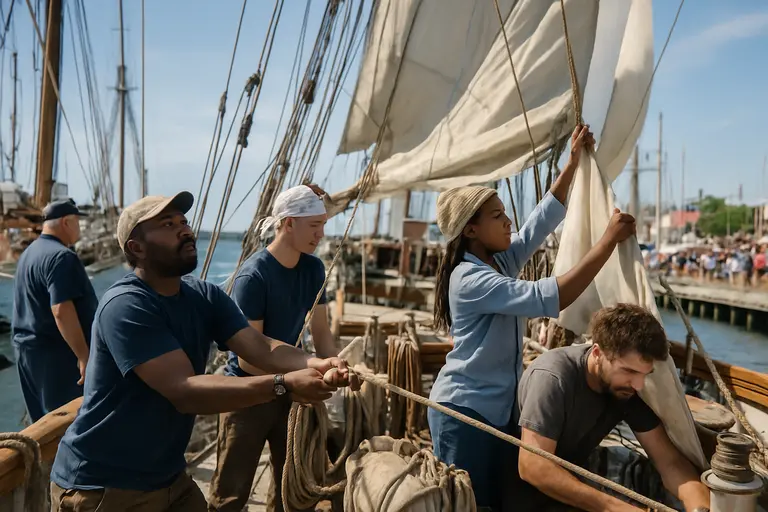
Central San Francisco Bay, Alcatraz, major marinas, and the Oakland Estuary saw the kind of dense movement that raises collision risk during large marine events. A U.S. Coast Guard Port Assessment workshop report identifies San Francisco waterways, including busy channels and port approaches, as areas where traffic patterns and risk management deserve careful attention San Francisco port assessment. In practice, Navigational Alerts were most effective when paired with slow speed, a dedicated lookout, and a route that avoided unnecessary crossings of heavy traffic streams.
Electronics Support, Not Electronics Dependence
AIS, chartplotters, VHF radio, radar, and mobile weather tools can support good decisions, but they do not replace watchstanding. Small recreational boats may not all transmit AIS, wake conditions can change faster than a screen refresh, and fog can hide vessels that are close enough to matter. During Fleet Week traffic, one person should be assigned to watch ahead and to each side while the operator focuses on boat handling. If crew size is limited, reduce speed and simplify the route.
VHF monitoring should be active, with volume set high enough to hear traffic and safety calls over engine noise and passenger conversation. If a patrol vessel issues instructions, the operator should acknowledge and comply in a controlled manner. Abrupt turns in dense traffic can create new hazards, so any course change should be signaled by predictable movement, safe speed, and eye contact or radio contact where possible.
Passenger Loading And Basic Gear
Fleet Week outings often carry guests who may not be regular boaters. That makes the safety briefing more than a formality. Every person aboard should know where life jackets are stored, when they will be worn, how to move without shifting weight suddenly, and what to do if the skipper calls for everyone to remain seated. The vessel should carry required safety equipment, including life jackets for all aboard, sound signaling devices, and fire extinguishers. The research record also warned that overloading or uneven passenger distribution can compromise stability, especially in choppy or rough conditions.
- Check notices, weather, tide, current, and visibility before loading passengers.
- Identify regulated areas and security buffers before choosing a viewing location.
- Assign a lookout and keep VHF audio clear of music or loud conversation.
- Balance passengers and gear before entering crowded or choppy water.
- Turn back early if fog, wind, traffic, or swell exceed the crew’s comfort level.
Readers exploring related creative engagements can also visit The Sketchbook Project, which fosters artistic collaborations within the network. However, this safety briefing remains dedicated to marine operations and conservative boating decisions.
San Francisco Fleet Week Marine Condition Lessons
The 2026 event showed that safe Fleet Week boating depends on layered awareness rather than one source of information. Treat Navigational Alerts as the first layer, then compare them with observed visibility, wind, current, traffic, crew ability, and the vessel’s condition. If any layer points toward a tighter margin, adjust the plan before the boat is committed to a crowded channel or exposed approach.
For future Fleet Week operations, the safest plan is often the simplest one: depart only if the vessel is ready, keep the route short, maintain a legal and respectful distance from restricted areas, and choose a viewing position that allows an easy return to sheltered water. Weather resources and official notices provide essential guidance, but they cannot account for every wake, equipment issue, or passenger movement. A cautious skipper uses them to make earlier, calmer decisions, and is willing to miss a viewing angle rather than press into conditions that are no longer suitable.