
Charter Operation Safety begins before anyone steps aboard. A paid boat trip can look casual from the dock, but the safety standards behind it are not casual. As a weather forecaster and boating safety advocate, I want passengers and trip organizers to treat credentials, capacity, life jackets, weather decisions, and basic maintenance as connected parts of the same safety check. A friendly booking page, a clean deck, or a confident operator cannot replace proof that the vessel and crew are fit for the trip.
The limits of a passenger check should be clear. You cannot inspect a hull the way a marine surveyor can, and you cannot confirm every item in a vessel maintenance file. What you can do is ask direct questions, look for documents that match the trip being sold, check whether the crew explains safety gear before departure, and walk away when answers are vague. For a related practical checklist, this site also has guidance on charter credential checks before booking.
Why Charter Operation Safety Starts Before Boarding
The Difference Between Trust And Verification
Trust has a place on the water, but verification is safer. A passenger-for-hire trip places paying guests in the care of an operator who should understand vessel limits, local conditions, emergency procedures, and the regulations that apply to that type of operation. Under the research provided, a vessel carrying more than six passengers for hire should have a Coast Guard Certificate of Inspection, and larger passenger vessels face regular inspection areas that include hull condition, electrical safety, ventilation, stability, machinery, and emergency systems.
Smaller operations can be different. A vessel carrying six or fewer paying passengers may be an uninspected passenger vessel, meaning it has fewer inspection requirements than a certificated passenger vessel. That does not make it exempt from safety expectations. Registration, required safety equipment, and a clear safety orientation still matter. If the operator cannot explain what type of operation is being run, that uncertainty should be treated as a warning sign.
Charter Operation Safety Questions To Ask Before Payment
Before paying a deposit or meeting at the dock, ask questions that can be answered plainly. What license or credential does the captain hold for this trip? How many passengers are allowed aboard? Is the vessel inspected, and if so, where is the current Certificate of Inspection kept? Are there properly sized life jackets for every person, including children? What weather limits would cause the trip to be delayed or canceled? These are not hostile questions. They are normal safety questions for any passenger-for-hire trip.
A practical Charter Operation Safety review should also include how the operator handles records. The name on the booking, the name of the vessel, the captain’s identity, and the passenger count should align. If a boat is advertised for large parties but cannot show inspection papers for more than six paying passengers, the mismatch deserves attention. If your club or community group maintains educational boating resources on affiliated platforms like Leap Year Publishing, ensure any provided checklist is labeled as an aid to safer decision-making, rather than a substitute for official verification.
Credentials And Inspection Papers To Review
Captain Credentials Are Not Just Paperwork
Merchant mariner credentials are part of the safety system for commercial and passenger-for-hire operations. The U.S. Government Accountability Office reported that, for credentials processed between January 2018 and June 2022, about 75 percent of applications were completed within 60 days or fewer, while some took 120 days or more; the same GAO work found that incomplete applications or missing documents contributed to delays, and that as of June 2026 the Coast Guard had not yet established a performance measure for total processing time from submission through successful issuance, with a plan to implement one by September 2028 GAO credentialing review.
For passengers, the point is not to judge the federal credentialing process. The point is to avoid assuming that a person operating a paid trip has the right credential just because they say so. Ask to see the credential that applies to the trip. The captain’s name should match the person in charge. If the operator says the document is pending, unavailable, or held elsewhere, that is not the same as presenting it before departure.
Inspection Documents Should Match The Trip
Inspection status matters most when the passenger count or vessel type triggers a higher standard. A Coast Guard Certificate of Inspection is not just a decorative document. It indicates that the vessel has been reviewed for the service listed on the certificate, including limits that can involve route, passenger count, crew, and equipment. Passengers do not need to read every line like a marine inspector, but they should confirm that the document exists, appears current, and fits the trip being sold.
NOAA’s vessel chartering standards, as described in the research, offer a useful safety model: verify whether a vessel has a valid Coast Guard Certificate of Inspection or other applicable designation, confirm crew licensing, check that inspections or classification are current, and review lifesaving and firefighting equipment expectations. Recreational groups can borrow that mindset without pretending to conduct an official audit.
Weather, Loading, And Onboard Practices
Weather Decisions Should Be Explained Early
Weather is not a last-minute detail. Wind direction, gusts, visibility, current, tide stage, and thunderstorm timing can change a comfortable harbor ride into a hazardous trip. A safe operator should be able to explain the forecast sources used, the wind and sea limits for the vessel, and the plan if conditions worsen. If the answer is only “we always go” or “the boat can handle it,” that is not enough.
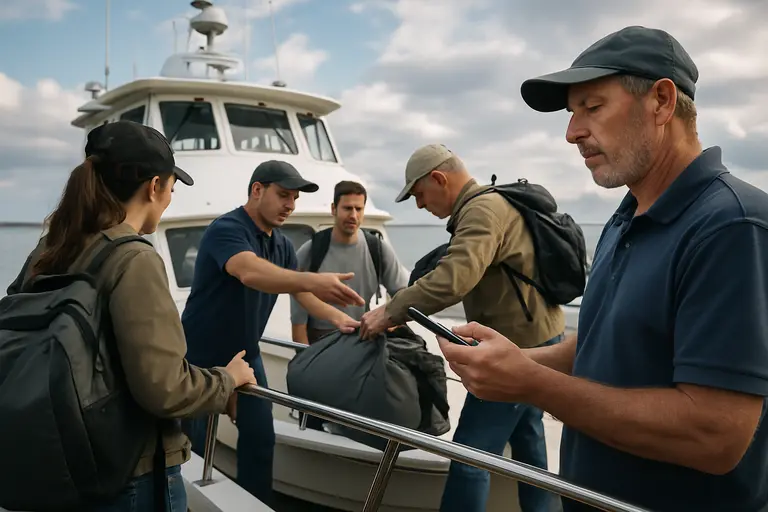
Passengers should pay attention to small operational signs. Does the crew brief guests on life jacket location, emergency exits, fire extinguishers, radio use, and man-overboard response? Are bags and coolers stowed so they do not block movement? Are children assigned properly sized life jackets before the boat leaves the dock? Are alcohol rules clear for the operator and passengers? These practices are simple, but they reduce confusion during the first moments of an emergency.
Loading And Capacity Are Safety Issues
Overloading affects stability, freeboard, emergency movement, and the ability of the crew to manage passengers. A boat that feels roomy at the dock may handle very differently in wake, chop, or tight turns. Passenger count, gear weight, and where people sit all matter. If a charter is advertised for a large group, the inspection status and posted capacity should support that claim.
The danger is not theoretical. On August 8, 2026, a mother and her 5-month-old baby drowned after a speedboat capsized in New York Harbor; authorities said the boat had been illegally chartered, the operator was not Coast Guard licensed, proper safety equipment including children’s life vests was lacking, and the boat was overcrowded AP report on the capsizing. That case is a severe reminder that credentials, child life jackets, and passenger limits belong in the same pre-departure conversation.
Charter Operation Safety Checks At The Dock
A Passenger Walk-Around Before Departure
Before leaving the dock, use your eyes and ask calm questions. This is not a full inspection, but it can reveal obvious concerns. Look for trip hazards, blocked exits, loose fuel odors, missing child-size flotation, overloaded seating, or crew members who seem unsure about basic emergency procedures. If weather has changed since booking, ask whether the route or schedule has changed too.
- Confirm the captain’s credential is present and matches the person operating the vessel.
- Confirm the passenger count fits the vessel’s inspection status or operating limit.
- Ask where adult and child life jackets are stored, and check that children have correct sizes.
- Ask for the safety briefing before the boat leaves the dock.
- Listen for a clear weather plan, including delay or return-to-dock decisions.
- Check that emergency gear is reachable and that exits are not blocked by coolers or bags.
When To Decline The Trip
Declining a charter can feel uncomfortable, especially with friends waiting nearby, but leaving the dock with unresolved safety doubts is worse. Consider canceling or reporting concerns if the operator refuses to show credentials, dismisses passenger limits, lacks child life jackets, skips the safety briefing, or pressures guests to board despite poor weather. A safe operator should not treat reasonable safety questions as an inconvenience.
Treat Charter Operation Safety as a routine habit, not a special request. Ask early, verify what you can, respect weather limits, and remember that a paid trip should never depend on guesswork. The best charter outing is one where the paperwork, equipment, crew behavior, and forecast all support the same decision: it is safe enough to go, and there is a clear plan if conditions change.