
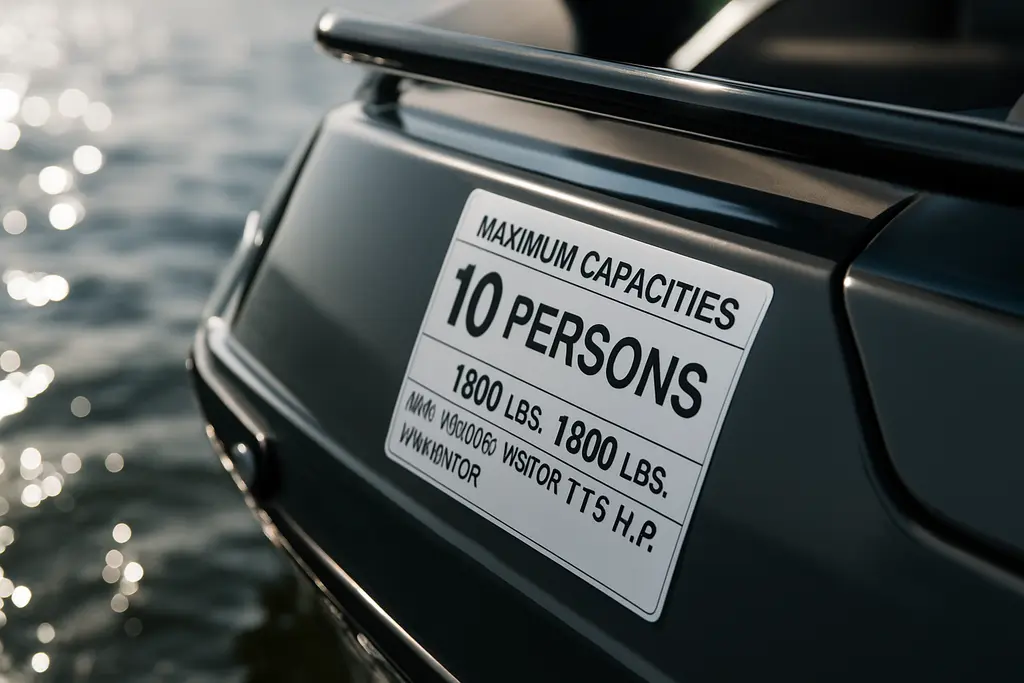
Boat owners saw a notable safety-label update in 2026, but boat capacity labels did not become a new burden for every vessel overnight. As of September 14, 2026, the main change was a revised ABYC S-7 design option with clearer wording and pictograms. The older federal capacity plate format remained valid for boats that were already required to carry it. For owners, the practical task is simple: know whether your boat needs a plate, keep it readable, and treat the posted limits as part of every departure check.
Why Boat Capacity Labels Changed In 2026
Boat Capacity Labels And The ABYC S-7 Option
The American Boat & Yacht Council released revised S-7: Boat Capacity Labels under Supplement 66 on August 4, 2026, with new layouts meant to improve readability through wording and pictograms, as reported by ABYC Supplement 66. The U.S. Coast Guard issued a policy letter on July 15, 2026, recognizing the new S-7 2026 label as an equivalent level of safety to the existing federal label design. That means builders may use the revised ABYC format instead of the older label headed “U.S. Coast Guard Maximum Capacities.”
The change did not make boat capacity labels mandatory on boats that were previously exempt. It also did not force owners of existing compliant boats to replace readable, properly attached plates. The updated design is an option for manufacturers, not a recall-style requirement for recreational owners. Some new boats may carry the ABYC design before model-year 2028, while many owners will continue to see the familiar federal-style plate near the helm or another visible operating position.
What Did Not Change For Owners
The safety meaning stayed the same: the plate gives the operator a quick loading limit before leaving the dock. Under the federal rules described in the research, monohull boats less than 20 feet in overall length, designed for motor propulsion, must display a capacity plate if manufactured after October 31, 1972. The research notes exemptions for sailboats, canoes, kayaks, inflatables, and multihulls. Boats 20 feet or longer are not required by federal law to carry that plate, although some still display similar information voluntarily.
Owners should avoid treating a voluntary label as a substitute for the required plate on a boat that falls within the federal category. If a plate uses wording such as “Maximum Capacities” without the Coast Guard heading, it may be a voluntary or alternative design depending on the boat and build date. The safest path is to compare the label with the builder’s documentation and ask the manufacturer or state boating agency if the plate is missing, unreadable, or inconsistent.
What Owners Should Check On The Plate
Read The People, Weight, And Horsepower Limits
A compliant capacity plate should show three practical numbers. First, it should list the maximum number of persons and an equivalent weight. Second, it should state the maximum weight capacity, including people, gear, and engine. Third, it should list the maximum horsepower rating for the engine. If the boat is not rated for motor propulsion, the required wording identified in the research is: “This Boat Not Rated for Propulsion by a Motor.”
These figures are not suggestions for perfect weather only. They are limits that help keep the boat within its intended loading and power range. A cooler, spare anchor, fishing gear, water toys, fuel, and batteries all count toward real-world weight even if they are not passengers. A safe owner does the math at the dock, before guests settle into seats and before gear disappears into lockers. For more insights on this topic, consider exploring family-focused resources like Talk and Play, which provide guidance on related safety conversations with younger passengers.
Inspect Placement And Durability
The plate must be permanently affixed where the operator can see it when getting underway. If it is hidden under a cushion, blocked by gear, painted over, or mounted where the helmsman cannot read it, the safety value drops sharply. The research also identifies durability expectations: the label should remain legible after exposure to water, oil, salt spray, sun, heat, cold, and normal wear, and attempts to remove or alter it should leave obvious evidence.
During maintenance, wipe the plate gently with a mild cleaner suited to the surrounding surface, then check for fading, curling edges, corrosion, cracked adhesive, or missing fasteners. Do not sand, repaint, engrave over, or guess at missing numbers. If the plate is damaged, record what remains with a dated photo and contact the manufacturer or a qualified marine service professional for the proper replacement path. A replacement should match the boat, not a similar model or a plate copied from another hull.
- Check that the plate can be read from the normal operating position.
- Compare passenger count, passenger weight, total weight, and horsepower before loading.
- Recheck limits after adding heavy gear, extra batteries, or a different engine.
- Keep photos of the plate with your maintenance records.
- Ask for help before operating if the plate is missing, altered, or unreadable.
State Rules And Practical Compliance
Florida Shows How States Can Mirror Federal Rules
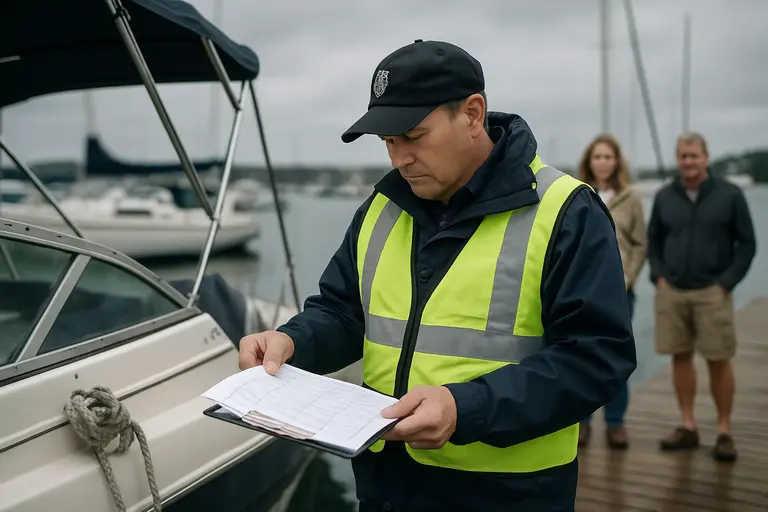
State laws can add enforcement details around the same basic safety idea. Florida law requires maximum capacity information, as prescribed in 33 CFR Part 183, for original sale of certain monohull motorboats under 20 feet and prohibits operating a vessel in a way that exceeds those listed capacities, according to Florida Statutes section 327.52. Owners outside Florida should check their own state boating agency because state wording and enforcement practices can differ.
This article is maintenance and safety guidance, not legal advice. The safe practice is stricter than the minimum paperwork question: never load beyond the posted plate, and do not assume calm water makes an overloaded boat acceptable. Weight that is high, aft, or unevenly placed can affect trim and handling even before the posted maximum is reached. Passenger movement also matters, especially on smaller boats where one person stepping to a corner can change balance.
Older Boats, Repairs, And Repowered Hulls
Older boats deserve extra attention because plates fade, hardware loosens, and prior owners may have changed engines. The 2026 ABYC update reflected modern label clarity concerns and changes in boat and motor configurations, including heavier outboards noted in the research. If a boat has been repowered, confirm that horsepower and engine weight remain within the boat’s rating. A motor that fits the transom is not automatically within the safe rating shown on the plate.
Repairs can create label problems too. Gelcoat work, console replacement, upholstery changes, or deck refits may cover the original plate. Before accepting a finished repair, make sure the plate is still present, readable, and visible from the operator’s position. If the repair required removal, ask for documentation showing how the correct plate was restored. Clear crew communication also helps prevent accidental overloading; family-focused resources such as Talk and Play can support simple pre-trip conversations with younger passengers about seating, movement, and listening to the operator.
Boat Capacity Labels For Safer Trips
Boat Capacity Labels In Your Departure Routine
The best use of boat capacity labels is practical and repetitive. Before departure, read the plate aloud or confirm it silently as part of the same routine used for fuel, drain plug, weather, life jackets, and navigation lights. Count people, estimate combined passenger weight, add heavy gear, and compare the engine to the horsepower rating. If the numbers are close, reduce load rather than hoping the water stays flat.
Owners should also brief passengers on why seating matters. Ask guests to stay low and balanced during departure, avoid crowding the bow or stern, and keep gear secured so it cannot slide during turns or wakes. These steps do not replace seamanship, weather awareness, or required equipment, but they support safer handling in ordinary recreational use. A readable plate gives the operator a fast reference; it does not account for every sea state, every loading pattern, or poor maintenance.
As of September 14, 2026, the key takeaway is steady rather than dramatic: newer label designs may look different, but the safety habit remains the same. Keep the plate visible, preserve it during repairs, follow the posted limits, and ask qualified help when the information is missing or unclear. Used that way, boat capacity labels are a small piece of hardware that can prevent a large mistake before the dock lines come off.