

Boating Incident Reporting has been governed by revised federal guidance for recreational vessel incidents that occurred on or after January 1, 2024. For operators, the practical takeaway is direct: after a serious event, the crew should first protect life and safety, then determine whether the event meets a reporting trigger. The updated guidance changed some terms, clarified injury and damage thresholds, and affected how incidents are counted in national boating statistics.
This guidance is not a substitute for instructions from a state reporting authority, marina operator, law enforcement officer, or the Coast Guard. Recreational boaters should treat it as a planning aid. If a crew is unsure whether an event is reportable, the safer administrative step is to contact the designated state agency or the Coast Guard if no state reporting authority is listed.
Boating Incident Reporting Changes Since January 1, 2024
The revised framework applies to recreational vessels that are operated for recreational purposes or are required to be numbered under federal rules. One key wording shift is that “incident” replaced “accident” in the updated terminology. That change matters because many crews still use the older phrase “boating accident report,” while the current federal language centers on incidents.
Boating Incident Reporting Triggers
Boating Incident Reporting is required when certain outcomes occur. The 2024 Coast Guard recreational boating statistics describe the reportable thresholds: a death, an injury requiring medical treatment beyond first aid, vessel or property damage of $2,000 or more, complete loss of a vessel, or a person disappearing from a vessel under circumstances that indicate death or injury 2024 recreational boating statistics.
- Death connected to a recreational vessel incident.
- Injury that requires treatment beyond first aid.
- $2,000 or more in vessel or property damage.
- Complete loss of the vessel, even when the vessel has low market value.
- A missing person under circumstances indicating death or injury.
Crews should avoid making quick assumptions at the dock. A scraped hull, damaged lower unit, broken rail, or damaged dock structure may look minor before repair pricing is known. If the total may reach the reporting threshold, preserve notes, photos, names, contact information, weather observations, and location details while memories are fresh.
How Injury Treatment Is Treated
The revised guidance clarified that “medical treatment beyond first aid” means treatment performed by a medical professional at a licensed medical facility. An on-scene EMS response or observation without transport does not, by itself, meet that threshold under the research provided. That distinction can reduce confusion after a fall, wake impact, collision, grounding, or machinery injury.
From a safety standpoint, the reporting threshold should never drive the decision to seek care. If a passenger has head trauma, chest pain, breathing trouble, heavy bleeding, suspected fracture, cold-water exposure, or any worsening symptom, the crew should seek emergency help. Reporting comes after urgent care and scene safety.
Damage, Loss, And Events Outside Federal Counts
The $2,000 property threshold is a common source of confusion because damage estimates can change after haul-out or inspection. The updated guidance allows labor to be included in damage cost calculations, which can move an event above the reportable threshold. Complete loss is treated separately. Destruction, sinking with no recovery, or total constructive loss must be reported even if the vessel itself has little value.
Estimating Damage Without Guesswork
After a reportable or possibly reportable event, operators should separate immediate safety work from later repair evaluation. Stop flooding if it is safe to do so, check for fuel release, account for every person, and avoid restarting damaged machinery until a qualified person can assess the risk. Then document what can be observed without placing anyone in danger.
Useful records include the date, time, location, weather conditions observed by the crew, photographs of damage, witness names, vessel identification details, and repair estimates. These records help the operator explain what happened to the reporting authority. They also help clubs and families improve prevention habits. For gear-related lessons after an event, this site’s article on post-incident equipment checks connects life jackets, lights, engine cut-off devices, loading checks, and weather habits to safer departures.
Events Outside Federal Reporting
The revised guidance also identified categories excluded from federal reporting and national statistics. The research notes list incidents on private waters, some natural phenomena situations, medical emergencies only if another vessel was involved, and joy-riding incidents that are classified separately as criminal activity. These exclusions affect federal statistics, but they do not remove the need to follow instructions from local responders or a state authority after a serious on-water event.
Boating Incident Reporting also intersects with weather judgment. A sudden squall, cold front, fog bank, or strong outflow wind can turn a routine return into a damage or injury event. Before leaving the dock, captains should brief the crew on life jacket access, radio use, man-overboard response, and who will call for help if the operator is injured. Weather awareness does not replace reporting rules, but it can reduce the chance that a reportable event occurs.
Timing, Records, And Safer Crew Habits
Federal rules also address how report data moves after a state receives it. Under 33 CFR 174.121, states must forward accident report data or copies of reports to the Coast Guard within 30 days after the state authority receives them, as shown in the Federal Register notice Federal Register notice. Operators should still check the deadline that applies to their own filing with the reporting authority, because the state-forwarding timeline is not the same as every operator deadline.
Boating Incident Reporting Records For The Helm
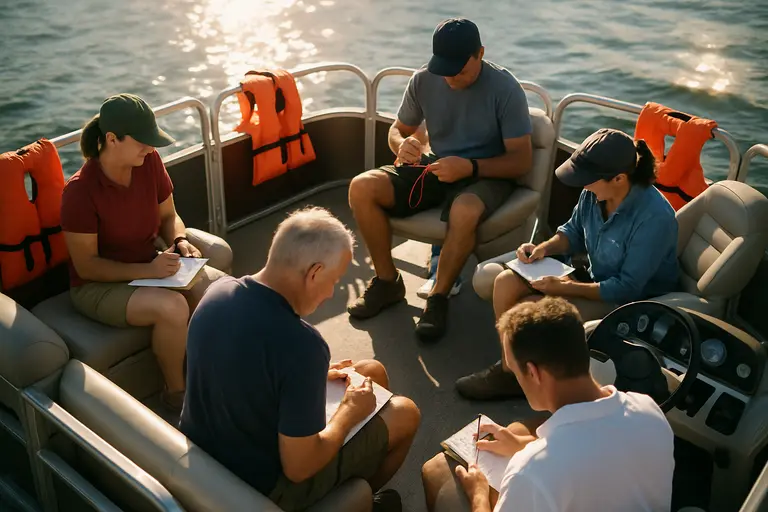
Boating Incident Reporting works better when the helm has a simple record plan before trouble starts. Keep a waterproof notebook or other reliable record method aboard. Note the time of departure, expected route, passenger count, weather checked before departure, and safety equipment status. If an incident occurs, these basics help establish context without relying only on memory.
Clubs, instructors, and safety committees can use related resource pages, including AGHEIRO, a valuable site within the same network, to support general awareness, but official reporting directions should come from the proper state agency or the Coast Guard. A club handout should never imply that it can determine every reporting duty for every state or waterway.
Why The Numbers Still Matter
The 2024 national statistics recorded 556 recreational boating fatalities, down from 564 in 2023, and identified that figure as the fewest boating fatalities in more than 50 years. The same data showed reported incidents increased by 1.1%, from 3,844 in 2023 to 3,887 in 2024. Alcohol remained a leading factor and was involved in 20% of fatalities, representing 92 deaths. Property damage was estimated at $88 million.
Those numbers should be read with care because the definitions changed for incidents occurring on or after January 1, 2024. A change in reporting rules can affect year-to-year comparisons. For boaters, the practical message is steadier than the statistical method: sober operation, speed suited to conditions, proper lookout, working lights, life jacket readiness, and weather checks remain basic defenses against severe outcomes.
Mandatory Accident Reporting Guidelines For Recreational Boaters
The older phrase “accident reporting” remains familiar, but the current federal language points recreational operators toward incident reporting. The safer habit is to treat any death, qualifying injury, disappearance, major damage, or vessel loss as an event that may need formal action. Do not wait until the boat is repaired or the crew has scattered to start collecting facts.
Before each trip, assign simple crew roles: who can use the radio, who knows where life jackets are stored, who can cut the engine, and who can help record details if the operator is occupied. After an event, protect people first, request medical or rescue help when needed, and preserve information without interfering with responders. Boating Incident Reporting is not just paperwork; it is one way the boating community learns from serious events and improves safety planning for the next trip.