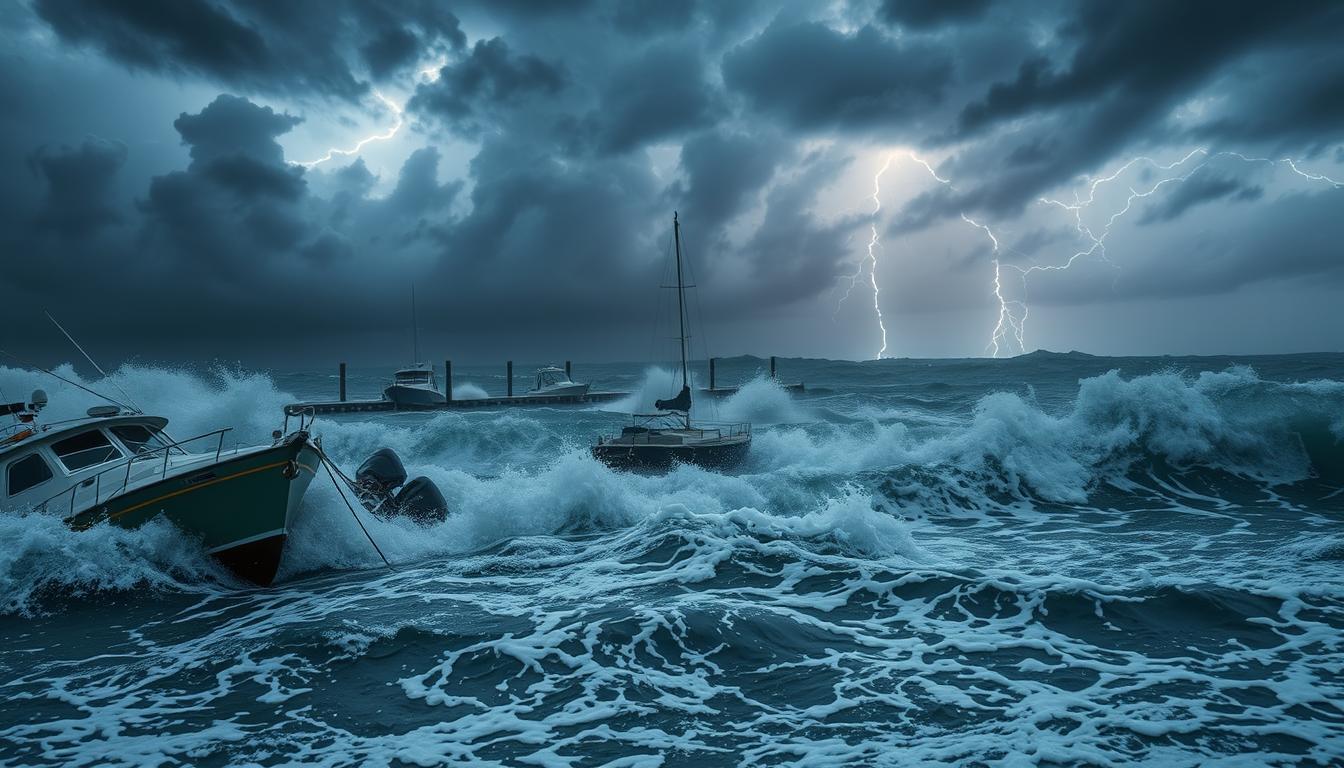
Forecasters at the National Oceanic and Atmospheric Administration (NOAA) say active Atlantic seasons are the new norm. If you have a boat in a risky area, you must have a proactive plan. This is key to keep lives and property safe.
The biggest threat often comes from the water, not just the wind. A strong storm surge can flood docks, pull boats off their moorings, and cause huge flooding. So, both marina managers and boat owners must prepare together.
Ultimately, success depends on understanding forecasts, making quick decisions about boat safety, and following detailed checklists. Knowing local boating conditions is also vital, as water levels and currents play a big role.
This guide will show you the essential steps for marina operators and cruisers. We’ll talk about how to read warnings, secure your boat, and handle recovery after the storm passes.
Seasonal Outlooks & Triggers
Hurricane preparedness starts with understanding seasonal outlooks. Every spring, NOAA and other agencies share their predictions for the Atlantic hurricane season. Ultimately, these forecasts give a general idea of what to expect from hurricanes & tropical systems.
They estimate the number of named storms, hurricanes, and major hurricanes. However, it is important to remember these are not exact predictions of where storms will hit. Instead, they help raise awareness and prepare people accordingly.
Reacting to Watches and Warnings
Boaters certainly need to start preparing early. Because NOAA predicts active seasons ahead, you consequently have much less time to get ready.
Tasks like moving your boat or securing it for haul-out take significant time. Waiting until a storm is near is incredibly risky. Therefore, you should start preparing early.
When specific weather triggers are issued, the real action begins. These are the official watches and warnings from the National Hurricane Center. Knowing the difference is absolutely key to staying safe.
-
A Hurricane Watch means conditions could hit your area in 48 hours. This is your time to act. Therefore, finish all major preparations during this period.
-
A Hurricane Warning means conditions are expected in just 36 hours. At this point, focus strictly on final preparations. If you haven’t prepared during the watch phase, it is unfortunately too late for big moves.
Here’s a quick guide to these critical triggers:
| Trigger | Timeframe | What It Means | Your Action |
|---|---|---|---|
| Hurricane Watch | Conditions possible within 48 hours. | The storm’s path could bring hurricane conditions to your area. Uncertainty remains, but risk is increasing. | Complete all major preparations. Strip sails, add lines, finalize plans to move or haul-out. This is your primary action window. |
| Hurricane Warning | Conditions expected within 36 hours. | Hurricane conditions are imminent. The storm is forecast to hit your region. | Execute all remaining storm-securing measures. Seek safe shelter. Do not begin new complex tasks. |
| Tropical Storm Watch/Warning | Similar timeframes for tropical storm conditions. | Dangerous winds of lower intensity are forecast. These storms can cause significant damage. | Take similar preparatory actions. Secure all loose gear and ensure your vessel is ready for strong winds and rain. |
The seasonal outlook alerts you to start preparing. Meanwhile, the watch is your cue to get to work. Finally, the warning is your signal to wrap up and find immediate safety.
Do not wait for a warning to secure your boat. By then, marinas will be busy, travel may be hard, and options will be few. Thus, treat every hurricane watch as your ultimate deadline. This proactive approach is essential for any cruiser or marina tracking hurricanes & tropical systems.
The Cone of Uncertainty Explained
Meteorologists use the Cone of Uncertainty to show exactly where a hurricane might go. But it is more than just a simple line on a map. Rather, it is a tool made from past mistakes. Specifically, it shows where the storm’s center might be in the next five days.
The width of the cone is based on past errors. This means there is a two-thirds chance the storm will stay within the shaded area. However, it does not tell you anything about the storm’s massive size or overall impact.
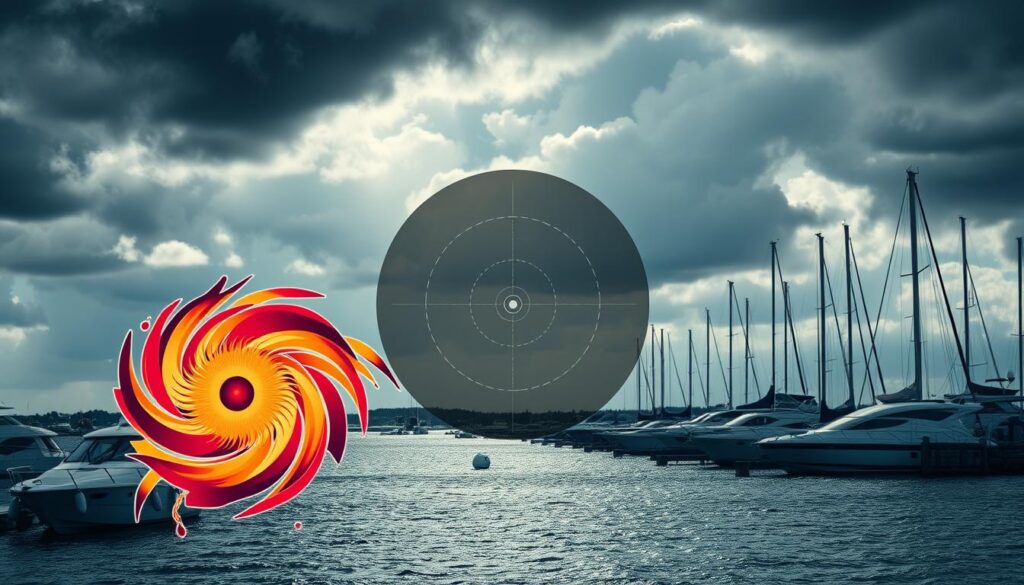
Damaging hurricane-force winds, life-threatening storm surge, and torrential rainfall can easily spread hundreds of miles from the center. Therefore, even if you are 100 miles outside the cone, you could face disaster. Thinking you are safe just because you are outside the cone is a critical mistake.
For marinas and cruisers, always prepare for the absolute worst regarding hurricanes & tropical systems. If you are in the cone’s widest point days before landfall, treat it exactly like the storm will hit you directly. Ultimately, this is your best way to stay safe.
How Forecast Cones Change Over Time
The cone obviously gets smaller as forecasters get more confident. Always check updates every six to twelve hours. Furthermore, the National Hurricane Center updates every few hours. Small changes can quickly put you in sudden danger.
Recent storms clearly showed this. For instance, Ian’s path changed a lot before it hit, catching many completely off guard. Similarly, Ida’s path narrowed and got stronger fast, proving that waiting for certainty is a terrible idea.
| Storm | Key Cone Shift | Impact Area Affected | Lesson for Preparedness |
|---|---|---|---|
| Hurricane Ian (2022) | Major eastward shift 48 hours before landfall | Fort Myers, FL area | Prepare for the entire width of the early cone. |
| Hurricane Ida (2021) | Track narrowed, intensity increased rapidly | Louisiana coast | Do not delay preparations based on early cone size. |
| Hurricane Dorian (2019) | Cone stalled over Bahamas for days | Grand Bahama Island | The cone indicates probable path, not speed or intensity. |
Remember, these forecast tools change a lot. Consequently, your plans should be highly flexible too. Never use the cone solely to decide if you should evacuate or secure your boat. Instead, it is a guide for understanding risk. Treat the cone’s edges as your very first warning.
Haul‑Out vs. Secure‑In‑Place
Choosing to haul out or secure your boat in place is absolutely key to its safety during hurricanes & tropical systems. This critical decision greatly affects your boat’s overall chance of surviving the storm.
The Haul-Out Strategy
Hauling out is definitely the gold standard for safety. If your boat can be pulled by a trailer, this is undoubtedly the best option. Move it to a safe, inland spot away from the water and known flood areas. Furthermore, make sure the area is also totally free from trees that could easily fall in strong winds.
Once safely on land, firmly follow these important steps:
-
Pull the drain plug to prevent dangerous water accumulation.
-
Strip off sails, biminis, dodgers, and absolutely any canvas.
-
Remove all essential electronics and valuables from the main cabin.
Securing Your Vessel in the Water
If your boat simply cannot be hauled out, you realistically have two options: secure it at a dock or firmly on a mooring. However, both need incredibly careful planning.
Securing at a Dock: Your main goal is to firmly tie the boat down so it cannot move. Therefore, use double or triple lines for each dock line. Specifically, set up spring lines in a crisscross pattern from the bow to a stern cleat and vice versa. Consequently, this stops the boat from moving violently forward or backward.
It is incredibly important to tie lines high on the pilings. This greatly helps with the massive storm surge, which can raise water levels a lot. If lines are set too low, they can easily break or violently pull the cleats right out as the water rises. Always tie strictly to the offshore side of solid pilings. Check every single cleat, chock, and piling for maximum strength.
Securing on a Mooring: Do not blindly assume your mooring is strong enough for major hurricanes & tropical systems. Check with your provider immediately to make absolutely sure it can handle the heavy load. Inspect the chain, swivel, and buoy connection carefully for wear or deep corrosion.
Use a secondary, heavy-duty mooring pendant as an essential backup. The storm’s brutal waves and wind put a lot of extreme strain on a single point. Therefore, having two systems helps immensely if one ultimately fails.
Checklists for Lines, Chafe, and Docs
A hurricane watch is your clear signal to start the final steps of boat prep. It explicitly means conditions could happen in just 48 hours. Therefore, it is definitely time to act, not just plan. Doing these critical tasks during the watch phase is absolutely key to avoiding the rush and panic of a severe warning.
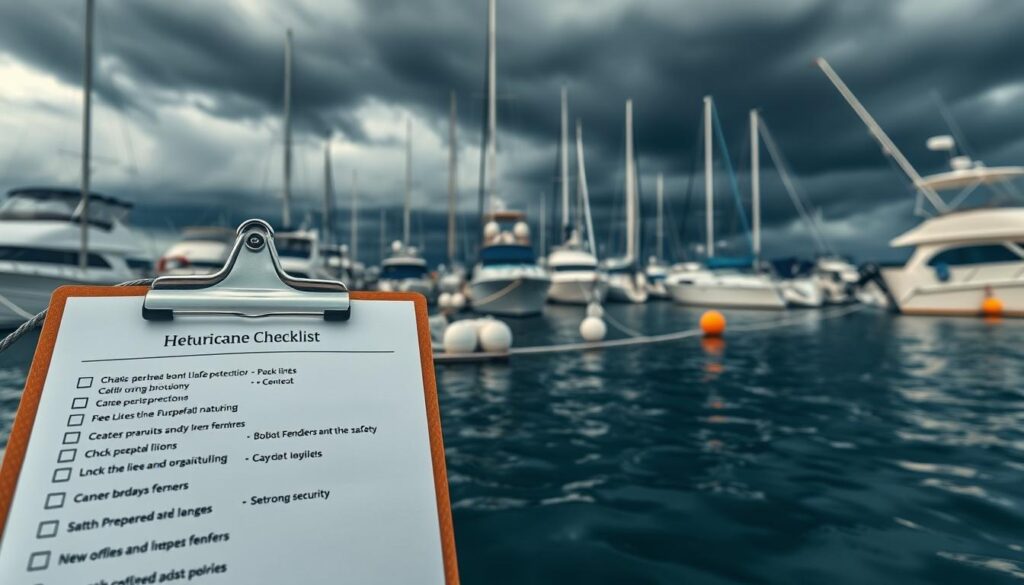
Lines and Chafe Protection Checklist
Your dock lines keep your boat firmly in place during hurricanes & tropical systems. Check and significantly strengthen every single one:
-
Look for fraying, cuts, or UV damage on the lines. Replace any that currently look bad.
-
Use longer, much heavier lines than usual for the extreme weather. Double or triple your primary lines.
-
Set spring lines in a tight crisscross pattern. This explicitly stops the boat from moving too much.
-
Wrap lines securely in chocks or over rails with split hose, thick leather, or a strong chafe guard. Use heavy tape or tight zip ties to firmly hold them.
-
Put out absolutely all fenders and boards. They perfectly protect the hull from the hard dock and other boats.
Boat Systems and Documentation Checklist
Protecting the boat’s delicate systems and thoroughly documenting its condition are both incredibly important steps:
-
Turn off the main shore power and all non-essential AC and DC breakers.
-
Secure the batteries tightly. Make sure they are fully charged and securely tied down. Consider bringing extra batteries for the bilge pumps.
-
Remove all valuables, electronics, and any loose gear. Make a precise inventory of what exactly stays.
-
Take clear photos and videos of the entire boat. Specifically, show all sides, the deck, the inside, and the engine room. This clearly shows the boat’s condition right before the storm hits.
-
Put away all sails, biminis, and canvas. Secure all deck cushions, grills, and portable items.
Personal and Marina Documents Checklist
Your essential paperwork should be just as safe as your boat. Get absolutely everything organized before leaving the marina:
-
Get your current boat insurance policy. Know exactly what is covered and your exact deductible.
-
Collect the official vessel registration, equipment inventory, and marina lease agreement.
-
Put these vital documents in a truly waterproof bag. Additionally, save high-quality digital scans or photos online.
-
Mark all valuable items strictly left on board with your name. This greatly helps accurately identify them after the storm passes.
-
Check all emergency contact numbers with the marina. Know their strict post-storm procedures.
Re‑Entry After the Storm
Safety certainly does not stop when the severe storm winds finally fade. The brutal aftermath of hurricanes & tropical systems brings its own serious dangers. First, always wait for the green light from local authorities before going to the marina.
Navigating Post-Storm Dangers
Waterways can be completely filled with massive debris like broken docks and sunken boats. Furthermore, this dangerous mess spreads far beyond the cone forecasted. Therefore, it is very dangerous to navigate without official confirmation.
After getting the okay to safely enter, do a slow, careful visual check from a very safe spot. Watch out for dangerous downed power lines. Remember, they might be highly live, even if the main power is fully off. Before stepping on any dock whatsoever, strictly sniff for gas smells. Use your nose only; never use a lighter or fire to check for dangerous leaks.
Look closely at the dock’s structure before walking on it. Specifically, check for damaged pilings, extremely loose boards, or sunken parts underwater. Consequently, only walk firmly on absolutely stable surfaces.
| Immediate Hazard | Required Action | Professional Follow-Up |
|---|---|---|
| Downed Power Lines | Assume all lines are live. Keep a distance of at least 30 feet. Report them immediately to the power company. | An electrician must verify the area is safe before restoring shore power to your vessel. |
| Gas Leaks (Natural Gas/Propane) | Sniff for odor before entering any enclosed space or bilge. If you smell gas, leave the area and call for help. | A licensed technician must inspect all gas lines, valves, and appliances before they are used. |
| Navigational Hazards | Check dock lines and mooring pendants for chafe. Visually scan the water for submerged objects before moving your boat. | Contact the Coast Guard or local marine patrol for the latest navigational warnings and chart updates. |
| Structural Damage to Vessel | Inspect the hull for cracks, punctures, or new blistering. Check the bilge for water intrusion. | Have a marine surveyor assess any damage before starting repairs. This is critical for insurance claims. |
Assessing Your Vessel’s Condition
When you finally get to your boat, carefully check the dock lines and springs for heavy damage. Look for severe chafing or too much extreme tension. Additionally, closely check all through-hulls and seacocks for any dangerous leaks.
Do not start your engines or violently switch on electrical systems immediately. Saltwater can easily cause terrible short circuits or massive fires. Get a professional marine mechanic to safely check your systems first.
Take highly detailed photos of any severe damage to your boat and the surrounding marina. Do this strictly before cleaning anything up. Ultimately, these critical photos are absolutely key for your insurance claim.
Insurance & Photo Records
Start your financial recovery today by checking your marine insurance policy. Look at your coverage limits, deductibles for named storms, and any special requirements. This includes if you need to haul out or move your boat.
Make a detailed proof-of-condition file. Take clear, dated photos and videos of your boat’s inside, outside, and all valuable gear. Save these digitally in the cloud and on a physical drive. Also, include your boat’s registration, title, a list of equipment with serial numbers, and your marina contract.
Understand what your marina is responsible for. Your lease agreement will tell you what they cover and what you need to handle. This avoids confusion later. The insurance industry uses environmental data to handle claims well. Your detailed records help with this.
Have a list of important contacts ready. Include your insurance agent’s 24-hour claims number, your marina manager, and your preferred salvage or towing companies. Keep this list with your boat documents in your evacuation kit.