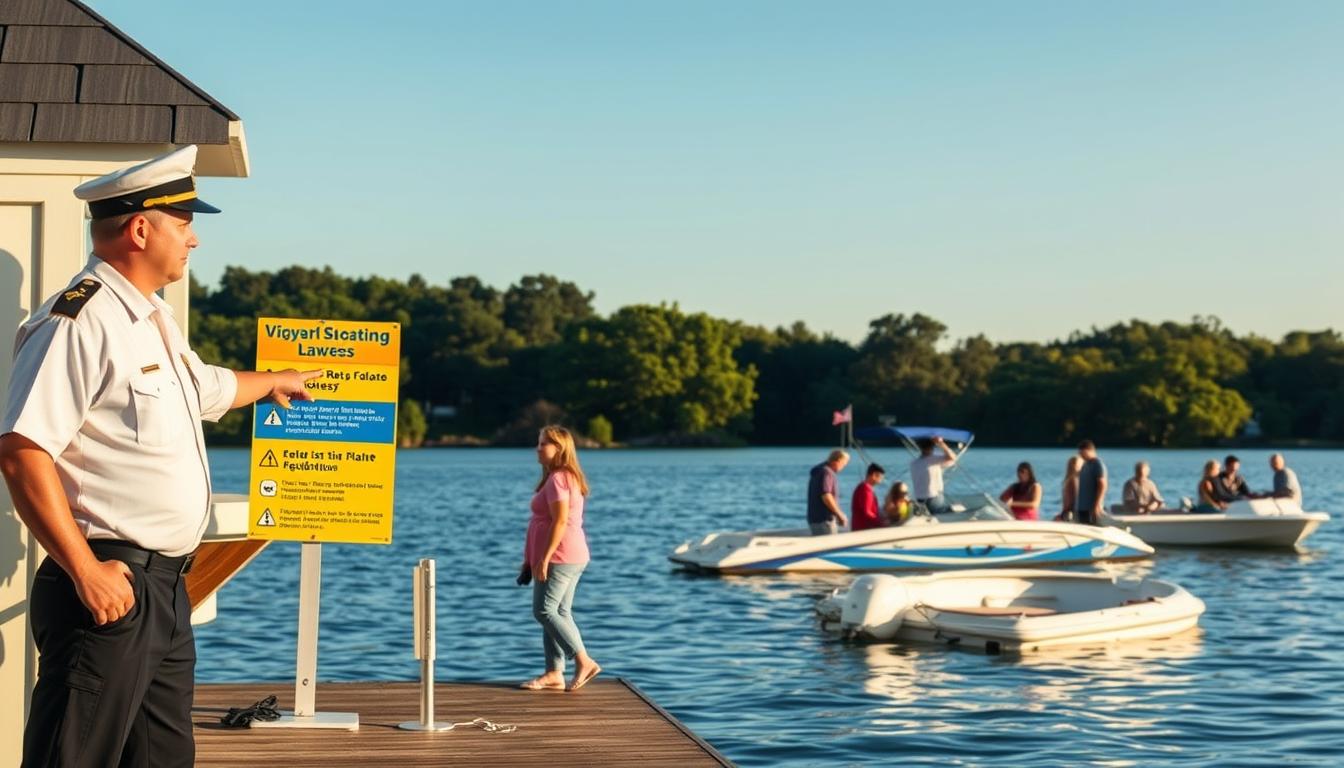
Forget what you’ve heard about breaking rules. On the water, they’re made from past mistakes. A beautiful day on the water can turn bad if you ignore local rules.
It’s not just about wearing a life jacket. It’s about following local boating laws that keep you safe. The U.S. Coast Guard is there to ensure safety and order.
This isn’t about being stuck in red tape. It’s about avoiding trouble on the water. Knowing the rules can save you from legal issues. So, before you go, let’s look at the key rules for a safe day on the water.
Navigational Requirements
Navigating waterways is more than avoiding sandbars and seagulls. It’s about following maritime traffic laws that have evolved over centuries. These boating regulations act as invisible guardrails, preventing chaos on the high seas.
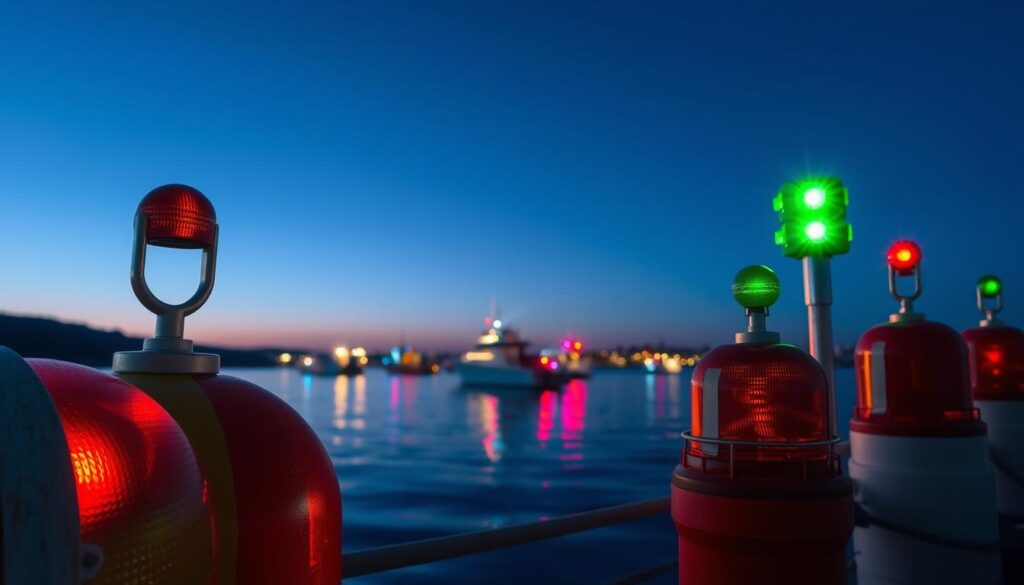
Forget terrestrial traffic lights. On the water, the International Regulations for Preventing Collisions at Sea (COLREGs) are the rules. They dictate everything from passing rules to what ship lights mean at night.
The Unwritten (And Written) Rules of the Water Road
COLREGs are like defensive driving for the sea. The main goal is to avoid collisions. The rest are important details.
First, know your lights. A green light on a ship’s right side means you’re looking at its right side. Red is for the left. It’s like a turn signal, but with more legal consequences if ignored.
| Vessel Type | Light Configuration | What It Means | Your Action |
|---|---|---|---|
| Power-driven vessel underway | Red & green sidelights, white masthead & stern light | Under power, moving forward | Give way if you’re crossing its path |
| Sailing vessel (motoring) | Same as power vessel, or may show a cone shape | Under sail but may have engine on | Usually has right of way over power boats |
| Vessel at anchor | All-around white light (or black ball shape by day) | Not under command or anchored | Give wide berth |
| Vessel towing | Yellow towing light above stern light | Towing another vessel or object | Stay clear, they have limited maneuverability |
The Sound of Signals
Your horn isn’t just for waving at friends. On the water, sound signals are a language all their own:
- One short blast: “I am altering my course to starboard (right).”
- Two short blasts: “I am altering my course to port (left).”
- Three short blasts: “My engines are going in reverse.”
- Five (or more) short blasts: The maritime equivalent of “What the hell are you doing?”—the danger signal.
The vessel with the right of way is the “stand-on” vessel. You must maintain course and speed. The “give-way” vessel must take early and obvious action to avoid a collision. Sailboats under sail generally have right of way over powerboats, but the 500-foot container ship? It always wins. Physics is the ultimate boating regulation.
Beyond the rules of the road, there are practical boating regulations you can’t ignore. Your vessel must be properly documented or registered, and you must have all required safety equipment as outlined by boating safety. This includes, but isn’t limited to, life jackets for every person on board, a sound-producing device (like a horn or whistle), and proper navigation lights that are visible at the required distances.
These boating regulations aren’t just red tape. They’re centuries of seafaring wisdom, designed to keep you, your passengers, and your vessel safe. Ignoring them risks a fine and a bad day on the water.
Safety Gear Checklist
Your boat’s safety gear is like a parachute. You hope you never need it, but you’ll be glad it’s there when you do. It’s not just for the Coast Guard; it’s for your safety on the water.
Forget the “suggested items” list. This is what you need to stay safe. It includes gear that’s both legally required and makes sense. It’s about more than just wearing a life jacket.
No-wake zones are important. They help keep everyone safe in crowded areas. Having the right safety gear is key, whether you’re in a no-wake zone or open water.
The Non-Negotiable Checklist
This isn’t a wish list. It’s a must-have list. Check it twice.
| Safety Item | Legal Minimum (General U.S. Coast Guard) | Recommended Best Practice | Critical Notes |
|---|---|---|---|
| Life Jackets (PFDs) | One wearable, serviceable PFD (Type I, II, III, or V) for each person on board. | One Type I, II, III, or V PFD for each person, plus extras for guests. Must be readily accessible, not in plastic. | Ensure proper fit and type for activity (e.g., Type III for water sports). Children must wear them. A stowed life jacket is useless. |
| Throwable Device | One Type IV throwable PFD (cushion or ring buoy) for vessels 16ft+. | One immediately accessible, with 60+ ft. of heaving line attached. Everyone should know where it is. | Practice throwing it. A ring buoy in a locker is a paperweight. |
| Sound-Producing Device | Whistle, horn, or bell. Must be audible for 0.5 nautical miles. | A horn (hand, mouth, or powered) that can produce a 4-6 second blast. A horn is better than a whistle. | It’s not just for saying “hello.” It’s your primary sound signal in no-wake zones or fog. |
| Fire Extinguisher | Required if boat has an inboard engine, closed living space, or permanent fuel tanks. | One B-I type (5-B:C) for boats under 26ft. Check gauge/charge annually. | Know how to use it. A fire on a boat is very bad. |
| Visual Distress Signals | For coastal waters or Great Lakes. 3 day/night pyrotechnic flares or 1 orange distress flag + 1 electric distress light. | Carry both day (flag) and night (flares/light) signals. Check expiration dates! | When you need these, you really need them. Don’t buy the cheapest, oldest stock. |
| Navigation Lights | Required if operating between sunset and sunrise. | Red/green bow and white stern light. Have a waterproof flashlight as backup. | If you’re out after dark, you need them. No exceptions. |
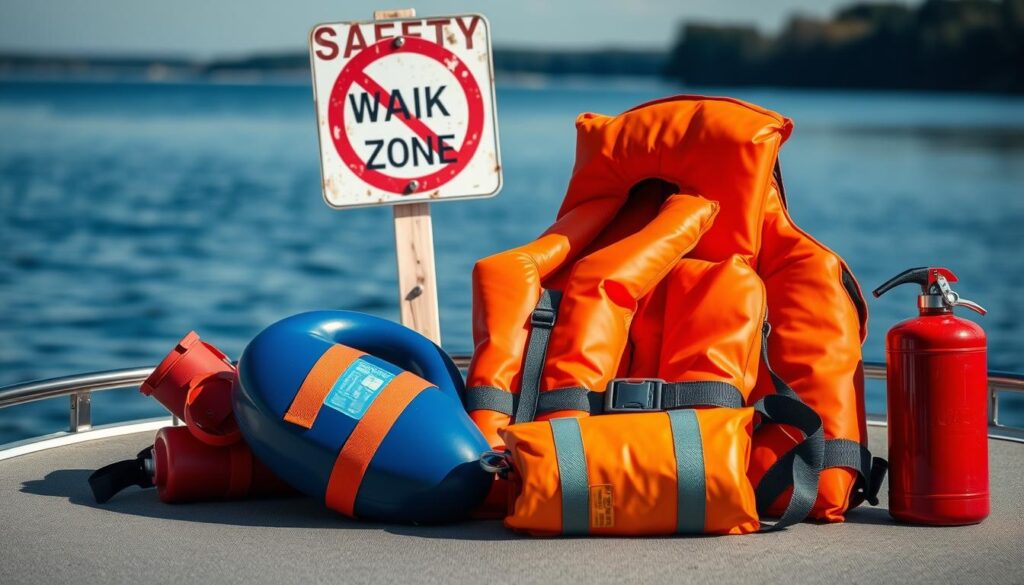
Notice the theme? It’s not about having gear—it’s about having the right gear, in good condition, and knowing how to use it. That old fire extinguisher? It’s a paperweight. Those expired flares? More likely to fail than help.
Beyond the Checklist: The “Why” Behind the Gear
Each item on that list solves a specific problem. The life jacket isn’t just for floating; it’s a lifesaver. The throwable ring isn’t a toy; it’s a lifeline. The fire extinguisher isn’t just a can; it’s your defense against fire.
No-wake zones are critical. They’re in busy areas where accidents are more likely. Your safety gear is key here. An engine failure or medical emergency at slow speed needs immediate action.
Run through this checklist as a safety check, not just a chore. The only thing left to chance is the weather. For the latest safety guides, check Transport Canada’s official boating safety resources.
Recent Changes in Law
Boating laws are changing fast, like a speedboat’s wake. Forget the old days of fishing trips without rules. Today, boating regulations are updated for the 21st century. If you’re not aware, you might face big fines or dangers.
The new laws focus on education, accountability, and technology. This is a big change from before.
The New Rules of the Water: Education, Enforcement, and Engine Cut-Offs
Renting a powerboat now requires more than just a driver’s license. Mandatory boater education is the big change. States are adopting NASBLA standards, making a boating safety course essential.
This change is important for young operators. Many states have new rules for those under 16. They need a boater education card and follow strict age and horsepower limits.
BUI: The “Don’t Drink and Drive” of the Water Gets Teeth
BUI penalties are now as tough as DUIs. Expect fines that can sink a small fortune, boating privileges suspended, and even felony charges for repeat offenders. The legal limit is 0.08% BAC, and some states want it lower. The message is clear: the water is not a playground.
Tech, Toys, and Tighter Controls
The law is adapting to new technology and trends. Engine cut-off switches (ECOS) are now required for PWC and many powerboats. This tech prevents accidents by killing the engine if the driver is thrown off.
States are also fighting invasive species and requiring carbon monoxide detectors in certain boats. The table below shows the big changes in regulations.
| Regulatory Area | Old Standard (Pre-2020s Mindset) | New Regulatory Reality |
|---|---|---|
| Operator Competency | Often no formal certification required. | NASBLA-approved education and a Pleasure Craft Operator Card (PCOC) or equivalent is mandatory in most states. |
| Youth Operation | Minimal, state-specific age limits. | Strict horsepower-to-age restrictions; mandatory education for teens. |
| BUI Enforcement | Often treated as a lesser offense than DUI. | Penalties now mirror DUI: heavy fines, license suspension, and possible jail time. |
| Safety Equipment | Basic life jackets and fire extinguishers. | Mandatory engine cut-off switches, carbon monoxide detectors on certain vessels, and stricter life jacket wear laws for children. |
What This Means for You: A Practical Guide
If you’re a responsible boater, you need to know the law. Know the rules for your state and any others you visit. Get certified with a NASBLA-approved course. It’s the best way to understand the rules and why they’re important.
Also, treat your boat like a car. You wouldn’t drive without a license, registration, and insurance. Make sure you have your Pleasure Craft Operator Card and proof of it on board. Your boat must have all required safety tech. And never mix alcohol with boating. The law is strict now.
The new boating regulations aim to make our waterways safer. They’re a shift from the old “cowboy of the lake” culture to one of education and responsibility. The law is changing fast, so it’s best to stay informed.
Where to Find More Info
Think of this as the “credits” of your boating knowledge film. The real directors of this production are the official sources. Ignoring them is like navigating a channel without charts.
For the complete, no-nonsense breakdown of Canadian regulations, check out Pleasure Craft Operator Cards to licensing on Drive a Boat Canada’s law page. It’s the definitive guide for staying on the right side of maritime law.
State boating agencies and the U.S. Coast Guard are your new best friends. Your state’s Department of Natural Resources or Parks & Wildlife website has local decrees. The National Association of State Boating Law Administrators (NASBLA) connects all the regulatory dots.
And for those who prefer local knowledge, organizations like the Stuyvesant Yacht Club offer hyper-localized info. This is the intel that keeps you out of legal trouble.
Remember, knowing the local waters is as important as checking the fuel gauge. For anglers, getting the right fishing permits is essential before casting your line. It’s not just bureaucracy; it’s your license to explore.