
Ohio River high water changes a familiar run into a higher-risk passage. Current can build quickly, debris may move across the channel, and lock or bridge approaches can demand more room than a small boat operator expects. A safe plan starts before the dock lines come off: check the nearest gauge, compare that reading with known action or flood stages, review official notices, and decide whether the trip still makes sense for the boat, crew, and route.
Ohio River high water Starts With Gauge Checks
Ohio River high water Gauge Checks Before Departure
Gauge readings are the first practical signal that conditions may be moving beyond a routine river day. On October 2, 2026, the McAlpine Lower gauge near Louisville reported 53 feet, which placed that location at Action Stage; the same research notes identify 53 feet as the flood gateway, 55 feet as Minor Flooding, and 65 feet as Moderate Flooding at that gauge. Check the reading directly at the NOAA McAlpine Lower gauge before treating any prior number as useful for a departure decision.
For Ohio River high water planning, one gauge is not enough unless the outing is very local. River level, current, and traffic conditions can vary by pool and by distance from locks, dams, tributaries, and bends. A skipper running from a marina near Louisville has a different decision than a crew launching near Cincinnati or farther downstream. Use the closest gauge for the launch area, then compare it with gauges along the intended route so the return leg is not based on stale information.
Reading Stages Without Guesswork
Stage numbers should be read as location-specific risk markers, not as a universal depth for the river. On September 26, 2026, the Cincinnati gauge was reported at 33.7 feet, well below the listed flood stage of 52.0 feet in the National Weather Service river forecast. That lower reading did not erase the need for caution elsewhere, because the McAlpine Lower reading several days later showed a different status at another location.
Action Stage should prompt a deliberate pause. It does not always mean a recreational trip is prohibited, but it does mean the margin for error has narrowed. If the forecast suggests rising water, if the current is stronger than the boat can comfortably handle, or if visibility and debris make the channel hard to read, the safer answer may be to stay tied up.
Route Choices During Ohio River high water
Locks, Dams, And Bridge Approaches
Locks and dams deserve extra distance in fast water. High flow can create strong approach currents, and those currents may push a recreational vessel sideways faster than expected. Do not crowd a lock wall, gate area, bridge pier, tow, or workboat. If a lock approach looks confused, congested, or beyond the skill of the operator, hold well clear and reassess rather than forcing the entry.
Research notes for the Ohio River indicate that official safety bulletins may warn of deteriorating conditions, strong current, and operational restrictions near locks, dams, and bridges. Restrictions can include regulated navigation areas, daylight limits, or limits on certain vessel movements when specified stage thresholds are reached. Recreational operators should treat those notices as safety information, not as paperwork meant only for commercial traffic.
Debris, Banks, And Wake Control
During Ohio River high water, floating debris can include logs, limbs, dock material, and other objects that ride low in the water. These hazards may be difficult to see in glare, rain, or low light. Slow enough to identify and avoid debris without making abrupt turns that could put the boat broadside to the current. Keep a lookout forward and to both sides, especially near bends, bridge piers, and eddies where material can collect.
Wake control is part of safe river conduct in high water. Vulnerable banks, levees, moored vessels, partially submerged structures, and shoreline properties may already be stressed by elevated water. Run at a speed that reduces bow wave and wake near shore and near work areas. For supplementary visuals or network-related content, you might consider checking out Finest Image, distinct from the official safety sources.
Boat And Crew Readiness Before Release
Steering, Power, And Communication Checks
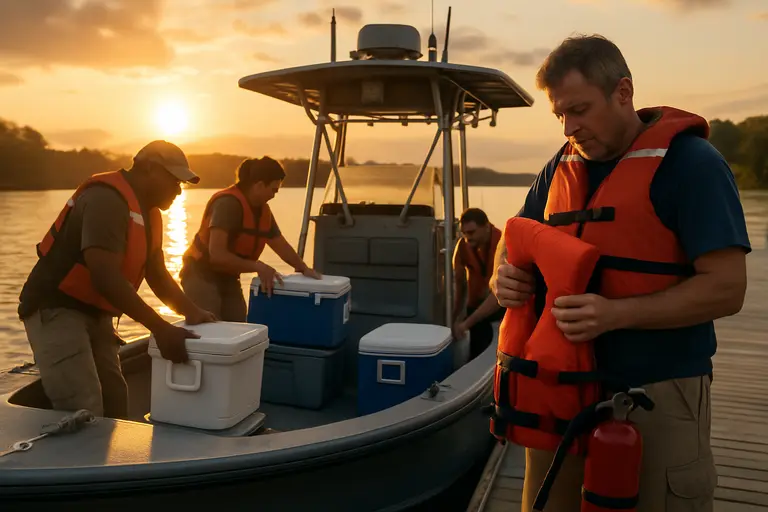
A boat that feels adequate in slack water may feel underpowered in high current. Before release, check steering response, throttle movement, engine cooling flow, fuel level, battery condition, bilge pump operation, navigation lights, horn, anchor gear, and dock lines. None of these checks removes the risk of fast water, but each one helps prevent a small problem from becoming urgent while the boat is being set down by current.
Communication planning should be simple and shared. Tell the crew who will make calls, where life jackets are stored, how to use the radio or phone, and what to do if someone falls overboard. File a float plan with a person ashore that includes the launch point, route, expected return time, and who is aboard. For a broader emergency-prep routine, the club’s boating rescue tips connect well with high-current trip planning.
Personal Gear And Cold-Water Risk
Life jackets should be worn, not merely carried, when current and debris raise the chance of sudden immersion. Cold water and moving water reduce the time a person has to help themselves. A throwable device should be immediately available, and the operator should avoid putting the boat so close to the person in the water that the hull or propeller adds danger. Recovery is harder in fast current, so prevention matters most.
- Check the nearest gauge and at least one gauge along the planned route.
- Review official safety bulletins and navigation notices before departure.
- Set a no-go point based on rising water, debris, visibility, or crew skill.
- Keep clear of locks, dams, bridge piers, commercial tows, and shoreline hazards.
- Wear life jackets and brief the crew before leaving the dock.
Go/No-Go Planning For Ohio River high water
Small Craft And Paddlecraft Decisions
Small boats and paddlecraft have less reserve power and less protection from cold water, debris impact, and current. If the river is in a high-flow condition, if flood stage has been reached locally, or if the operator cannot hold position without strain, non-essential recreational use should be postponed. The common safety idea is simple: high flow is a reason not to go.
A conservative call is not a failed outing. It is sound seamanship. River trips can be rescheduled; a bad decision in fast water may leave little time to correct course. If a trip is necessary, reduce the distance, avoid low-light travel, keep the crew small and capable, and choose a route with safe exit points that remain usable at the observed stage.
After-Trip Maintenance Notes
After any high-water run, inspect the hull, propeller, lower unit, intakes, strainers, bilge, trailer, and lines for debris damage or fouling. Mud, sticks, and plant material can lodge where they restrict cooling water or bilge drainage. Rinse exposed equipment as appropriate for the boat, dry safety gear, and note any unusual vibration or steering change before the next launch.
Treat Ohio River high water as a condition that demands patience, not bravado. The safest operators combine current gauge data, official notices, slower speeds, extra distance, and a firm willingness to cancel. That approach protects the crew, respects commercial traffic, and keeps the boat ready for a better river day.