Imagine you’re in the middle of a chess game when Lake Superior suddenly changes the rules. I learned this the hard way during a “leisurely” sail that turned into a lesson in chaos. Water doesn’t care about your yacht club membership – it’s fair to all.
Transport Canada’s data shows 62% of marine incidents come from things we can predict. Most boating emergencies aren’t random events, but our own mistakes. Knowing when you start to lose heat could save your life.
Ever thought about buoyancy-to-weight ratios when a wave hits your boat like Moby Dick? I didn’t until it happened to me. That’s why your Boating Safety Checklist needs to be as detailed as NASA’s.
Surviving isn’t just about reacting. It’s about stopping disaster before it starts. Your plans for avoiding collisions should be as solid as a submarine door. And leak management? It’s like MacGyver meets Archimedes.
When you’re getting ready for the sun, think about how ready you are for the water. If you’re not sweating the small stuff, you might be sweating something worse.
When and How to Call for Help
Imagine your emergency signal needs to go viral fast, like a TikTok dance. But instead of likes, you’re looking for rescue helicopters. Knowing when to call for help is key. It’s what separates those who survive from those who don’t.
Let’s focus on real protocols, not drama. These are the steps to take when your GPS fails.
Mayday Priorities & Signal Methods
Distress signaling isn’t a game. It’s serious. Channel your inner Maverick: “I feel the need… for rescue speed!” Here’s what to do:
- Transmit first: Use VHF Channel 16 before posting on social media
- Signal smart: Save flares for when planes can see them
- Location, location, location: Give exact GPS coordinates
Coast Guard data shows 73% of failed rescues are due to unclear locations. Practice giving your GPS coordinates quickly. It’s like rapping Eminem’s “Lose Yourself” under pressure.
Coast Guard Communication Protocols
The USCG needs clear information, not stories. They have a strict response hierarchy:
| Transmission Type | Avg Response Time | Critical Data Points |
|---|---|---|
| Mayday (Immediate) | Under 2 minutes | Coordinates, vessel type, medical emergencies |
| Pan-Pan (Urgent) | 5-7 minutes | Mechanical failures, non-life-threatening |
| Security Calls | 10+ minutes | Weather updates, navigation hazards |
Local resources are also important. Philadelphia boaters should check local safety protocols. Knowing the tides is better than praying to Poseidon when your engine fails.
“We’re not mind readers – give us clear information, not riddles.”
Emergency procedures are not YouTube tutorials. Don’t mix up flare colors like a Coachella outfit. Stick to the plan – your life is not a content farm.
VHF Protocol & Local Numbers
Learning marine radio etiquette is like ordering coffee in Italy. Get it wrong, and you’ll get strange looks from sailors. While Local Boating Conditions change a lot, one rule is always the same: Channel 16 is for emergencies only. It’s not for chatting about your fishing trip.

Channel 16: The Golden Rules
Your VHF radio is like a lifeline and a legal document. The VHF radio protocol has three main steps:
- Pause: Wait 3 seconds before talking (no radio hogging)
- Position: Start with GPS coordinates like you’re setting a pin
- Priority: Use “Mayday” only when you’re really in trouble
Regional Emergency Contacts
Emergency responders are like craft beers – each region has its own special kind. Here’s your guide:
| Region | Primary Contact | Backup Frequency | Local Quirk |
|---|---|---|---|
| Cape Cod | Chatham Coast Guard | Channel 22A | Tidal rips stronger than your morning espresso |
| Florida Keys | Station Key West | Channel 09 | Watch for rogue charter boats |
| Pacific Northwest | Seattle VTS | Channel 5A | Fog thicker than hipster beard oil |
Remember, Boating Regulations say to update these contacts every season. That fishing charter number from 2019? Not as reliable as a TikTok weather forecast.
Safety Equipment Checklist
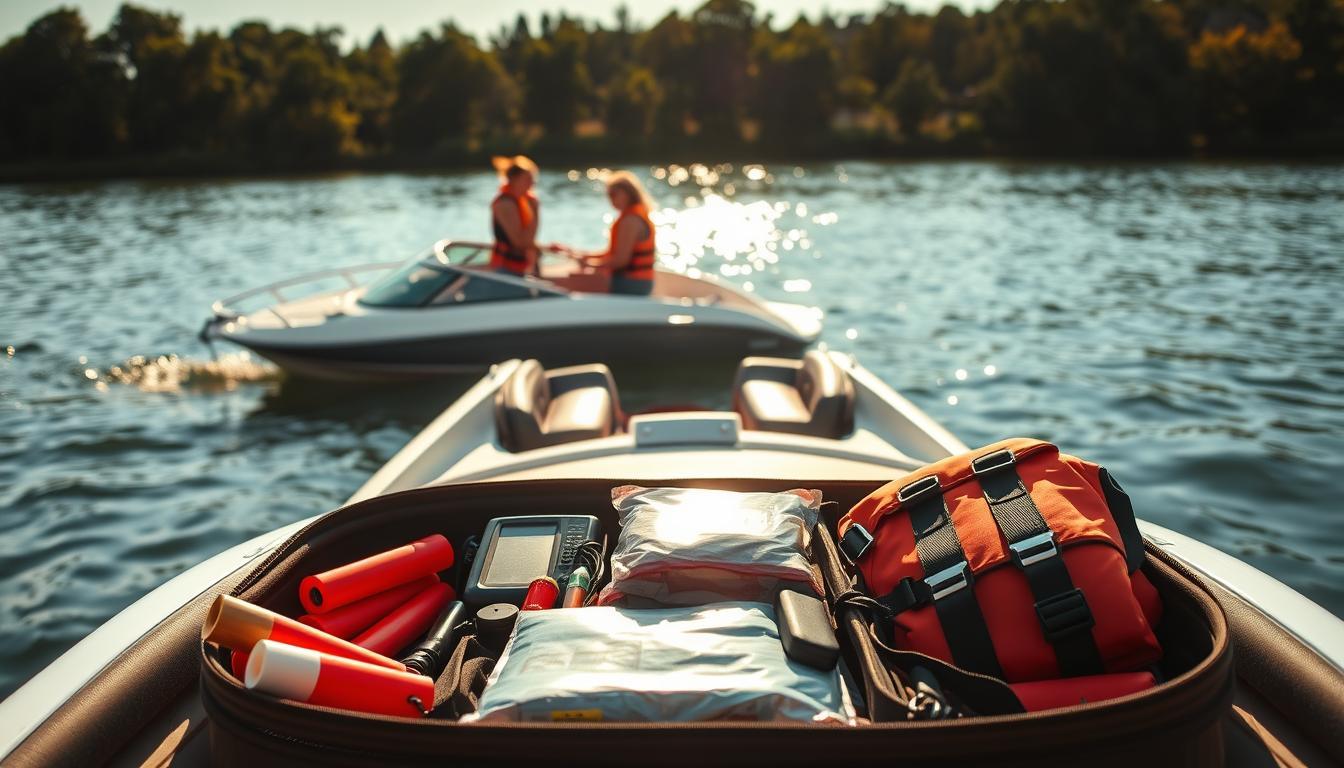
Imagine Marie Kondo folding your life raft while whispering, “Does this distress beacon spark joy?” We focus on the real marine safety gear, not just the basics. We aim to make your boating experience safe and enjoyable.
The Bare Minimum – Government Edition
The USCG requires six essential items:
- Life jackets (one per passenger, sized like Taylor Swift’s Eras Tour costumes – wrong fit = tragic finale)
- Fire extinguishers (expiration dates matter more than your Tinder matches)
- Visual distress signals (flare guns aren’t just for Bond villains)
“Newfoundland crab fishermen survive 50-foot waves using gear that would make Quint from Jaws blush.”
Pro-Level Additions for Storm Chasers
Redundancy Saves Lives
Transport Canada’s checklist fits on a Post-It note. But real captains have much more. Add these to your weather preparedness arsenal:
- EPIRB locator beacons (the only device that truly “sparks joy” during emergencies)
- Waterproof handheld VHF (because Channel 16 might ghost you)
- Strobe lights brighter than Vegas casinos
Think of it as building your own family safety on the water Avengers squad. Every member has a special power. Would you face a rogue wave with basic gear or something worthy of Hemingway’s The Old Man and the Sea?
Real-Life Survival Stories
What makes a maritime horror story a survival masterpiece? It’s the unexpected plot twists, quick decisions, and the battle between humans and nature. Let’s look at two incidents where survival depended on tides, currents, and determination.

Gulf Stream Ordeal
A 28-foot sailboat was caught in the Gulf Stream’s strong currents on a July afternoon. The captain, “Dave,” ignored a wind shift warning. His boat became a helpless cork in a storm.
His survival tools were a broken EPIRB, a waterproof flashlight, and 70s-era Boy Scout knots. The U.S. Coast Guard said Dave’s mistake was treating tidal charts lightly.
Great Lakes Close Call
Lake Superior doesn’t care about your summer plans. In 2022, a charter fishing crew faced a rogue wave near Marquette. Their life raft inflated backward.
“It was like watching your parachute open inside-out during a skydive – pure ‘oh crap’ energy.”
The crew’s quick choice to leave the ship or stay was a life-or-death decision. Cold water immersion is deadly fast in Lake Superior, with 60% of boating emergencies fatal within 6 minutes.
Seasonal Safety Tips
- 🗓️ May-September: Check tidal charts like you’d stalk an ex’s Instagram – obsessively
- 🌊 Nor’easter season: Pack extra flares (and a reality check about your “unsinkable” boat)
- 🧊 Winter prep: Treat ice-prone waters like that one friend who “forgets” their wallet – assume the worst
These stories are more than just tales. They teach us how Tides & Currents knowledge can save lives. On water, only preparation can protect you.
Training Options in [Region]
Learning to navigate the coast doesn’t have to be a long, hard journey. [Region] offers a mix of practical skills and local flair. Imagine learning about boating rules while enjoying oyster shooters, like Anthony Bourdain teaching right-of-way rules.
Certification Courses
The Puget Sound Institute has a fog navigation module that’s surprisingly perfect. It’s like Taylor Swift songs and breakups. Their 8-hour course covers:
- Decoding Coast Guard broadcasts (the maritime version of reading tea leaves)
- Emergency anchoring techniques for tidal zones
- Local navigational hazards disguised as scenic attractions
On-Water Workshops
Forget classroom naps. The Great Lakes Maritime Academy offers live drills. You’ll:
- Practice MAYDAY calls while waves slap the helm
- Execute man-overboard recoveries in shipping lanes
- Decode radar ghosts caused by squall lines
Their “Drunk Captain” simulation is like a game. It makes learning to survive emergencies fun.
“You wouldn’t trust a TikTok influencer to fix your engine. Why trust amateur advice on COLREGs?”
Florida’s Intracoastal Waterway schools have a unique approach. Their sunset navigation clinics teach you to spot channel markers. They also help you avoid the worst navigational hazard – paddleboard selfies in narrow passes.
Downloadable Emergency Card
Imagine having a waterproof cheat sheet that survives both rogue waves and your cousin’s questionable margarita mix. Our emergency card template turns critical marine rescue protocols into pocket-sized clarity. Personalizing it is key – because forgetting your epi-pen expiration date during anaphylactic shock isn’t the adrenaline rush anyone wants.
Paper Wars: Battle of the Waterproof Titans
Mylar and Tyvek aren’t just space-age materials – they’re the Tom Brady vs. Serena Williams of marine stationery. Tyvek flexes with wash-and-wear durability, while Mylar laughs at saltwater corrosion. Pro tip: Test your Sharpie’s loyalty on both before committing. That relationship needs to outlast your last Tinder date.
Lamination Station: More Than Just Plastic Surgery
Cold lamination preserves emergency procedures like cryogenic freezing – minus the sci-fi weirdness. Heat-sealed edges prevent information degradation better than your college roommate’s half-remembered CPR training. Always double-check your float plan details against NOAA’s latest requirements – outdated coordinates turn rescue missions into scavenger hunts.
The included flowchart transforms crisis decisions into a choose-your-own-adventure novel where every ending involves intact kneecaps. Slip one into your waterproof case next to the flares, then text a copy to your emergency contact. Because Family Safety on the Water works best when your entire crew sings from the same waterproof hymnal. Download yours before your next voyage – the only thing that should be sinking is your suspicion that preparation kills spontaneity.