
Imagine the anchorage as a floating neighborhood. Dropping your hook is more than a nautical move; it’s joining a community. This is the social contract of the sea. Breaking it can make you a danger.
This isn’t just about being nice. It’s about safety, respect, and anchoring rules that keep things orderly. It’s like the difference between a quiet street and a busy highway.
The anchorage etiquette is key. The first boat to arrive sets the rules. Everyone else must respect their space. Your anchor’s reach should not disturb your neighbor’s boat.
It’s not just about where you are. It’s also about noise, light, and respect for the water. Good boating etiquette means keeping quiet, avoiding loud noises, and not dumping waste.
There’s more to it than meets the eye. To really get it, you need a guide like this one on anchoring rules and responsible practices.
Managing Crowds
You’ve found the perfect, idyllic cove. So has everyone else. The scene can be beautiful or chaotic. It depends on how well you manage the crowd.
It’s not just about finding a spot. It’s about understanding the complex dance of a crowded anchorage. A good captain knows how to navigate this.
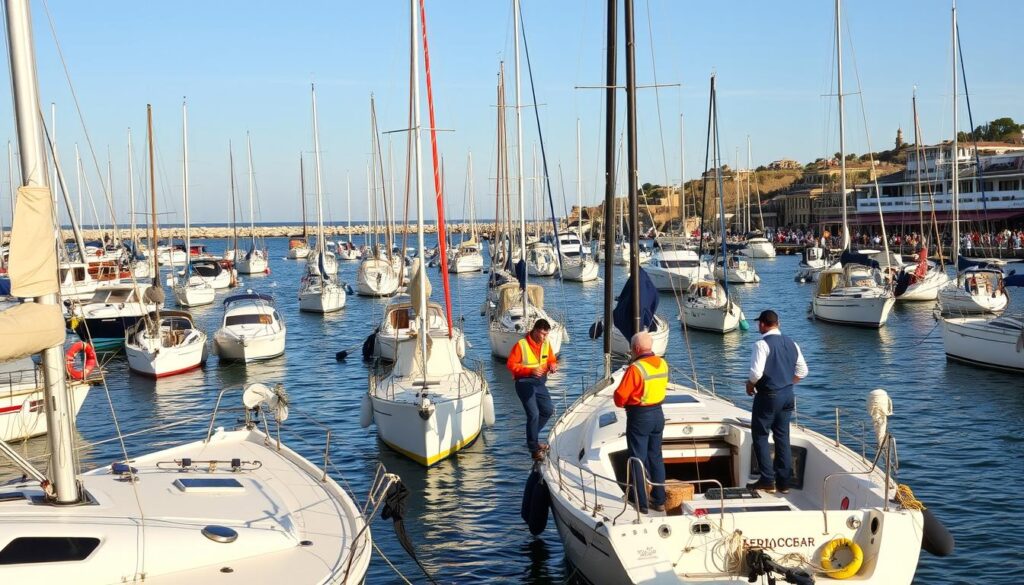
Spatial Awareness in a Crowded Bay
Before anchoring, read the bay carefully. A courtesy tour is essential. Don’t rush in. Slowly circle the area to find the right spot.
Every boat needs space around it. The swing radius should be big enough to avoid collisions. The anchorage density affects how safe it is.
The new arrival should yield. You need to fit in without disturbing others. Anchoring further out is often better. This way, you avoid tangling with others.
Always think about how your boat will move in different winds and currents. This is key to avoiding problems.
The Magnet Effect and You
Boaters are drawn to each other, like magnets. Seeing one boat, you might anchor nearby. Soon, more boats join, and the area gets crowded.
Don’t follow the crowd. Find a spot 50 yards away for better peace. It takes courage, but it’s worth it.
When choosing your spot, consider your scope. It should match your neighbors to avoid problems. The right scope is important for a safe anchorage.
| Factor | Poor Practice | Best Practice | Why It Matters |
|---|---|---|---|
| Scope (Chain) | 3:1 (in a blow) | 5:1 to 7:1 | Prevents dragging and reduces swing radius |
| Swing Radius | Assuming 2:1 scope | Calculate for 360° swing | Avoids midnight collisions when wind shifts |
| Neighbor’s Scope | Ignoring it | Matching it | Prevents dangerous, unsynchronized swinging |
| Bottom Type | Anchoring on rock | Sand/Mud patch | Holding power varies 10x by bottom type |
Managing a crowded anchorage is about responsibility, not just your right to be there. It’s a lesson in social and spatial geometry. For more tips, check out expert advice on sail trim. The goal is to fit in without disturbing others. That’s the art of anchoring in a crowd.
Communication with Nearby Boats
Anchoring isn’t a solo sport. It’s a communal act in a temporary, floating neighborhood. Forget the silent treatment—it’s as effective as a screen door on a submarine. Your VHF radio isn’t just for weather updates; it’s your social lubricant in a crowded anchorage.
It’s your public address system, and your first line of defense against becoming the talk of the cove for all the wrong reasons. Good VHF communication isn’t just polite; it’s the keystone of boating communication that keeps your floating neighborhood from devolving into a nautical version of a bad reality show.
The VHF is Your Friend (Sometimes)
Channel 16 is for hailing. It’s the marine equivalent of shouting “Hey, you!” across a crowded room. Once you’ve made contact, the professional move is to switch to a working channel—68, 69, or 71 are common for non-commercial traffic.
The key is the pre-anchoring call. Before you even think about dropping the hook, a quick, clear transmission can save a world of hassle. A simple, “Sailing vessel *Windseeker*, this is *Sea Breeze* on your port side, planning to anchor astern. We’ll give you a 3:1 scope on 7:1 chain.”
This isn’t just polite; it’s a strategic heads-up. It tells your new neighbor your intentions, your scope, and your plan. It’s the nautical version of knocking before you enter a room. For a deeper dive into the nuances of our full guide to anchoring etiquette covers the finer points of scope, swing circles, and neighborly conduct.
The magic phrase is “Securité, sécurité, sécurité.” It’s the international call for a safety message, and it gets everyone’s attention. A simple, “Sécurité, sécurité, sécurité. All vessels, all vessels, this is the sailing vessel *Serenity* preparing to anchor on the north side of the bay.”
It’s professional, it’s clear, and it announces your intentions to everyone, not just the boat you’re trying not to bump into.
Light and Sound Signals at Anchor
When the sun sets, your anchoring signals shift from radio waves to light and sound. The rules are specific: a 360-degree all-round white light visible for at least two miles. This isn’t just a suggestion—it’s a COLREGs requirement.
But the white masthead light 50 feet up can be a dim speck to a small boat approaching at 3 AM. The pro-tip? A secondary, lower anchor light at deck level. It’s not just for the rulebook; it’s for the guy in the 3 AM fishing skiff who isn’t looking at your masthead.
Then there’s the sound. In restricted visibility—fog, heavy rain, or a moonless night—a bell or a gong is your voice. One short blast for “I am turning to starboard,” but at anchor, it’s about warning others. The regulations call for a rapid bell ring for five seconds at one-minute intervals in fog.
It’s a lonely, haunting sound, but it screams “I’m here!” more effectively than any AIS signal to a small craft without radar.
The “Anchor Drag Dance” Protocol
Here’s where communication becomes a safety dance. You see a neighboring boat dragging down on you. What now? The anchor watch isn’t just a concept; it’s an active, polite intervention. This is the moment your VHF earns its keep.
Avoid the frantic, open-channel shout. Hail the vessel by name if you know it, or use a general call on the working channel. “Sailing vessel *Wanderlust*, this is the vessel anchored to your starboard side, on channel 69.”
When they respond, keep it professional: “*Wanderlust*, this is the sailboat to your port side. Just a heads-up, it looks like your anchor may be dragging. You’re about 50 feet from our bow and closing. Please check your position.”
This is the anchor watch in its purest form—a neighborly heads-up that could prevent a very expensive, fiberglass-against-fiberglass conversation.
This isn’t about tattling. It’s about community. A crowded anchorage is a temporary, floating village. Your VHF communication skills, your light, your sound signals—they’re your contribution to the village watch.
They say, “I’m here, I’m alert, and I’m part of this temporary community.” It’s the difference between being the boat everyone gives a wide berth and the one they’re happy to see return to the anchorage next season.
Quiet Hours
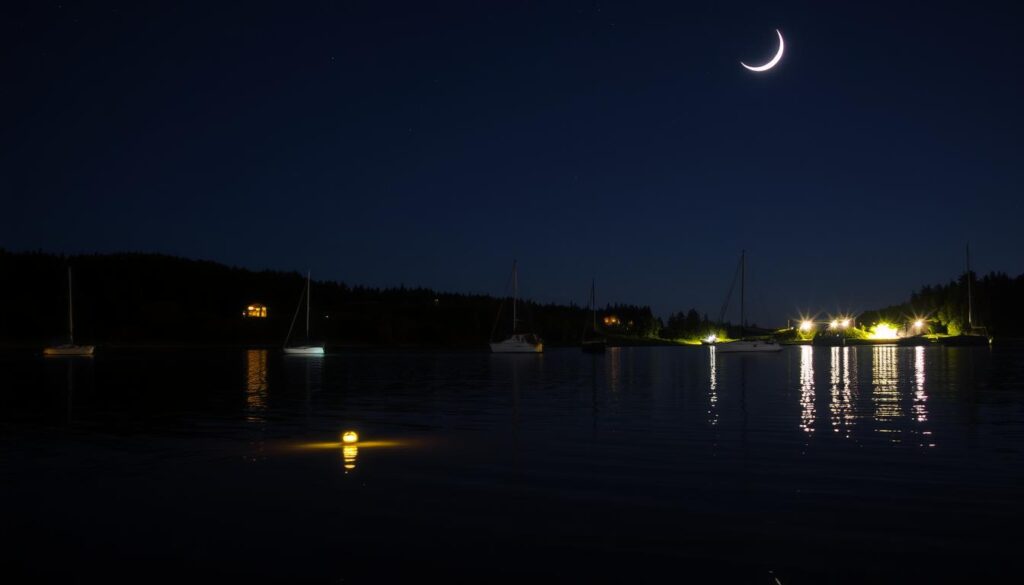
Sunset in a crowded anchorage has a special magic. The sounds of halyards and water create a calm symphony. But as night falls, a new sound emerges, testing the anchorage’s social contract.
This is the time for anchorage quiet hours. It’s a silent agreement to respect each other’s peace. Breaking this pact can turn a quiet cove into a noisy chaos.
The Generator Conundrum
The first sound is a low hum. Then more join, turning the anchorage into a generator convention. The rule is clear: don’t let your generator disturb others.
Running a generator too early is a big no-no. The quiet hours from 10 PM to 7 AM are there to protect everyone. Playing music too loud is also a breach of peace.
The 10 PM Rule and the Sanctity of Silence
After 10 PM, a new rule takes over. This is when light pollution becomes a problem. A bright deck light can ruin the night for others.
Using a red light or a shielded light is the solution. It keeps the night peaceful and lets everyone enjoy the stars. It’s about respecting the shared space of the anchorage.
Respecting anchorage quiet hours shows you’re a seasoned mariner. It’s about being a considerate guest, not a disruptor. For more on anchoring etiquette, check out this guide on living harmoniously in a crowded anchorage.
Handling Conflicts
In a crowded anchorage, a peaceful sunset can quickly turn chaotic. Anchor dragging is a major cause of anchorage conflicts. If a boat starts to drag, it sets off a chain reaction for others nearby.
The Dragging Neighbor Protocol
Seeing a drifting vessel means you must act fast. Turn on your engine, get ready with fenders, and have your windlass remote ready. The dragging boat’s skipper is responsible.
Call them privately on VHF, or go over in a dinghy. Say something like, “Vessel *Wanderlust*, this is the sailboat off your starboard quarter. It appears your anchor is dragging.” This way, you avoid starting a boating dispute.
De-escalation and the “Cruiser’s Karma”
The anchorage’s social contract is put to the test here. Helping a boater today means they’ll help you tomorrow. True anchorage conflicts often stem from fear and stress.
Being calm and helpful can ease tensions. Say, “Looks like you’re dragging, can we help you reset?” It’s not just about anchoring rules. It’s about community spirit. This spirit can turn a boating dispute into a story of friendship over sundowners.