Steel hull checks gained fresh attention after the U.S. Coast Guard issued Change-1 to Navigation and Vessel Inspection Circular 7-68 on August 22, 2026. That update revised long-standing notes on inspection and repair of steel hulls and added guidance on pitting and corrosion repair, while accepting International Association of Classification Societies Recommendation #47 Part B as an acceptable ship repair standard, according to the USCG update. For owners, operators, port engineers, and yard teams, the practical message is clear: hull condition should be checked in a planned, documented way, not only when damage becomes obvious.
The Coast Guard material is written for U.S.-flag inspected steel vessels, not as a one-size-fits-all manual for every private recreational steel boat. Even so, the same safety habits are useful at any scale: look for corrosion early, keep repair records, use qualified people for hull work, and do not assume paint alone proves the plate beneath is sound. A small weep, blistered coating, or uneven patch can point to a problem that deserves closer review before the boat returns to service.
Steel Hull Checks After The 2026 USCG Update
What The Change Covered
The 2026 Coast Guard revision did not erase the need for judgment by inspectors, surveyors, shipyards, and vessel operators. It gave updated reference points for repair consistency, especially where pitting and corrosion are involved. The NVIC Change-1 document states that the guidance applies to all U.S.-flag inspected steel vessels, both classed and non-classed, and addresses repair standards during drydock examinations, internal structural examinations, and special surveys in the NVIC 7-68 Change-1.
For day-to-day maintenance planning, that matters because steel hull work can drift into informal habits. One yard may describe a pit field one way, while another may focus on coating loss or weld condition. A shared standard helps keep the discussion centered on condition, measurement, repair method, and verification. Owners should still rely on the requirements that apply to their vessel, flag, class status, route, and inspection program.
Where Steel Hull Checks Fit On Board
Good inspection practice starts before haulout. Crew members can record coating blisters, rust staining, unusual bilge water, damaged insulation, impact marks, and seepage while the vessel is afloat. These observations do not replace drydock or survey work, but they help direct attention once the hull is exposed. Photos, dates, and location notes are useful because corrosion rarely develops in a straight line. A small area that looks unchanged for months may still need thickness measurement if it sits in a wet, oxygen-starved, or high-wear location.
Maintenance teams should make steel hull checks a planned habit around known risk areas: ballast spaces, bilges, machinery spaces, the waterline, sea chest areas, shell plating near fittings, decks exposed to standing water, and structural details where coatings break down. Research supplied for this article also notes growing emphasis on visual inspection and non-destructive testing, such as ultrasonic gauging, in areas of high stress or compromised coating protection. The limitation is worth saying plainly: only trained personnel with suitable equipment can interpret thickness readings and repair thresholds for an inspected vessel.
Reading Corrosion, Pitting, And Coating Clues
Surface Rust Is Only A Starting Point
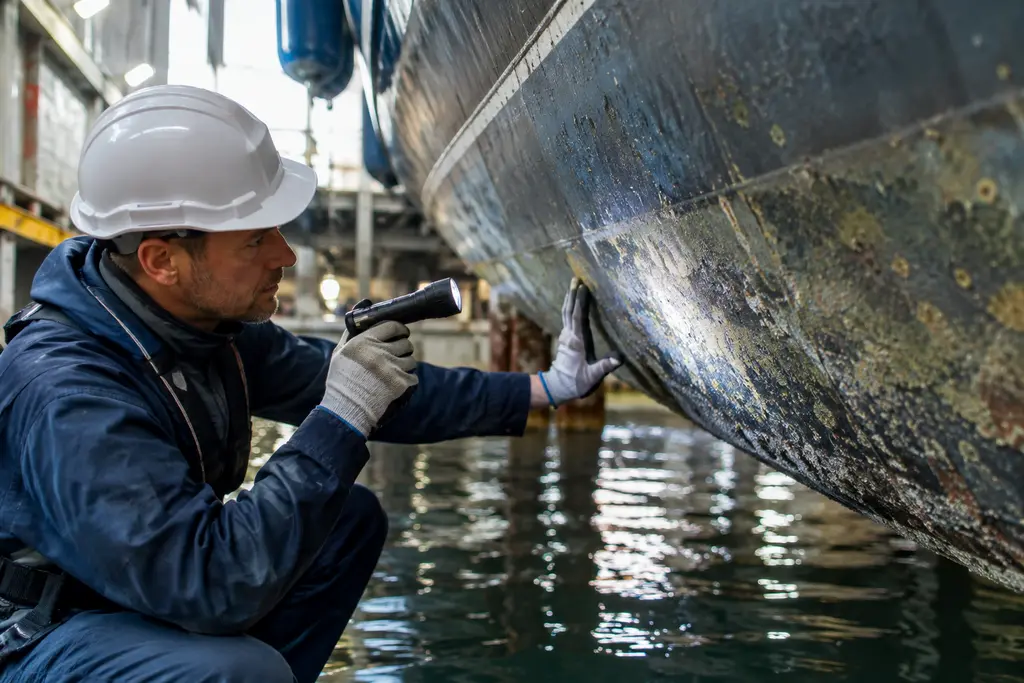
Rust on steel is easy to see, but hull condition is not judged by color alone. Coating failure, scale, pits, grooving near welds, and wastage around fittings all deserve a closer look. A newly painted surface can hide older defects if surface preparation was poor. On the other hand, staining from a single hardware leak may not mean wide structural loss. The safer approach is to treat visible change as a prompt for inspection rather than a final answer.
Pitting deserves special caution because local metal loss can be easy to underestimate. A broad area of light surface corrosion may look worse than a smaller cluster of deeper pits, yet the deeper damage may matter more. If the vessel is subject to Coast Guard inspection or class rules, repair acceptance should follow the applicable standards and any directions from the responsible authority or class society. For smaller privately used steel vessels, a qualified marine surveyor or steel hull repair yard can help translate the same principles into a practical scope of work.
Thickness Measurement And Repair Records
Ultrasonic thickness measurement is often used to compare actual plate thickness with expected or allowable values. The research notes refer to thickness measurement in class renewal survey settings, including cargo holds, ballast tanks, pipe tunnels, cofferdams, outer hulls, and decks. Not every recreational boat has those spaces, but the principle still helps: measure where risk is higher, not only where access is easy.
Repair records should identify the area repaired, the observed condition, the repair method, the people or yard involved, and any follow-up checks. If plates, inserts, welds, or coatings are renewed, keep the supporting paperwork with the vessel file. If your club maintains a shared safety reading folder, a related network resource such as a network partner like agherio.org can sit beside vessel-specific records, but repair decisions should still be based on the vessel’s approved plan, survey findings, and qualified advice.
Planning Hull Maintenance Around Real Use
Match The Schedule To Exposure
A steel vessel that sits in salt water, carries wet gear, or has poorly ventilated compartments may need closer attention than a lightly used freshwater boat. Lay-up periods also change the risk picture. The research provided notes that ships laid up for an extended period, commonly six months or more, may face special lay-up and re-commissioning survey considerations depending on duration and condition. For a local owner, that translates into a basic habit: do not assume a quiet season is harmless. Stagnant bilges, failed coatings, and missed leaks can continue working while the boat is inactive.
Before haulout, crews should gather known problem notes so the yard can inspect those areas while access is available. During haulout, avoid rushing the washdown and visual review. After repair, inspect coatings, drains, anodes if fitted, and spaces that collect water. For a broader pre-departure mindset that pairs well with hull care, see these practical boat maintenance safety checks.
A Practical Inspection Rhythm
Operators can build a simple rhythm without pretending every boat has the same requirements. Before each trip, look for bilge changes, new rust streaks, unusual odors, loose fittings, and signs of impact. Monthly during active use, open accessible compartments, check coating condition, confirm drains are clear, and photograph anything that appears to be growing. Before and after haulout, compare old notes with what is visible on the hard. If the boat is inspected, classed, or part of a formal examination program, follow the approved schedule rather than a casual owner-made calendar.
- Record the exact location of corrosion, pitting, coating failure, or seepage.
- Use photos with dates so changes can be compared over time.
- Flag areas near the waterline, bilges, machinery spaces, and hull penetrations for closer review.
- Ask qualified personnel about ultrasonic gauging when visual signs suggest thinning.
- Keep repair standards, yard invoices, survey notes, and coating records in one vessel file.
The key is not to turn every owner into a naval architect. It is to catch signs early enough that trained people can assess them before strength, watertight integrity, or safe operation is compromised. Steel is durable, but it rewards steady attention.
Repair Decisions And Inspection Limits

Know What Owners Should Not Guess
Owners and crews can identify changes, document conditions, and keep the boat clean and dry where possible. They should not guess at structural acceptance limits, welding suitability, or whether deep pitting is safe to ignore. Steel hull repairs can involve plate thickness, weld procedure, access, coatings, heat effects, and inspection requirements. On vessels covered by Coast Guard inspection or class rules, the responsible authorities and accepted standards set the path for repair review.
This is where steel hull checks need discipline. If damage is found, it is better to slow the schedule than to hide the issue under coating or filler. A repair that looks smooth from the outside may still be unsafe if wasted steel remains beneath it or if the wrong method was used. The 2026 Coast Guard update reinforces the value of consistent repair standards, but it does not remove the need for qualified inspection, sound workmanship, and clear records.
Communicating With The Yard
Good communication with the yard begins with plain language. Instead of saying “the hull looks bad,” note “rust scale and pitting visible on the port bilge plate near frame location marked in photo.” Instead of saying “the patch was fixed,” ask for the repair description, material details if applicable, inspection results, and coating system used. These records help the next surveyor, the next owner, and the crew member who opens the same compartment a year later.
If your vessel falls outside the inspected-vessel scope of NVIC 7-68, the Coast Guard guidance can still help shape questions for a qualified surveyor or repair yard. Ask how pitting is being assessed, whether thickness readings are needed, how repair boundaries are chosen, and what follow-up inspection is recommended. The answer may vary with vessel type, service, and condition, so avoid copying a repair from another boat without professional review.
Steel Hull Checks As A Standing Safety Habit
Regular steel hull checks are not just a yard task. They are part of safe ownership, like checking steering, fuel systems, electrical gear, and lifesaving equipment. The 2026 Coast Guard revision gave inspected steel vessels updated repair guidance, but the practical lesson reaches further: watch the hull, document changes, bring in qualified help when signs point to thinning or damage, and keep the records where they can guide the next inspection.
A steel hull can serve safely for a long time when corrosion control, dry compartments, coating care, and inspection discipline work together. No article can determine whether a specific plate, weld, or pit field is acceptable. That decision belongs with the applicable authority, class society, surveyor, or skilled repair professional. What every crew can do is keep the hull visible, keep notes honest, and treat early warning signs as safety information rather than cosmetic annoyance.