After the U.S. Coast Guard’s Operation Safe Voyage activity around September 10, 2026, charter boater safety should start before anyone steps aboard. The core lesson is practical: paying passengers should confirm who is operating the vessel, what safety documents are on board, whether lifesaving equipment is ready, and whether the trip plan fits the weather and passenger load. This guidance is safety-focused, not legal advice, and it cannot replace direction from the Coast Guard, state boating officials, or the captain responsible for the voyage.
Charter Boater Safety Checks Before Boarding
The Coast Guard’s East District reported that Operation Safe Voyage enforcement continued beyond Labor Day and targeted illegal charter activity year-round. In that announcement, boarding teams checked whether captains held the proper Merchant Mariner Credential and whether certain vessels carrying more than six paying passengers had a valid Certificate of Inspection, or COI, showing passenger capacity and required lifesaving equipment Coast Guard enforcement update. For passengers, the safest approach is to treat those items as basic pre-departure questions, not awkward requests.
Charter Boater Safety Questions To Ask
A useful charter boater safety habit is to ask clear questions in plain language. Who is the captain? May passengers see the captain’s credential? If the trip carries more than six paying passengers, is there a valid COI for the vessel? What is the maximum passenger capacity? Where are the life jackets, fire extinguishers, and emergency communication equipment? A legitimate safety briefing should not feel rushed, and passengers should know where to sit, how to move, and what to do if the captain gives an emergency instruction.
Passengers should also pay attention to bareboat or bare-crew arrangements. The Coast Guard has warned that if a charter requires customers to accept a specific captain instead of allowing the customer to choose, that may be a warning sign that the operation is functioning as a passenger-for-hire trip. The safety concern is simple: the label on the booking page does not keep passengers safe. The actual operation, captain control, vessel capacity, and inspection status matter.
Documents And Equipment That Matter
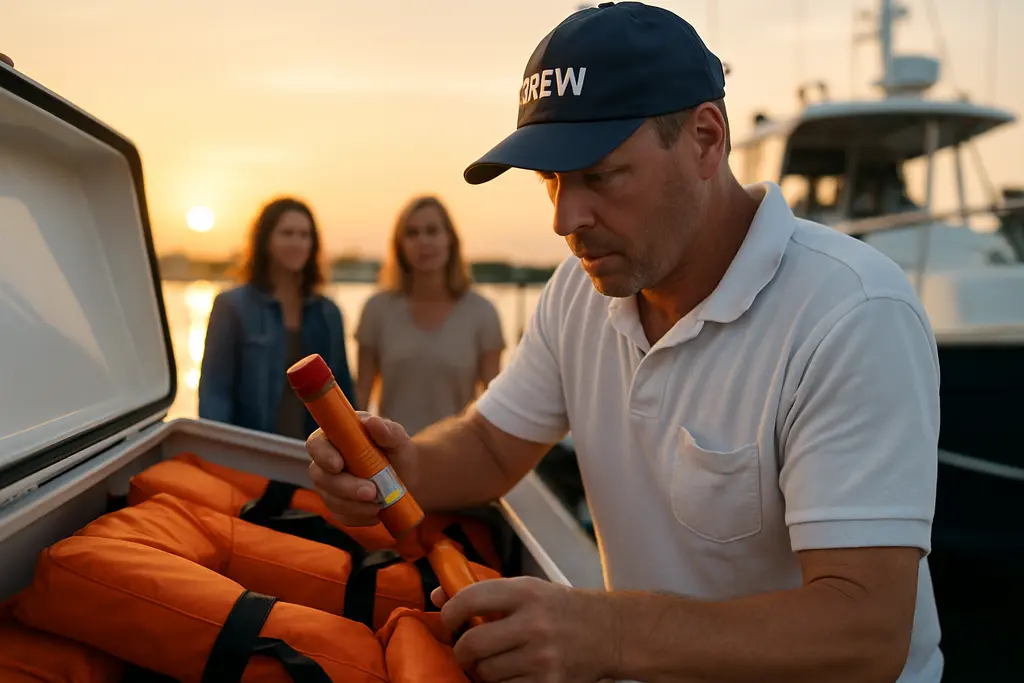
Before departure, look for visible signs that the operator treats safety as normal practice. Life jackets should be available and suitable for the passengers on board. Firefighting equipment should be present. Navigation lights should be working for any trip that may take place near dusk, at night, or in restricted visibility. If the boat appears overloaded, if passengers are asked to sit in unsafe places, or if the crew brushes off questions about credentials or lifesaving gear, it is reasonable to pause and reconsider the trip.
One practical limit is worth stating: passengers are not marine inspectors. You may not be able to judge every system on a vessel. Still, you can check for obvious red flags and ask for the documents that the Coast Guard specifically highlights. If answers are vague, rushed, or inconsistent, that uncertainty itself is a safety signal.
Life Jackets, Training, And Sober Operation
Good charter boater safety does not stop with paperwork. The Coast Guard’s 2024 Recreational Boating Statistics reported that about 76% of boating deaths were due to drowning, and 87% of those drowning victims were not wearing a life jacket. The same report stated that nearly 70% of deaths occurred on vessels operated by people who had not received formal boating safety instruction, and alcohol was the leading known contributing factor in 20% of fatal boating accidents 2024 boating statistics. Those figures support three steady habits: wear a life jacket, value boating education, and keep the operator alcohol-free.
Life Jacket Use On Charter Trips
Passengers sometimes assume that a larger charter vessel is automatically safer than a small recreational boat. That assumption can weaken good habits. A life jacket cannot help if it is stowed away during a fall overboard, a sudden wake, or a fast-changing emergency. Children, weak swimmers, older passengers, and anyone moving around deck areas should be especially careful about wearing a properly fitted life jacket. If a captain gives a briefing, listen for exact locations of wearable devices and any instructions for passengers who may need help putting one on.
Weather, wake, crowd movement, and low light can all make a simple footing mistake more serious. A calm departure from the dock does not guarantee calm conditions later. Passengers can help by keeping walkways clear, securing bags, avoiding crowding on one side of the vessel, and following seating instructions when the boat is underway.
Alcohol And Operator Readiness
Alcohol risk is not limited to the person at the helm. Passengers who are impaired may ignore instructions, move unsafely, distract the crew, or fail to react quickly during a docking or emergency situation. The safest charter culture is simple: the operator stays sober, passengers keep judgment clear, and someone in the group remains alert enough to help communicate, count passengers, and recognize trouble early.
Formal boating education also matters, even for people who usually ride as guests. A passenger who understands basic right-of-way concepts, lookout duties, weather risk, and distress procedures is more likely to notice a problem before it grows. For related reading on practical pre-trip habits, this marina safety resource on illegal charter safety risks covers warning signs that fit many passenger-for-hire situations.
Weather, Lookout, And Passenger Load Decisions
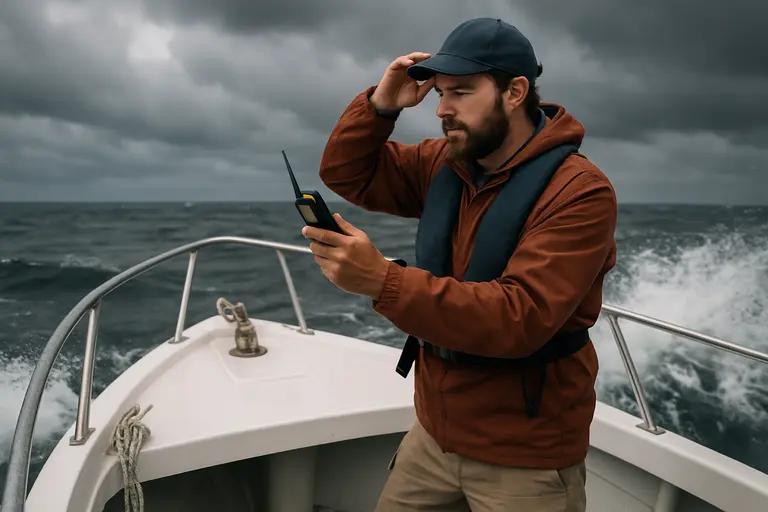
A safe charter trip depends on more than a qualified captain and a sound boat. The group needs a plan that fits the day’s conditions. Weather can change the level of risk quickly, especially for passengers who are not used to vessel motion, spray, heat, cold, or limited shelter. Before leaving, ask what conditions are expected, where the boat will go if the weather worsens, and whether the route has safe alternatives.
Capacity Is A Safety Boundary
Passenger load is one of the clearest warning signs. If a boat looks crowded at the dock, it may be harder to move safely once underway. Excess passengers can affect seating, balance, emergency movement, and access to lifesaving gear. A valid COI, where required, helps identify the vessel’s allowed passenger capacity. On smaller arrangements, passengers should still ask how many people the boat is designed to carry safely.
Very low pricing can also be a warning sign when paired with other concerns. Price alone does not prove a trip is unsafe, but a charter that appears to avoid credentials, inspections, life jackets, or passenger limits deserves extra caution. Do not let a bargain override visible safety problems.
Lookout Duties Help Everyone
The operator is responsible for the vessel, but passengers can still support a safer trip by avoiding distractions near the helm, reporting hazards calmly, and keeping children within sight. A proper lookout is especially valuable near docks, crowded anchorages, narrow channels, and areas with paddle craft or swimmers. If the captain asks passengers to stay seated during docking, anchoring, or rough water, treat that instruction as a safety control rather than a suggestion.
For readers who use community checklists and local resources alongside official boating guidance, resources like Bethel NC UMC should be considered supplementary to Coast Guard safety requirements. Official vessel, credential, and reporting questions should be directed to the appropriate boating authority.
Operation Safe Voyage Lessons For Charter Boaters
The practical charter boater safety standard after Operation Safe Voyage is straightforward: verify credentials, confirm inspection status where required, respect passenger limits, wear life jackets, avoid alcohol-related risk, check weather, and report suspected unsafe charter activity. The Coast Guard reported that since 2021, enforcement actions tied to illegal passenger vessel operations had resulted in more than 414 enforcement actions nationwide and about $10.6 million in proposed civil penalties. Those numbers show that the issue is not isolated.
If something feels wrong before departure, passengers still have options. Ask one more direct question. Request the safety briefing before the vessel leaves the dock. Decline to board if the boat appears overloaded or lacks basic equipment. Report suspected illegal charter activity through the Coast Guard or the appropriate local authority. A safe charter should never depend on passengers staying quiet about obvious concerns.
Charter trips can be enjoyable, social, and memorable, but the best experience starts with prevention. Strong charter boater safety habits give passengers a simple way to protect themselves without needing expert technical knowledge: ask, look, listen, and be willing to walk away from a trip that does not meet basic safety expectations.